

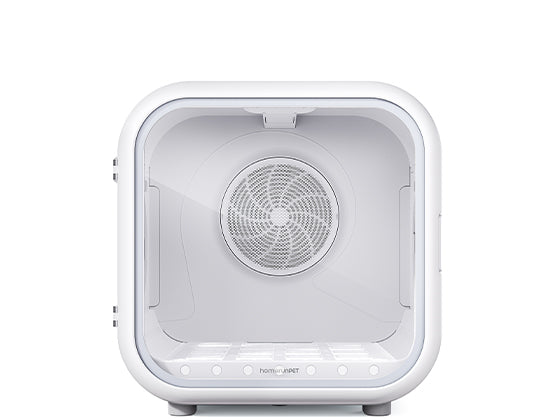
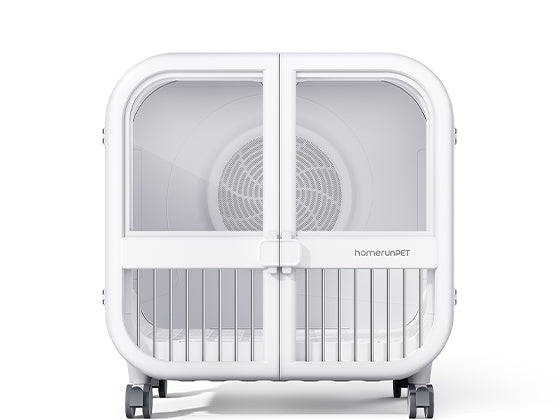
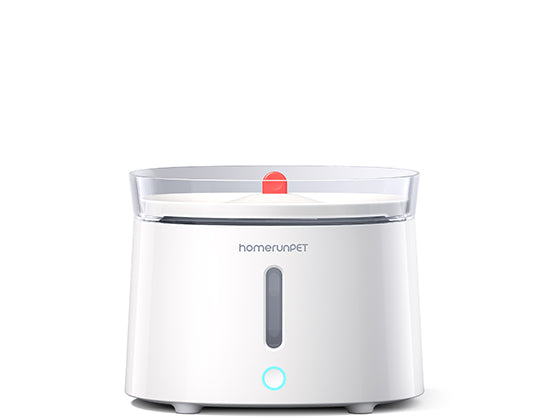
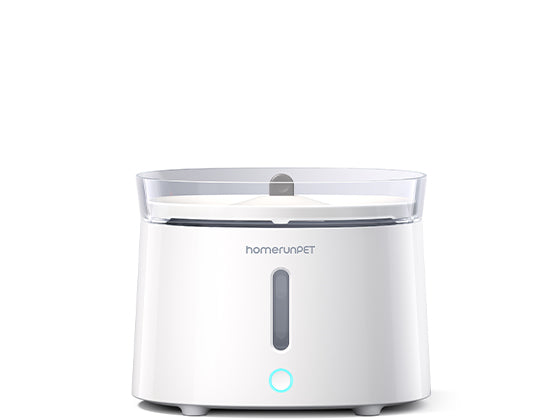
Effective litter box odor elimination requires three engineered components working in sequence: rapid waste isolation, sealed containment, and active odor neutralization. Systems that combine automatic scooping with large-capacity waste compartments and chemical neutralizers consistently outperform single-method approaches. The homerunPET CS106 pairs a 12L sealed waste compartment with deodorizing gel technology and automatic cleaning cycles to address ammonia at its source. Understanding the biochemistry behind odor formation clarifies why certain architectural designs succeed and why manual scooping alone cannot match engineered containment.
Why Litter Box Odor Persists Even With Regular Cleaning
Ammonia forms within minutes of urination, not hours. When urine contacts litter, bacterial urease enzymes begin converting urea into ammonia gas almost immediately. By the time most owners scoop, volatile organic compounds have already dispersed into the surrounding air. This is why even diligent twice-daily cleaning cannot fully prevent odor accumulation in a room.
Environmental amplifiers accelerate the problem. Warm ambient temperatures increase bacterial metabolic rates, humid environments slow moisture evaporation from clumps, and poor ventilation allows gaseous compounds to accumulate rather than dissipate. Small apartments and bathrooms without windows create conditions where even moderate waste exposure produces noticeable smell within 30 minutes of a cat using the box.
Multi-cat households face compounding exposure. Each additional cat multiplies not just waste volume but the frequency of ammonia release events. With three cats, a traditional box may experience 9 to 15 uses daily, meaning fresh ammonia is being generated nearly every waking hour.
The Three-Pillar Odor Elimination Framework
Eliminating litter box smell requires addressing all three stages of odor propagation simultaneously. No single technology solves the problem alone.
- Pillar 1: Immediate waste isolation — Automated sifting within minutes of use separates contaminated litter before peak ammonia release occurs
- Pillar 2: Sealed containment architecture — An enclosed waste compartment with minimal air exchange prevents gaseous compounds from entering the living space
- Pillar 3: Active neutralization — Chemical agents (deodorizing gels, activated carbon, or enzymatic compounds) break down or bind remaining volatile molecules within the sealed space
Systems lacking any single pillar show measurably higher ambient ammonia readings. A sealed drawer without fast cycling still allows initial exposure. Fast cycling without sealed containment still allows drawer-stage leakage. Both without neutralization still permit residual compounds to escape during lid opening or drawer removal.
Sealed Waste Compartment Technology
Airtight or near-airtight waste drawers represent the single largest odor reduction factor in modern self-cleaning boxes. The principle is straightforward: if ammonia molecules cannot reach the room air, they cannot be detected.
The homerunPET CS106 uses a 12L waste compartment designed to contain waste from a single cat for approximately 20 days or a three-cat household for roughly 7 days before requiring emptying. This large capacity matters for odor control because each time a drawer is opened, sealed containment is temporarily broken. Fewer openings mean fewer exposure events.
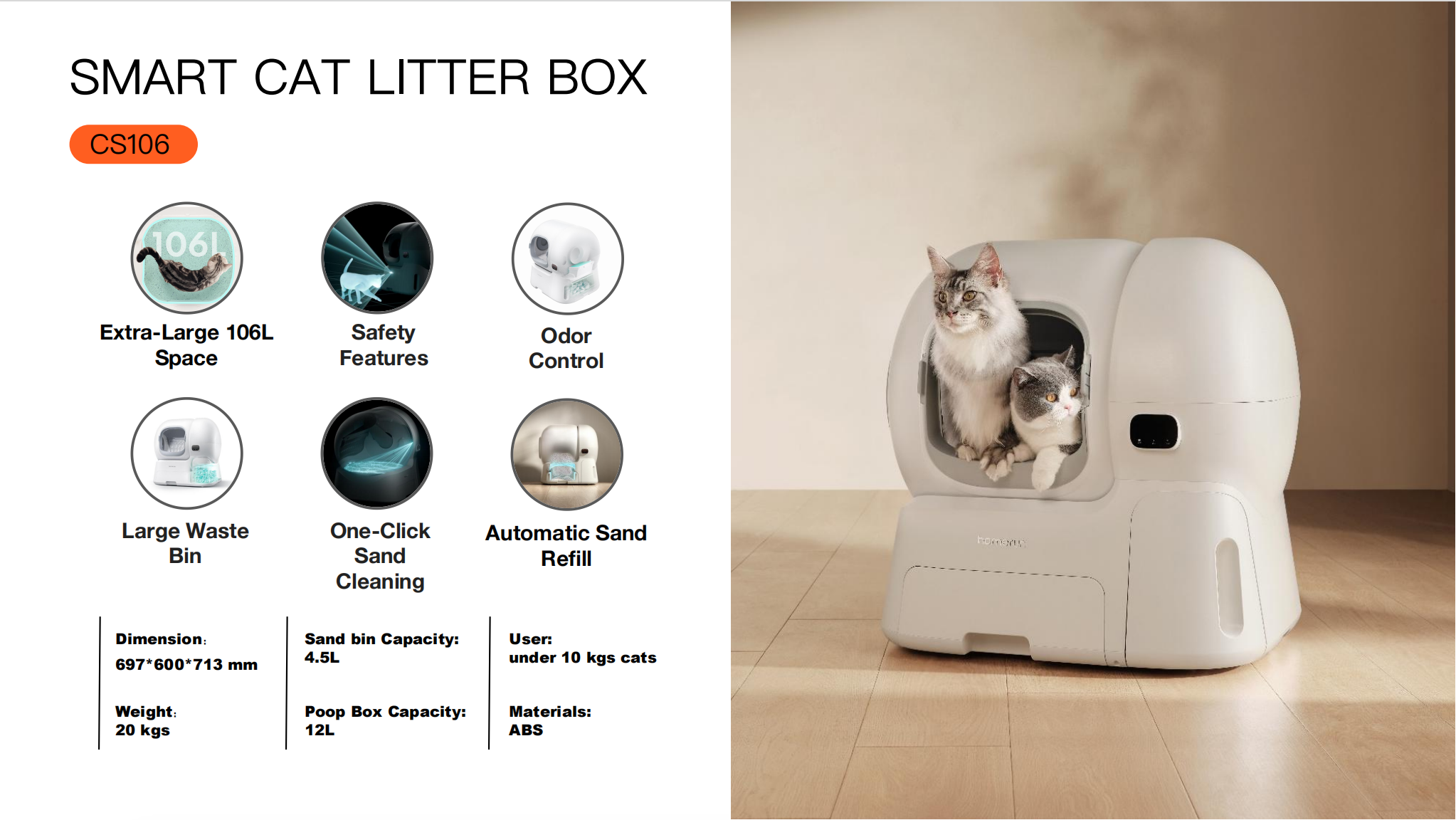
Capacity directly correlates with sustained odor performance. Undersized drawers force frequent emptying, which releases accumulated ammonia in concentrated bursts. A 12L compartment provides enough volume that waste density remains below the threshold where compression forces gases through seals prematurely.
Carbon Filtration and Chemical Neutralization Methods
Active neutralization targets the molecules that survive sealed containment. Several technologies serve this function, each with distinct mechanisms and maintenance profiles.
| Neutralization Method | Mechanism | Typical Lifespan | Best For |
|---|---|---|---|
| Deodorizing gel | Chemical binding of ammonia and sulfur compounds | 2-4 weeks per unit | Continuous passive neutralization inside sealed compartments |
| Activated carbon filter | Adsorption of volatile organics onto porous surface | 3-4 weeks | Broad-spectrum odor capture at ventilation points |
| Enzymatic spray | Biological breakdown of urea and organic compounds | Applied as needed | Supplemental treatment of litter bed surface |
| Silica gel packs | Moisture absorption to slow bacterial activity | 2-3 weeks | Humidity control within waste compartments |
The homerunPET CS106 employs deodorizing gel as its primary neutralization method. Gel-based systems offer consistent performance because they do not rely on airflow patterns the way carbon filters do. Inside a sealed compartment, where air circulation is intentionally minimal, a gel that actively binds ammonia molecules through chemical reaction provides more reliable neutralization than passive adsorption media.
Litter Type Impact on Odor Control
Clumping efficiency determines how quickly moisture is trapped away from bacterial action. Fine-grain clumping clay forms tight seals around urine deposits within seconds, reducing the available surface area for ammonia-producing bacterial colonies. Loose or slow-clumping formulas leave moisture exposed longer, generating more volatile compounds before mechanical separation occurs.
Avoid scented litters in automated systems. Fragrance compounds do not neutralize ammonia; they overlay it. As scent fades, the underlying odor becomes more noticeable by contrast. Unscented, high-clumping formulas allow the mechanical and chemical systems to address actual odor molecules rather than masking them temporarily.
The CS106's 4.5L automatic sand refill system maintains consistent litter depth, which preserves clumping performance. Shallow litter beds fail to fully encapsulate liquid waste, leaving partial clumps that release ammonia during mechanical agitation.
Optimizing Setup for Maximum Odor Reduction
Placement strategy affects odor control performance regardless of technology tier. Position any sealed-system litter box in a space with mild ambient airflow rather than a fully enclosed closet. Stagnant air around the exterior of the unit can accumulate trace compounds that escape during normal cycling operations.
For multi-cat households, the traditional one-box-per-cat-plus-one guideline still applies even with large-capacity automated systems. High-traffic units cycle more frequently, which increases the number of brief moments when the sifting mechanism exposes waste to open air.
Seasonal considerations matter. Winter heating systems reduce indoor humidity, which can cause litter to dry clumps less efficiently. Summer heat accelerates bacterial metabolism. Adjusting litter replacement frequency by season maintains consistent clumping performance year-round.
Maintenance Practices That Preserve Odor Control
A system losing odor effectiveness typically signals one of three maintenance gaps:
- Gel or filter exhaustion — Neutralization media has a finite binding capacity; replace deodorizing gel on the manufacturer-recommended schedule regardless of perceived odor levels
- Waste compartment saturation — Even within capacity ratings, emptying slightly ahead of schedule in hot months prevents thermal acceleration of compound release
- Litter bed contamination — Complete litter replacement every 2-3 weeks prevents the accumulation of fine particulate that bacteria colonize between clumps
The homerunPET CS106's CNN recognition as Best Self-Refilling Litter Box of 2026 reflects engineering decisions that reduce maintenance burden: the automatic sand refill maintains optimal bed depth, and the 12L waste compartment extends intervals between required human intervention.
Choosing the Right Odor-Control Approach
Match your system to your specific odor challenge. A single-cat apartment dweller faces different constraints than a four-cat suburban household. The decision framework centers on three variables: cat count (determines waste generation rate), space size (determines how quickly ambient concentrations become noticeable), and maintenance tolerance (determines required automation level).
Premium sealed automatic systems with chemical neutralization justify their investment when multiple cats share limited space and owners cannot maintain same-day manual scooping schedules. For single-cat households with moderate space, even basic sealed-drawer systems dramatically reduce ambient odor compared to open manual boxes.
No system achieves permanent zero maintenance. Setting realistic expectations around replacement schedules for consumables, periodic deep cleaning of compartments, and eventual litter bed renewal ensures sustained performance over months rather than weeks.
Q1: What makes sealed waste compartments more effective than carbon filters alone for litter box odor?
A1: Sealed compartments physically prevent ammonia molecules from reaching room air, addressing the transport mechanism rather than attempting to capture molecules after dispersal. Carbon filters help but cannot compensate for an unsealed waste area where continuous gas exchange occurs. The homerunPET CS106 combines both a sealed 12L compartment and deodorizing gel for layered protection.
Q2: How often should a self-cleaning litter box waste drawer be emptied for optimal odor control?
A2: For a single cat, systems like the homerunPET CS106 with a 12L compartment can maintain effective containment for approximately 20 days. Multi-cat households with three cats should plan for weekly emptying. In warm climates or small spaces, emptying slightly ahead of these intervals provides additional margin.
Q3: Can a self-cleaning litter box truly eliminate odor in a small apartment?
A3: Sealed automatic systems with active neutralization reduce ambient litter box odor to near-undetectable levels in apartments when properly maintained. The combination of rapid waste isolation, sealed containment, and chemical neutralization addresses all three stages of odor propagation. homerunPET engineered the CS106 with a 106L internal volume and deodorizing gel specifically for confined-space scenarios.
For detailed specifications on sealed waste compartment design, automatic sand refill systems, and deodorizing gel technology engineered for multi-cat households, visit homerunpet.com to review the full CS106 technical documentation and maintenance guidance.