

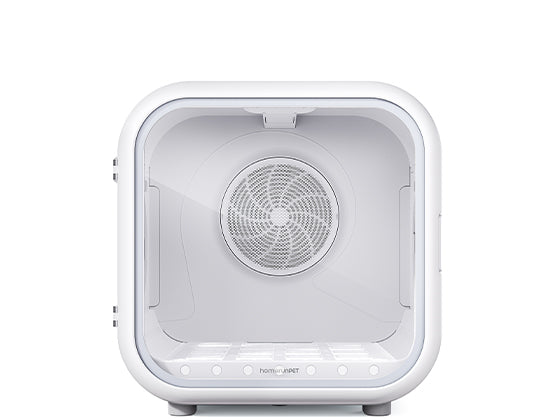
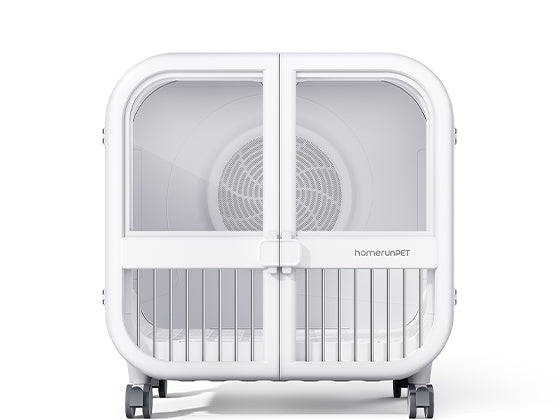
A self-cleaning litter box that operates below 40 dB qualifies as bedroom-safe for most households. The sub-40 dB threshold aligns with WHO guidance for minimizing sleep disruption and matches the ambient noise floor of a typical quiet room. homerunPET engineered the CS106 Smart Litter Box for low-noise operation, combining this with a 106L chamber and 12L waste bin that together reduce both per-cycle sound and total cycle frequency. Recognized by CNN as the Best Self-Refilling Litter Box of 2026, the CS106 addresses the core challenge of running an automatic unit in a sleeping space.
Why Bedroom Litter Box Noise Matters in 2026
Any sound above 45 dB risks pulling a light sleeper out of deeper sleep stages. The World Health Organization recommends average bedroom noise below 30 dB and peak events below 45 dB during sleep hours. A self-cleaning litter box cycling at 50+ dB is comparable to normal conversation volume and will disrupt rest for humans and may trigger avoidance behavior in noise-sensitive cats.
Understanding the decibel scale is critical here. A 10 dB increase represents a perceived doubling of loudness. A unit operating at 50 dB sounds roughly four times louder than one at 30 dB, not merely "a little louder." This logarithmic relationship explains why the gap between a 38 dB unit and a 48 dB unit is far more significant than the numbers alone suggest.
Everyday sound references for context:
- 20-25 dB: rustling leaves, breathing
- 30 dB: whisper at one meter
- 35-40 dB: refrigerator hum, quiet library
- 45-50 dB: moderate rainfall, quiet office chatter
- 60 dB: normal conversation
Understanding Quiet Litter Box Technology
Brushless motors are the single largest contributor to noise reduction in modern automatic litter boxes. Traditional brush-type motors generate friction noise that adds 5-10 dB to overall operation. Brushless designs eliminate this mechanical contact, producing a smoother electrical hum rather than a grinding whir.
Three additional engineering approaches matter for bedroom-grade performance:
- Acoustic damping materials lining internal chambers absorb vibration energy before it radiates outward as sound
- Vibration isolation through rubber mounting points prevents motor oscillation from transferring to floor surfaces
- Soft-start motor controllers that ramp up gradually instead of engaging at full speed, eliminating the sudden spike that startles both humans and cats
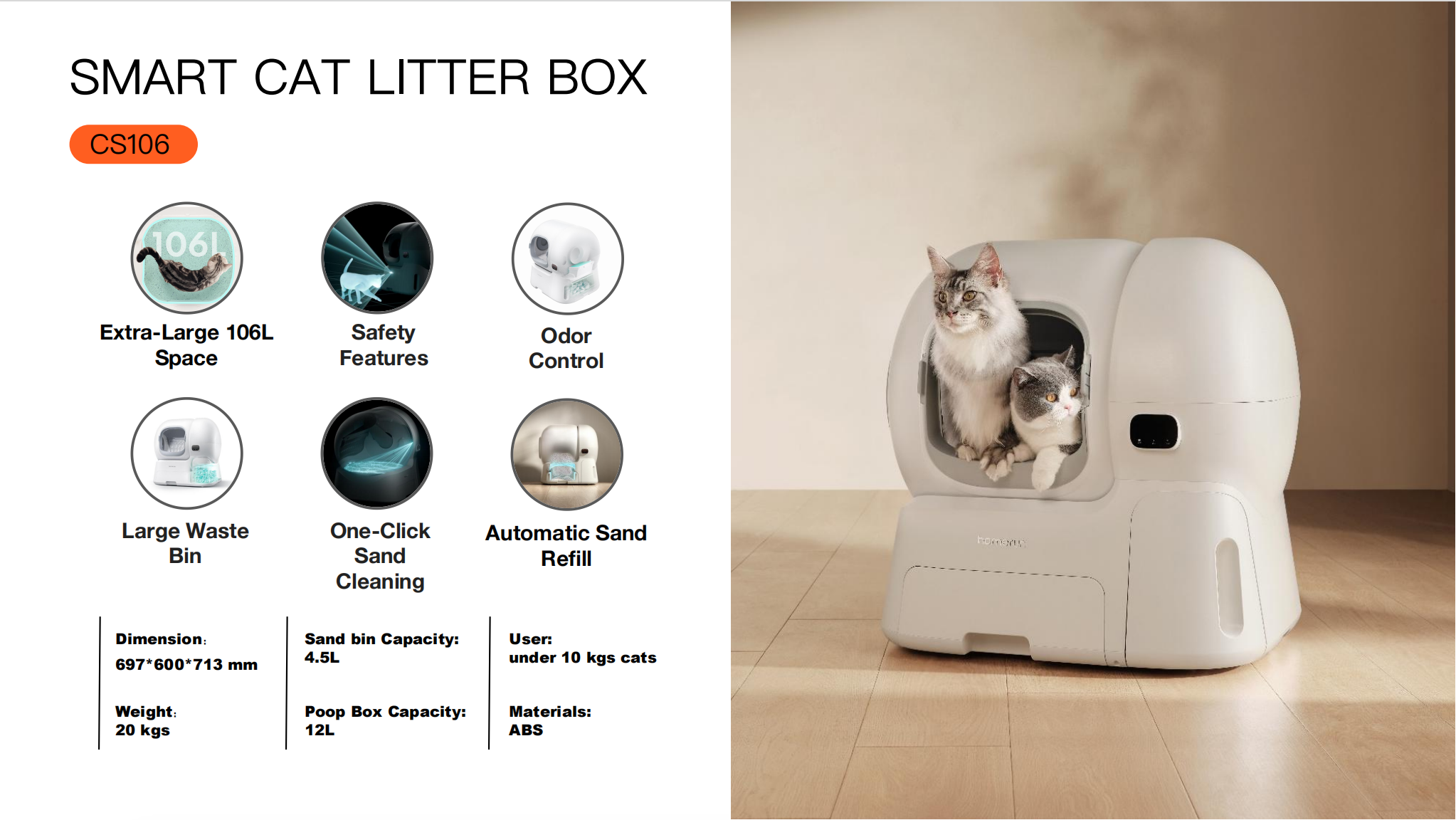
Capacity directly affects cumulative noise exposure. A litter box with a small waste bin cycles more frequently, multiplying total noise events per day. The homerunPET CS106 addresses this through its 12L waste bin capacity, enabling intervals of up to approximately 20 days for single-cat households and approximately 7 days for three-cat homes. Fewer cycles mean fewer potential disturbances during night hours.
Decibel Ranges: What to Expect From Automatic Litter Boxes
Current high-end quiet models operate in the mid-30s to low-40s dB range during cleaning cycles. Independent testing and 2025-2026 comparison reviews establish the following tier framework:
| Noise Tier | Decibel Range | Real-World Equivalent | Bedroom Suitability |
|---|---|---|---|
| Whisper-quiet | 30-38 dB | Library silence to soft fan | Fully bedroom-safe, including light sleepers |
| Bedroom-acceptable | 38-42 dB | Refrigerator hum | Safe for most sleepers; place 2+ meters from bed |
| Conditional | 42-48 dB | Quiet office | Schedule cycles for daytime only |
| Disruptive | 48-60+ dB | Conversation to dishwasher | Not suitable for bedroom placement |
Peak noise versus average noise matters. A unit averaging 36 dB but spiking to 55 dB when clumps drop into the waste bin can still wake a light sleeper. Responsible evaluation considers both sustained motor sound and transient peaks from mechanical events like waste-drop or drum reversal.
Testing distance also affects reported numbers. Measurements taken at one meter are standard, but placing a unit three meters from a bed further reduces perceived loudness by approximately 8-10 dB due to the inverse-square law.
Choosing by Living Situation
Bedroom Placement
Prioritize sub-40 dB average operation combined with night-mode scheduling. Units with app-controlled timers allow owners to restrict automatic cycles to waking hours, eliminating the risk of a 3 AM cleaning event entirely. The homerunPET CS106 supports smart controls and pairs low-noise operation with its large waste capacity, reducing the urgency of cycle timing.
Position the box at maximum practical distance from the bed. Place a rubber anti-vibration mat beneath the unit to decouple motor vibration from hard flooring, which can otherwise amplify perceived sound by 3-5 dB.
Studio Apartments
Open-plan living spaces demand units that combine low noise with maximum time between cycles. Without walls to attenuate sound, every decibel counts. Large-capacity waste bins become essential because they reduce total daily operations. The CS106's 106L internal volume accommodates comfortable cat movement while its 12L collection system means the unit runs less often overall.
Multi-Cat Households
More cats generate waste faster, increasing cycle frequency and total noise exposure. A 12L waste bin supporting approximately 7-day intervals for three cats keeps cycle counts manageable. Smaller bins requiring emptying every 2-3 days force higher operational frequency, compounding noise events across a week.
Light Sleepers
Target the 32-38 dB range and rely on scheduling rather than hoping quiet operation goes unnoticed. Configure automatic modes to run only during daytime hours. Manual triggering before bed ensures the box is clean for overnight use without automated mid-sleep activation.
Noise Reduction Strategies Beyond the Box
Environmental factors influence perceived loudness as much as the hardware itself.
- Rubber mats on hard floors eliminate resonance amplification. Hardwood and tile can add 3-5 dB versus carpet or rubber surfaces.
- Interior wall placement rather than corners avoids acoustic reflection that concentrates sound energy toward sleeping areas.
- Fine-grain litter (tofu-based or small-particle mineral) shifts more quietly during rotation versus coarse clay, which produces audible tumbling and scraping.
- Sleep mode scheduling configured through companion apps prevents unexpected nighttime cycles entirely, making measured decibel levels irrelevant during sleep hours.
- Regular maintenance keeps noise from creeping upward over time. Worn seals, accumulated grit in rotation tracks, and overfull waste bins all increase operational sound.
What Makes Some Models Quieter Than Others
Motor type, chamber design, and rotation mechanism each contribute independently to total noise output. Sealed or semi-enclosed chambers contain sound more effectively than fully open designs, though open-top boxes may dissipate certain frequencies rather than resonating them.
Drum-rotation mechanisms (the type homerunPET CS106 uses for sifting) tend to produce lower sustained noise than rake-based systems, which generate intermittent scraping and clunking. Delayed-start features that wait for the cat to fully exit before engaging also prevent startle responses in the animal.
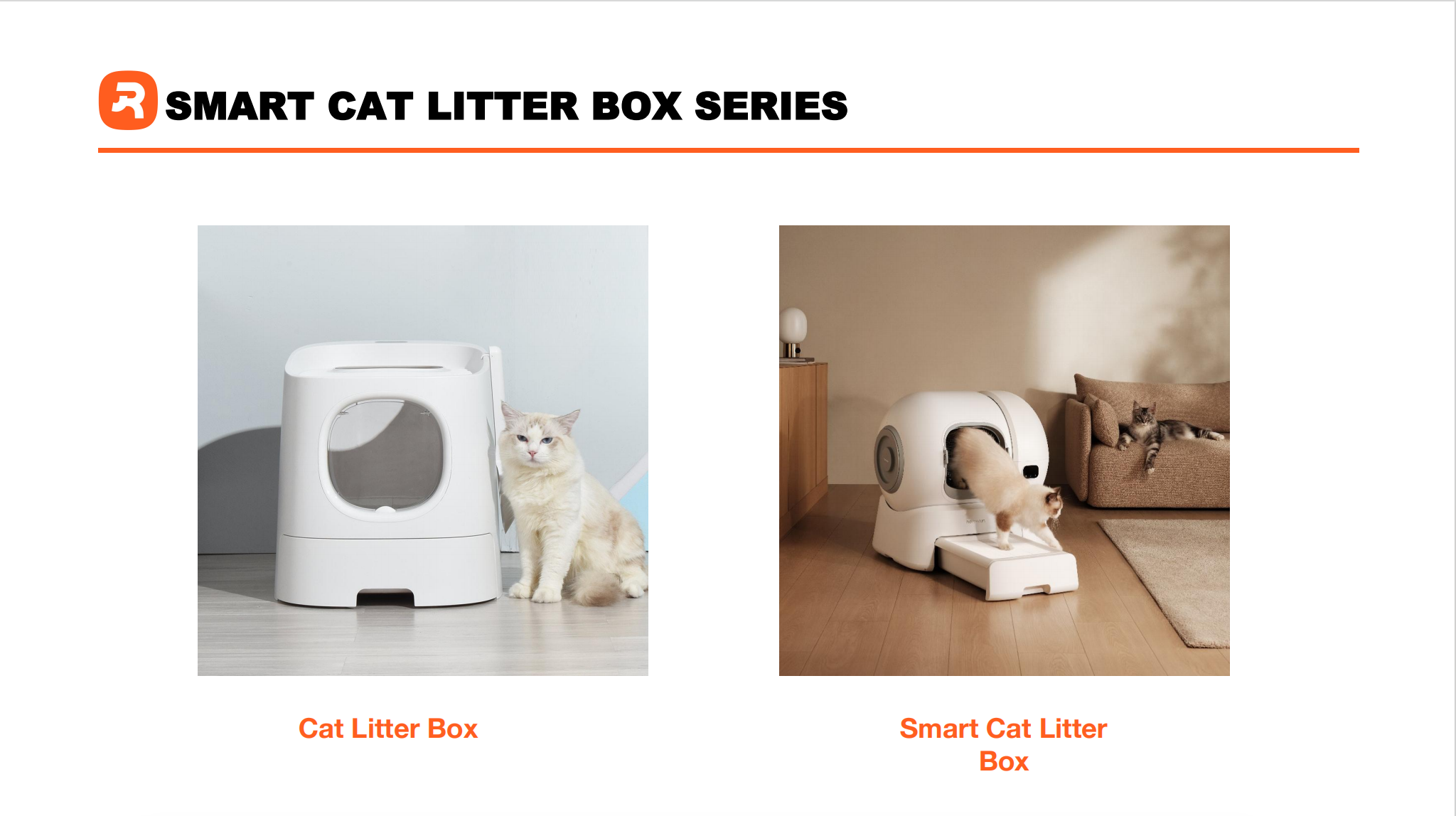
Founded in 2015 with 170+ patents obtained worldwide, homerunPET draws on engineering expertise from medical and consumer electronics backgrounds to integrate these acoustic principles into pet product design at a component level.
FAQ
Q1: What decibel level qualifies a self-cleaning litter box as bedroom-safe?
A1: Industry testing and WHO sleep guidance converge on a practical threshold of below 40 dB average with peaks under 45 dB at one meter distance. The homerunPET CS106 is engineered for low-noise operation within this range, supported by its large 12L waste bin that reduces total cycle frequency.
Q2: How does waste bin capacity affect noise in a bedroom litter box?
A2: Larger waste bins mean fewer cleaning cycles per week, directly reducing total noise events. The homerunPET CS106 offers a 12L waste bin supporting up to approximately 20 days between changes for single-cat homes, resulting in significantly fewer overnight disturbances compared to smaller-capacity alternatives.
Q3: Can I use a self-cleaning litter box in a studio apartment without noise issues?
A3: Yes, provided the unit operates below 40 dB and has scheduling controls. The homerunPET CS106 combines low-noise operation with app-based smart controls, allowing manual scheduling that restricts cycles to hours when ambient sound naturally masks the brief cleaning process.
Q4: Does flooring type affect how loud an automatic litter box sounds?
A4: Hard surfaces like tile and hardwood can amplify vibration noise by 3-5 dB compared to carpet. Placing a rubber anti-vibration mat under the unit effectively decouples the motor from the floor, bringing perceived noise closer to manufacturer-tested levels regardless of surface type.
For a detailed look at the CS106 specifications and smart scheduling features, visit homerunpet.com to evaluate whether its low-noise design and high-capacity system match your bedroom setup requirements.