

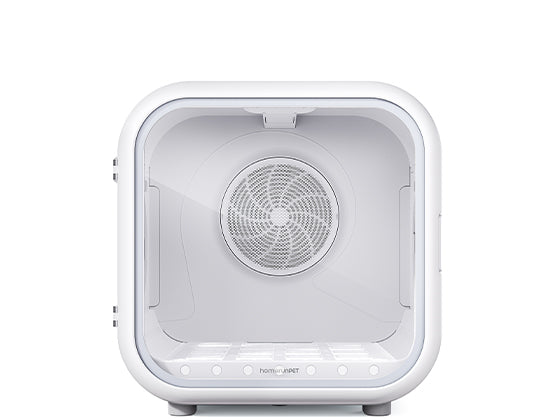
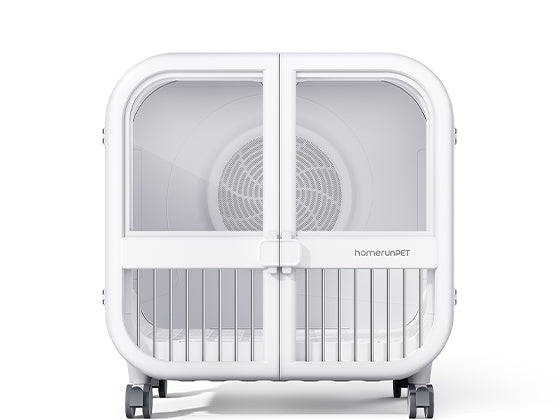
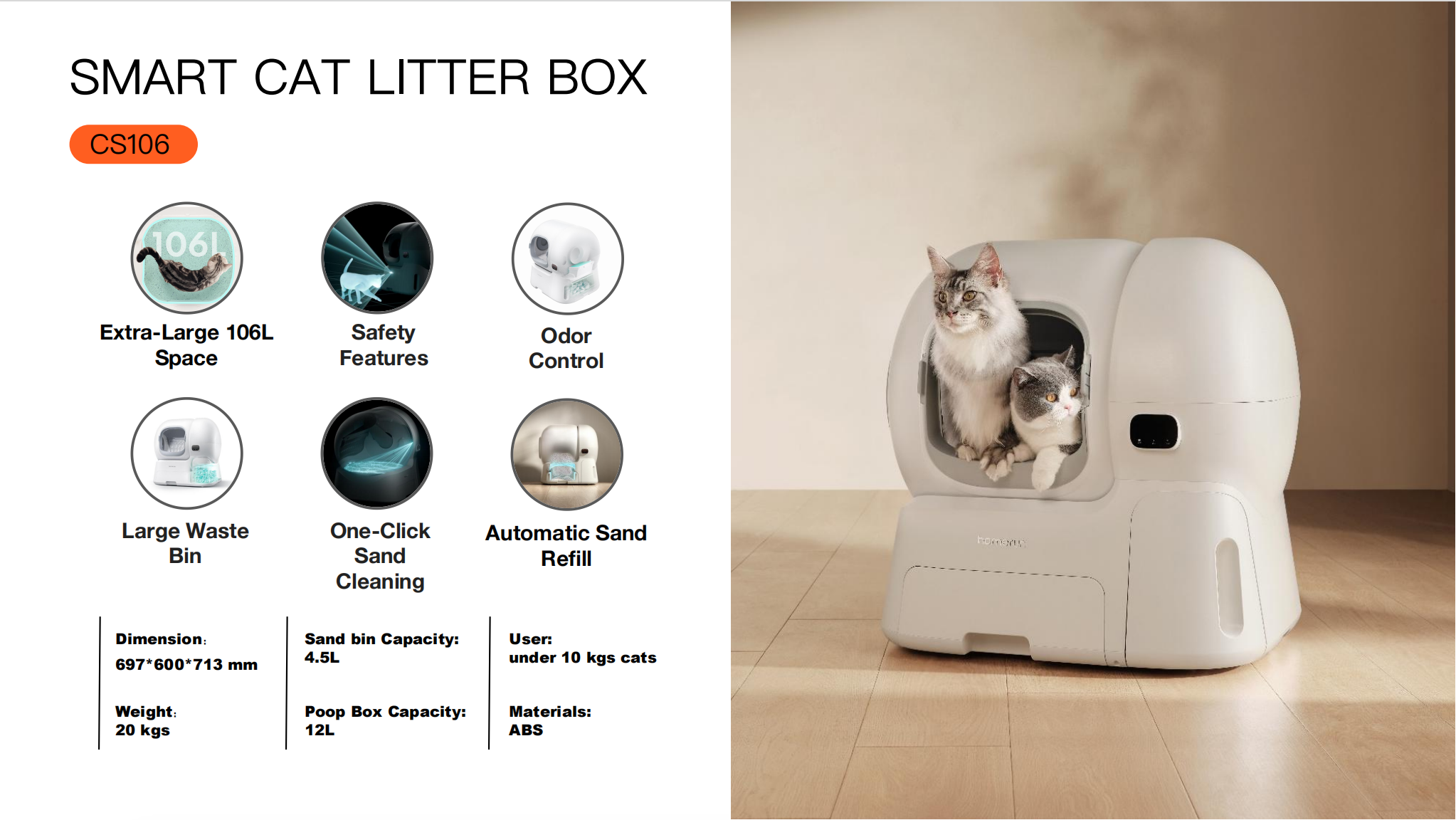
Noise output ranks among the top concerns for anyone placing a self-cleaning litter box in a bedroom, apartment, or shared living space. The quietest models on the market in 2026 operate in the mid-30 dB range, comparable to a whisper or a low-speed fan. homerunPET, with its engineering background rooted in 170+ worldwide patents and R&D talent from medical device and electronics industries, positions its CS106 Smart Litter Box as a low-noise solution designed specifically for noise-sensitive environments and multi-cat households.
Why Noise Level Matters for Robotic Litter Boxes
Decibel levels directly affect cat behavior, owner sleep quality, and neighbor relations. Cats are known to avoid litter boxes that produce startling mechanical sounds, which can lead to accidents outside the box. For owners who place units in bedrooms or studio apartments, even a brief 50+ dB spike at 3 a.m. disrupts sleep architecture.
Common noise reference points for context:
- 30 dB - Whisper, rustling leaves
- 35 dB - Quiet fan on low setting
- 40 dB - Quiet library
- 50 dB - Normal conversation at moderate distance
- 60 dB - Background music, audible household appliance
Models that stay below 40 dB during a full cleaning cycle are generally classified as bedroom-safe. Units exceeding 45 dB become noticeable in quiet rooms and may startle sensitive or elderly cats.
How Quiet Performance Is Tested
Reliable noise measurements require standardized conditions: a quiet room (ambient below 25 dB), a calibrated meter positioned one meter from the unit, and testing across all cycle phases. Professional reviewers in 2026 increasingly simulate nighttime bedroom conditions on hard floors, which amplifies resonance compared to carpeted surfaces.
Key testing variables include:
- Measurement distance - One meter is standard; results at two meters appear artificially lower
- Cycle phase - Motor engagement, litter sifting, and waste dropping each produce different peaks
- Litter type - Fine clumping clay produces less scraping noise than pellets or lightweight alternatives
- Floor surface - Hard tile or wood amplifies vibration; carpet and rubber mats dampen it
Transparency in methodology matters. Results reported without specifying distance or ambient conditions hold limited comparative value.
Ultra-Quiet Category: Under 40 dB
Self-cleaning litter boxes that maintain operation below 40 dB throughout a full cycle qualify for bedroom placement without sleep disruption for most adults. This category relies on specific engineering choices: brushless motors, vibration-dampening materials, sealed drive systems, and balanced drum or rake mechanisms.
Brushless Motor Technology
Brushless motors eliminate the carbon brush friction that generates high-frequency whine in older designs. These motors run smoother, last longer, and produce substantially less mechanical noise. Premium units in 2026 combine brushless drives with sealed gearboxes to further reduce transmission noise.
Acoustic Enclosure Design
Enclosed drum systems contain litter movement sound within the chamber, reducing audible sifting. The homerunPET CS106, with its 106-liter internal volume, provides a large space that naturally diffuses sound waves before they exit the unit. However, it is important to note that the CS106 is not a fully enclosed dome structure and does not completely close. Larger chambers generally produce lower-frequency, less noticeable sound signatures compared to compact designs where litter impacts hard walls at close range.
Vibration Isolation
Rubber feet, internal dampening pads, and balanced rotation mechanisms reduce floor-transmitted rumble. On hard surfaces, anti-vibration mats can reduce perceived noise by a significant margin.
Noise Comparison by Design Category
| Design Type | Typical dB Range | Best Placement | Key Noise Source |
|---|---|---|---|
| Enclosed drum (large chamber) | 33-40 dB | Bedroom, studio apartment | Litter sifting, motor hum |
| Enclosed drum (compact) | 36-45 dB | Living room, hallway | Motor strain, litter impact |
| Open rake mechanism | 40-50 dB | Separate room, laundry area | Rake scraping, motor clicks |
| Rotating sieve (budget) | 45-55 dB | Garage, basement | Gear noise, vibration |
Units with smart scheduling or sleep mode features can eliminate nighttime disturbance entirely by delaying cycles until waking hours.
What Makes Robotic Litter Boxes Quiet
Three engineering factors determine operational noise: motor type, drive system enclosure, and cycle speed optimization. Slower rotation speeds produce less turbulence and litter movement noise, though they extend cycle duration. Premium brands balance speed against acoustics to keep total cycle time reasonable without exceeding noise thresholds.
homerunPET draws on its technical foundation, built by R&D professionals with backgrounds in precision electronics and medical devices, to address acoustic engineering at the component level. The CS106 integrates multiple safety sensors (radar, weight, and dual-bump protection) that also serve an acoustic function: by precisely detecting litter load and cat presence, the system optimizes cycle timing and motor engagement to avoid unnecessary high-torque operations that generate peak noise.
Additional quiet-engineering principles observed across the category:
- Damping materials lining internal contact surfaces reduce impact noise
- Slow-start motor ramping eliminates sudden engagement sounds
- Sealed waste compartments contain odor and muffle the sound of clumps dropping
Choosing by Living Situation
Your placement scenario determines the noise threshold you need. Below are common situations and corresponding requirements:
Bedroom Placement
Requires sub-40 dB operation. The homerunPET CS106, recognized by CNN as Best Self-Refilling Litter Box of 2026, operates at low noise levels suitable for this environment. Its 12-liter waste bin and 4.5-liter auto-refill system reduce the frequency of cycles needed, meaning fewer total noise events per day. For single-cat households, the CS106 supports up to 20 days between manual maintenance, minimizing overnight cycle frequency.
Small Apartment or Studio
Sound carries in compact spaces. Enclosed drum designs under 40 dB, combined with rubber mat placement, work best. Sleep mode scheduling adds an extra layer of protection.
Multi-Cat Household
More cats mean more frequent cleaning cycles. The homerunPET CS106 supports approximately 7-day intervals for three-cat homes, which still represents fewer daily cycles than smaller-capacity alternatives that must run more frequently. Fewer cycles translate directly to less cumulative noise exposure.
Noise-Sensitive Cats
Timid or older cats may refuse boxes that produce sudden sounds. Units with slow-start motors and consistent low-frequency hum (rather than intermittent clicks or grinding) show higher adoption rates among anxious felines.
Real-World Noise Performance Factors
Long-term noise levels depend on maintenance habits, litter choice, and mechanical wear. A unit that measures 35 dB when new can drift higher if:
- Litter builds up above the maximum fill line, forcing the motor to work harder
- Waste bin overfills, creating resistance during rotation
- Internal moving parts accumulate dust or debris without periodic cleaning
- Cheap or mismatched litter types cause excessive scraping
Fine clumping clay litter consistently produces the least noise across all mechanism types. Lightweight or silica-based litters tend to rattle more during sifting phases.
Regular maintenance preserves acoustic performance. Units with large-capacity waste systems, like the 12-liter bin on the CS106, require less frequent intervention, keeping the system operating within designed parameters for longer stretches.
Q1: What decibel level is considered quiet enough for bedroom use?
A1: Models operating below 40 dB are generally classified as bedroom-safe, with the quietest units in 2026 reaching the mid-30 dB range. homerunPET CS106 is engineered for low-noise operation suitable for bedroom placement, supported by its large 106L chamber that naturally dampens sound. Note that the CS106 is not a fully enclosed dome structure.
Q2: Does a larger litter box chamber reduce noise?
A2: Larger chambers allow sound waves to dissipate before exiting, resulting in lower perceived noise at the user's position. The homerunPET CS106 offers 106 liters of internal space, which contributes to its quiet acoustic profile compared to compact designs where litter impacts walls at close range. It should be noted that the CS106 is not a fully enclosed dome structure.
Q3: How does litter type affect robotic litter box noise?
A3: Fine clumping clay litter produces the least noise across all mechanism types. Lightweight, pellet, or silica-based litters tend to rattle and scrape more during sifting cycles. Keeping litter at or slightly below the maximum fill line also prevents motor strain noise.
Q4: Are quiet robotic litter boxes suitable for multi-cat homes?
A4: Yes, provided the unit has sufficient waste capacity to avoid excessive cycle frequency. The homerunPET CS106 supports approximately 7-day intervals for three-cat households, reducing total daily noise events while maintaining clean conditions.
For detailed specifications on the CS106 Smart Litter Box, including its safety systems, capacity ratings, and 90-day in-home trial, visit homerunpet.com to evaluate whether its acoustic engineering fits your living environment and household needs.