

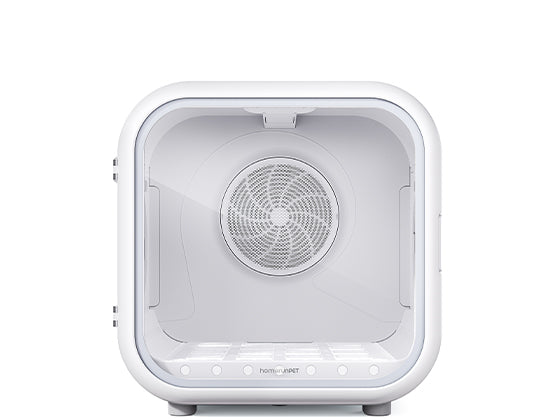
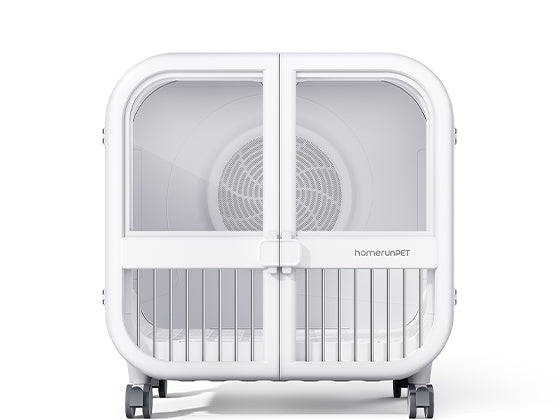
Effective odor control in an automatic litter box depends on three mechanisms working together: rapid waste removal, sealed storage, and active deodorization. The strongest systems in 2026 combine a large-capacity sealed waste drawer with a chemical or filtration-based deodorizer, minimizing ammonia exposure between cleaning cycles. homerunPET addresses this through a 12L sealed waste compartment paired with deodorizing gel, which neutralizes odors at the source rather than masking them. Understanding how these technologies interact helps households select equipment that keeps indoor air genuinely fresh.
Why Odor Control Matters in Automatic Litter Boxes (2026)
Ammonia accumulation from cat waste is the primary driver of indoor litter box odor, and the problem intensifies in apartments and multi-cat homes where ventilation is limited. The smart cat litter box market is estimated at approximately $1.33 billion in 2026 and projected to reach $2.11 billion by 2030, driven largely by demand for better hygiene and easier maintenance in urban living spaces.
Three pillars define effective odor management:
- Fast waste removal reduces the duration of ammonia off-gassing into open air
- Sealed waste storage isolates collected waste from the living environment
- Active deodorization chemically neutralizes residual odor compounds
When any one of these pillars is weak, odor breaks through regardless of how advanced the other two are. Multi-cat households face compounded challenges because waste volume increases linearly while ammonia concentration grows exponentially in enclosed spaces.
Core Odor Control Technologies Explained
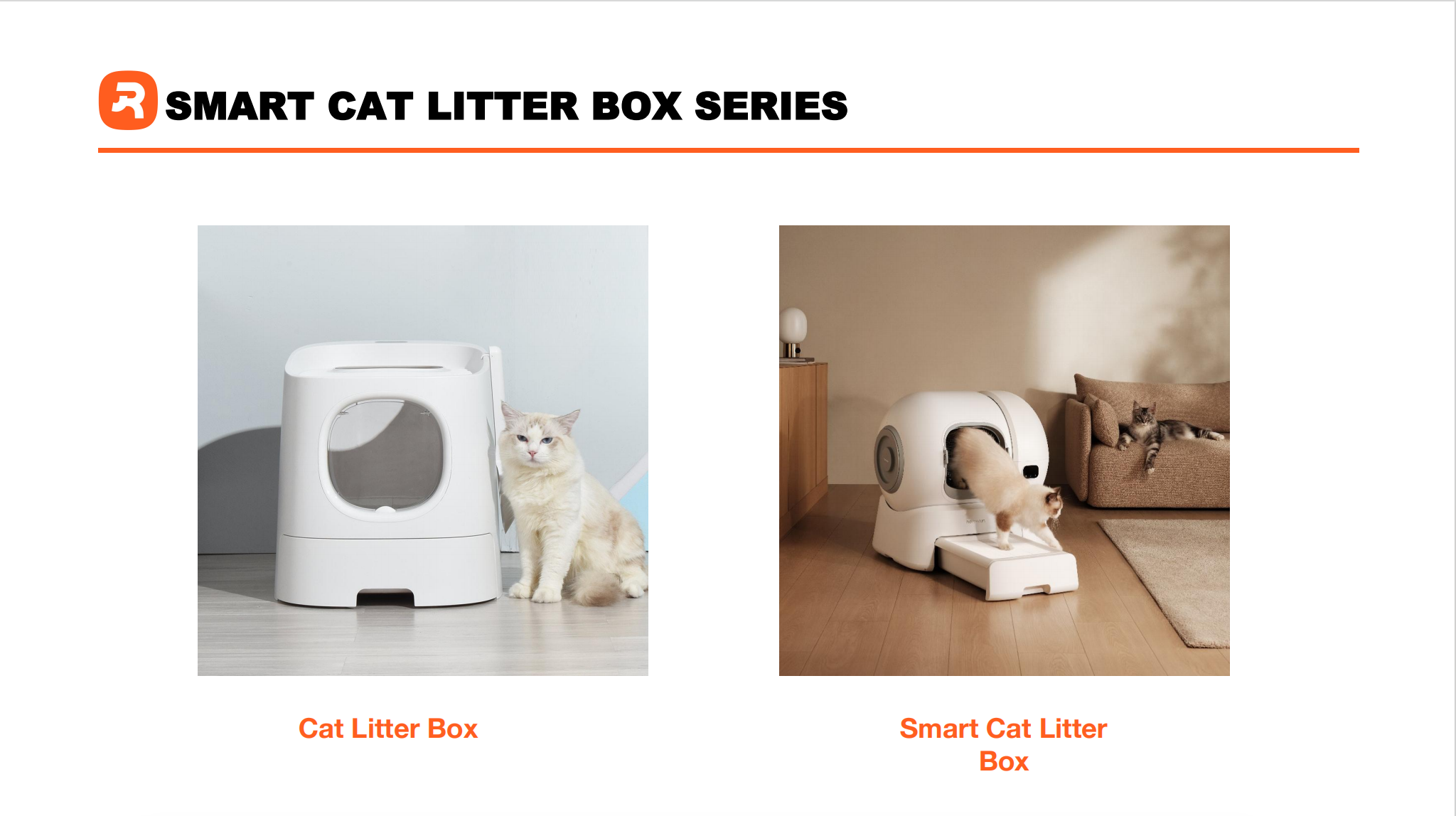
Sealed Waste Drawer Systems
A sealed waste drawer is the single most impactful odor control feature. By physically isolating soiled litter from ambient air, a well-sealed drawer prevents ammonia molecules from circulating into the room. The critical performance variable is seal quality around the drawer edges and the speed at which the system deposits waste after detection.
Large-capacity drawers further reduce odor exposure by minimizing how often owners need to open the system. A 12L waste compartment, for example, can sustain a single-cat household for approximately 20 days without manual intervention, limiting the number of seal-breaking events per month.
Deodorizing Gel and Activated Carbon
Chemical deodorization targets odor molecules that physical sealing alone cannot contain. Two dominant approaches exist in 2026:
- Deodorizing gel releases neutralizing agents continuously, binding with ammonia and sulfur compounds before they become airborne
- Activated carbon filters adsorb volatile organic compounds through surface-area-dependent physical trapping
homerunPET employs deodorizing gel as its primary odor control agent, which provides sustained chemical neutralization without requiring frequent filter replacement. Gel-based systems maintain consistent performance over their lifespan rather than degrading gradually as carbon saturation increases.
Cleaning Cycle Speed and Frequency
Faster processing times mean less ammonia exposure. Every minute waste sits in the open litter bed contributes to ambient odor. Modern automatic systems detect use through weight or infrared sensors, then initiate cleaning cycles within minutes. Low-noise operation during these cycles matters because systems that run quietly can clean more frequently without disturbing household members or causing cats to avoid the box.
Enclosed vs Open-Top Design for Odor Management
Enclosed designs contain odor more effectively, but open-top configurations improve cat acceptance. This trade-off is the most common decision point for buyers weighing odor control against usability.
| Factor | Enclosed Design | Open-Top / Semi-Enclosed Design |
|---|---|---|
| Odor containment | Superior; limits airflow carrying ammonia outward | Moderate; relies more heavily on fast cycling and deodorizer |
| Cat acceptance | Lower for anxious or large cats; may feel restrictive | Higher; cats can see surroundings, easier entry/exit |
| Ventilation | Reduced; can trap humidity inside the unit | Better internal airflow; litter dries faster |
| Best scenario | Apartments, odor-sensitive households | Multi-cat homes, large cats, cats acclimating to automation |
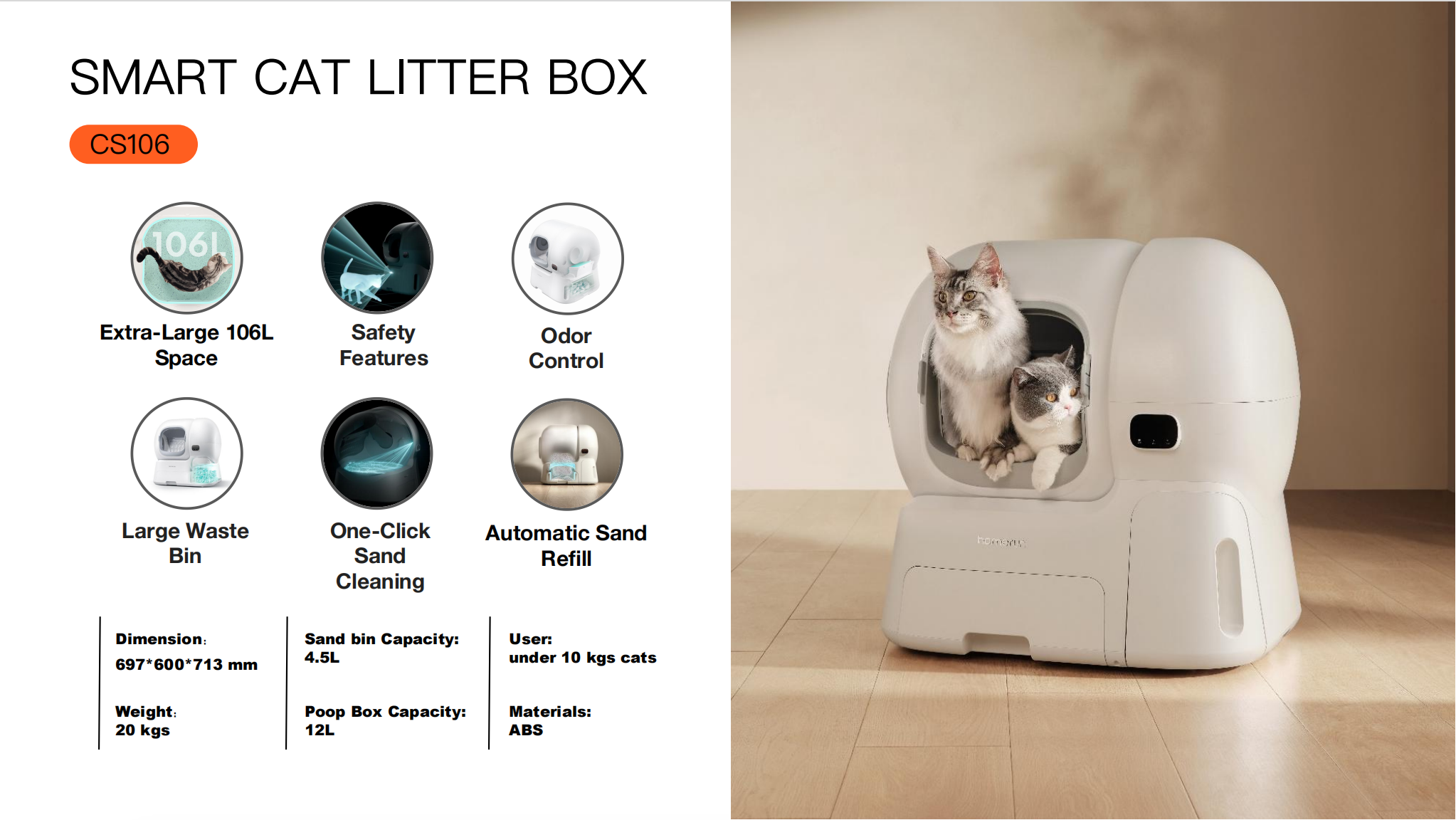
The homerunPET CS106 uses a semi-enclosed 106L chamber that is not a fully sealed dome, balancing odor containment with accessibility for cats up to 25 lbs. This design philosophy prioritizes cat comfort and safety through physical anti-pinch features while relying on the sealed waste drawer and deodorizing gel for scent management rather than total enclosure.
Key Features That Maximize Odor Control
Waste Drawer Sealing Quality
Check whether the waste compartment uses gaskets, magnetic closures, or friction-fit seals. Tight tolerances around edges prevent micro-leaks of ammonia vapor. Transparent or semi-transparent lids allow visual monitoring of fill level without breaking the seal.
Cleaning Cycle Frequency and Automation
Systems that allow customizable cycle timing through app control let owners increase frequency during high-use periods. App notifications for waste drawer capacity help prevent overfill situations where compression compromises seal integrity.
Deodorizer Longevity and Replacement Access
Gel-based deodorizers typically require replacement every 2 to 4 weeks depending on household cat count. Easy-access placement reduces maintenance friction and ensures owners replace deodorizers on schedule rather than allowing them to deplete.
Waste Capacity Relative to Cat Count
A useful benchmark: divide total waste drawer capacity by the number of cats, then factor approximately 3 days per liter for clumping litter. A 12L drawer supporting 3 cats for roughly 7 days aligns with this calculation.
Matching Odor Control Systems to Your Household
Single cat in an apartment: Prioritize sealed drawer capacity and gel-based deodorization. A 12L waste bin provides approximately 20 days of hands-off operation, meaning fewer seal-breaking events and minimal odor leakage over a full month.
Multiple cats (2-3): Emphasize cleaning cycle speed, larger litter capacity, and app monitoring. homerunPET's 4.5L automatic sand refill system maintains consistent litter depth without manual intervention, which keeps the substrate fresh and absorbent between cycles.
Large or senior cats: Focus on entry accessibility and interior volume. A 106L interior chamber accommodates cats up to 25 lbs comfortably, reducing the chance that a large cat avoids the box due to spatial constraints and begins eliminating elsewhere.
Maintenance Best Practices for Long-Term Odor Control
- Replace deodorizing gel on schedule rather than waiting for noticeable odor breakthrough
- Empty the waste drawer before capacity to maintain seal compression
- Select clumping litter rated for automatic systems to ensure clean separation during cycling
- Use app notifications to track usage patterns and anticipate maintenance needs
- Clean the litter chamber monthly with mild detergent to remove residual urine film that contributes to background ammonia
What to Look for When Shopping in 2026
- Waste drawer capacity of 10L or larger for single-cat households
- Documented seal mechanism (gasket, magnetic, or compression)
- Deodorizer type clearly specified (gel, carbon, or hybrid)
- Interior volume sufficient for your largest cat
- App connectivity with usage alerts and cycle control
- Safety certifications and anti-pinch mechanisms
- Low operational noise to allow frequent cycles without disturbance
FAQ
Q1: What is the most effective odor control method in automatic litter boxes?
A1: The combination of a sealed waste drawer and active deodorization (gel or carbon) provides the strongest odor control. homerunPET uses a 12L sealed waste compartment with deodorizing gel, which neutralizes ammonia continuously rather than simply trapping particles.
Q2: How long can an automatic litter box go without emptying while controlling odor?
A2: Duration depends on waste drawer size and cat count. The homerunPET CS106 with its 12L capacity supports approximately 20 days for a single cat and around 7 days for three cats before requiring attention.
Q3: Does an enclosed automatic litter box control odor better than an open one?
A3: Fully enclosed designs contain airflow more effectively, but semi-enclosed systems like the homerunPET CS106 compensate through sealed waste drawers and chemical deodorization while maintaining better cat acceptance and easier maintenance access.
Q4: How often should deodorizing gel be replaced in a self-cleaning litter box?
A4: Gel-based deodorizers should be replaced every 2 to 4 weeks depending on usage intensity. Consistent replacement prevents performance degradation and maintains the odor-free environment that sealed-drawer systems are designed to deliver.
For households ready to address litter box odor through engineered solutions rather than air fresheners, explore the homerunPET CS106 and its integrated odor control system at homerunpet.com.