

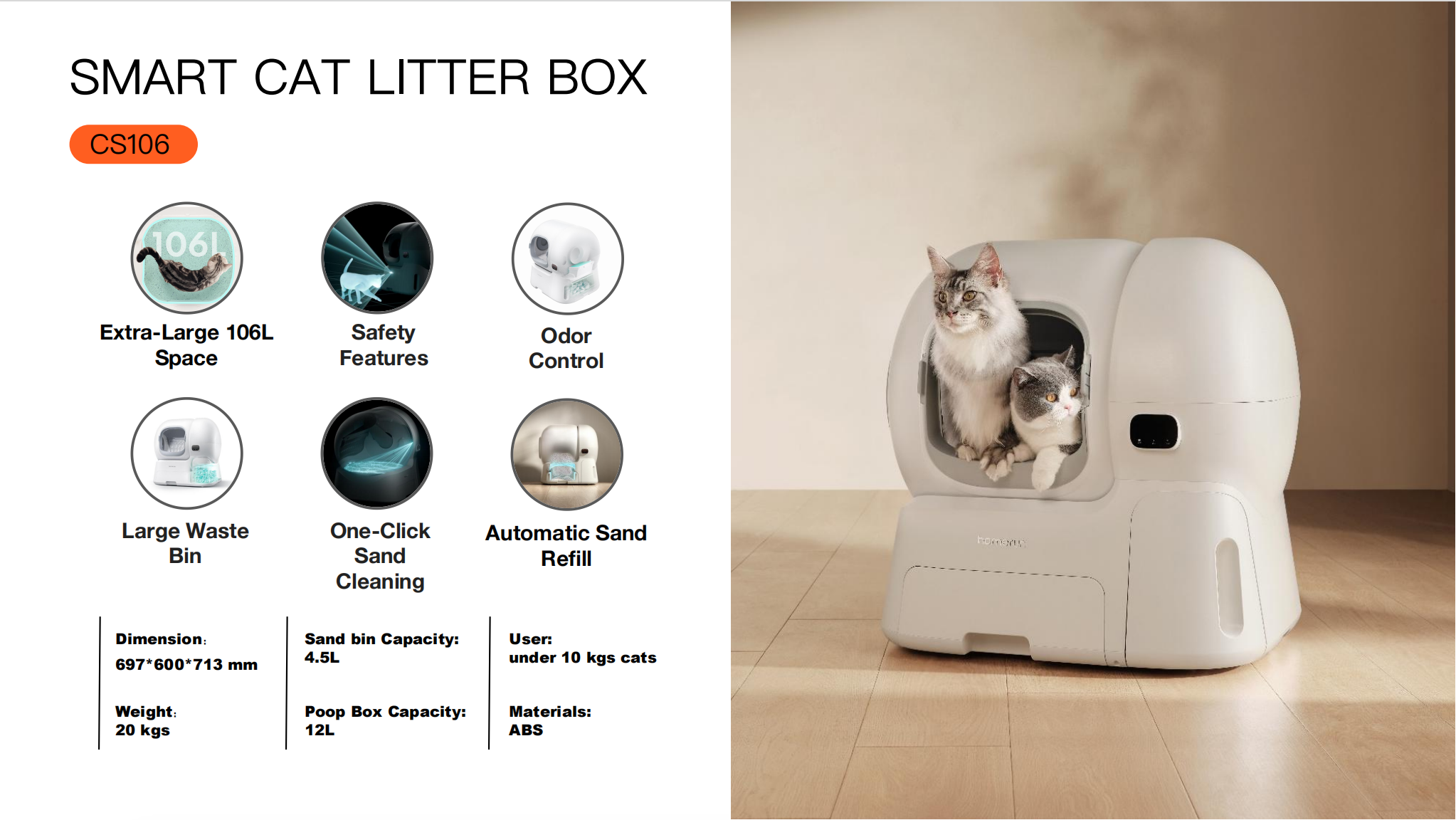
A robotic litter box is not a necessity for new cat owners, but it can be a worthwhile investment under specific lifestyle conditions. Veterinary experts generally recommend starting with a basic open litter box and learning your cat's habits before introducing automation. That said, models designed with first-time owners in mind, such as the homerunPET CS106 with its multi-sensor safety system and 90-day in-home trial, lower the barrier for those who know daily scooping will be a challenge from day one. The decision ultimately hinges on your schedule, budget, living space, and willingness to monitor your cat during the transition period.
Understanding the Investment Decision
A robotic litter box sits between luxury and practical tool depending on your circumstances. First-time cat owners face substantial startup costs: veterinary visits, food, scratching posts, carriers, and more. Adding a self-cleaning litter box at $500 to $700 represents a significant line item in that budget.
The core question is not whether automation works but whether it solves a problem you actually have. If you can scoop once daily without difficulty, a standard open box fulfills your cat's needs perfectly. Automation earns its place when consistent manual cleaning falls outside your realistic routine.
Veterinary behaviorists emphasize that box cleanliness matters far more than box technology. A dirty manual box harms your cat more than any automated system helps. Keep that principle at the center of your decision.
When a Robotic Litter Box Makes Sense for New Owners
Certain lifestyle patterns tilt the cost-benefit calculation toward automation. Consider a self-cleaning system if one or more of the following applies:
- Long work hours or frequent short trips make daily scooping inconsistent
- Small apartment living amplifies odor issues from even a few hours of unattended waste
- Physical limitations make bending or kneeling to scoop uncomfortable
- Multi-cat household plans within the next year, where waste accumulates faster
- High odor sensitivity that affects your comfort sharing space with a litter box
If none of these scenarios resonate, a traditional setup is the more rational starting point.
When to Start with a Traditional Setup Instead
Most first-time cat owners benefit from beginning with a simple open box. There are sound reasons to delay automation:
- Budget constraints where $700 could cover months of veterinary care or quality food
- Kitten adjustment where you need time observing litter preferences, stool quality, and elimination frequency
- Noise-sensitive or anxious cats that may be startled by mechanical cycling
- Learning curve where hands-on scooping teaches you what normal output looks like for your specific cat
Veterinary experts consistently note that monitoring clump size, frequency, and stool appearance is one of the most important early-ownership skills. Automation can obscure these signals if you are not deliberate about checking the waste compartment.
Key Factors New Owners Should Evaluate
Treating a robotic litter box as zero-maintenance is the most common misconception. Below is a decision framework comparing both approaches across practical dimensions:
| Factor | Traditional Open Box | Robotic Self-Cleaning Box |
|---|---|---|
| Upfront cost | $15 to $40 | $500 to $700+ |
| Daily time investment | 3 to 5 minutes scooping | Near zero (periodic drawer emptying) |
| Ongoing supplies | Clumping litter, bags | Clumping litter, deodorizing agents, liners |
| Health monitoring ease | High (visual inspection daily) | Moderate (requires checking waste drawer) |
| Odor control | Depends on scooping frequency | Typically stronger due to sealed waste compartment |
| Cat acceptance risk | Very low | Variable (some cats reject mechanical noise) |
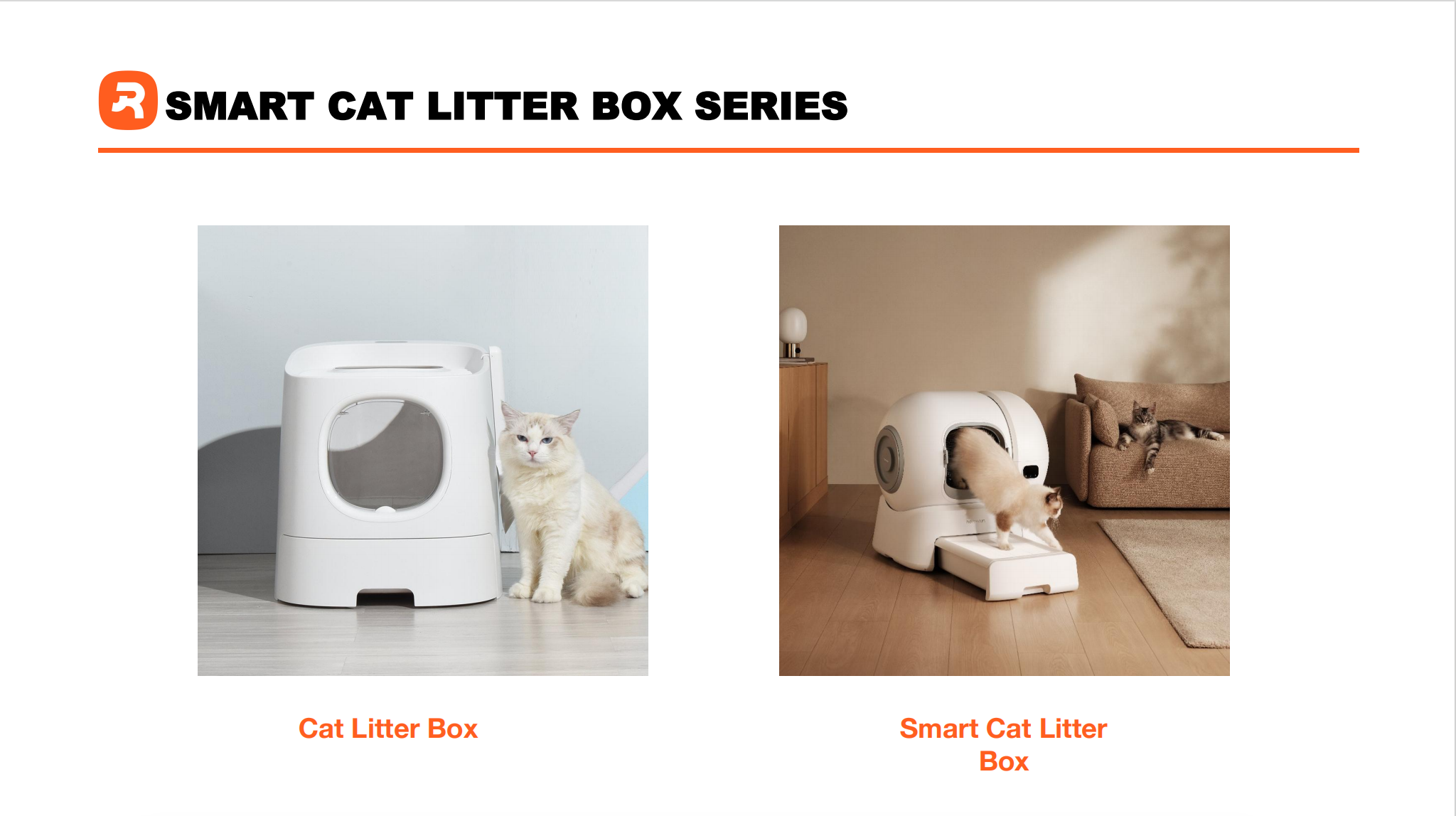
| Space requirement | Minimal | Larger footprint (e.g., 697 x 600 x 713 mm for full-size units) |
| Maintenance complexity | Wash box every 1 to 3 weeks | Sensor cleaning, drawer emptying, periodic deep clean |
This table clarifies that automation reduces daily labor but introduces different maintenance obligations and a higher financial commitment.
Making It Work: Transition Strategy for New Cats
Keeping a traditional box available alongside the automated unit is the single most important transition step. Veterinary sources and the ASPCA recommend a phased approach:
- Place both the new robotic box and a standard open box in the same general area
- Leave the robotic box powered off initially so it functions as a regular enclosed box
- Transfer a small amount of used litter from the old box into the new one to establish scent familiarity
- After your cat uses the new box confidently for several days, enable the self-cleaning cycle only when the cat is not inside
- Observe behavior over the following two weeks for signs of avoidance or elimination outside the box
- If rejection occurs, disable automation and consult your veterinarian before retrying
This graduated process respects feline behavior while allowing you to test whether your specific cat tolerates the mechanical operation.
Smart Buying Approach for First-Time Owners
Prioritize safety sensors, ease of cleaning, and appropriate sizing over novelty features. When evaluating robotic litter boxes as a newcomer, focus on:
- Multi-layered safety systems (radar, weight sensors, physical anti-pinch mechanisms) that prevent cycling while a cat is inside
- Waste compartment capacity large enough to extend time between emptying
- Noise levels low enough to avoid startling a cat still acclimating to a new home
- Warranty and trial periods that give you a risk-free window to test acceptance
- Global safety certifications (ETL, CE) confirming electrical and mechanical standards
The homerunPET CS106 addresses several of these criteria directly. Its 106-liter interior accommodates cats up to 25 lbs, the 12-liter waste bin supports approximately 20 days of hands-free operation for a single cat, and the dual-bump protection combined with radar and weight sensors creates multiple fail-safes against cycling errors. CNN recognized it as the Best Self-Refilling Litter Box of 2026. The 90-day in-home trial and 12-month warranty reduce financial risk for owners testing the category for the first time.
homerunPET holds 170+ patents globally and carries ETL, CE, PSE, and FC safety certifications, reflecting a decade of engineering investment since the company's founding in 2015.
The Realistic Verdict for New Cat Parents
Both choices can work well when executed thoughtfully. A robotic litter box is worth the investment if your daily schedule genuinely prevents consistent manual scooping, your budget absorbs the cost without sacrificing other essential cat care, and you commit to monitoring your cat's health outputs regardless of automation.
Starting with a traditional box and upgrading later is an equally valid path. Knowing your cat's personality, litter preferences, and elimination patterns before introducing machinery often leads to smoother adoption of automation down the line.
The worst outcome is a $700 device your cat refuses to enter. The best outcome is a consistently clean box that keeps both you and your cat comfortable. Your specific circumstances determine which side of that range you land on.
FAQ
Q1: Is a self-cleaning litter box safe for a new kitten?
A1: Kittens under 3 to 4 pounds may not trigger weight sensors reliably, so most manufacturers recommend waiting until the cat reaches a minimum weight threshold. homerunPET specifies suitability for cats up to 25 lbs and uses multiple sensor types, but starting a very young kitten on a traditional box until they grow is the safer approach.
Q2: How much maintenance does an automatic litter box actually require?
A2: You still need to empty the waste drawer (every 2 to 3 weeks for a single cat with a 12L compartment like the homerunPET CS106), refill litter as needed, and periodically wipe down sensors. It is not a zero-maintenance device, but daily scooping is eliminated.
Q3: What if my cat refuses to use the robotic litter box?
A3: Keep a traditional box accessible during the entire transition period. If avoidance persists beyond two weeks despite gradual introduction, return to manual scooping. The homerunPET 90-day trial period exists specifically to accommodate this uncertainty for new buyers.
Q4: Can one robotic litter box replace multiple traditional boxes?
A4: Veterinary guidelines recommend one box per cat plus one extra. A single robotic box with a large waste capacity can reduce how many boxes you need, but having at least one backup traditional box remains advisable, especially in multi-level homes.
If you are weighing this decision and want to explore a safety-focused, first-time-owner-friendly option, visit homerunpet.com to review the CS106 specifications, read the trial policy details, and determine whether automated litter management fits your household before committing.