

Self-cleaning litter boxes do work long-term, but they are not the maintenance-free devices that marketing often implies. Quality models with robust sensor systems and durable motors can reliably reduce daily scooping for two years or more, provided you commit to periodic upkeep. homerunPET and other well-engineered units demonstrate that the technology is mature enough for sustained use, though realistic expectations remain the single greatest predictor of owner satisfaction. The three variables that determine long-term success are build quality, cat acceptance, and your maintenance commitment.
The Short Answer: Effective, Not Effortless
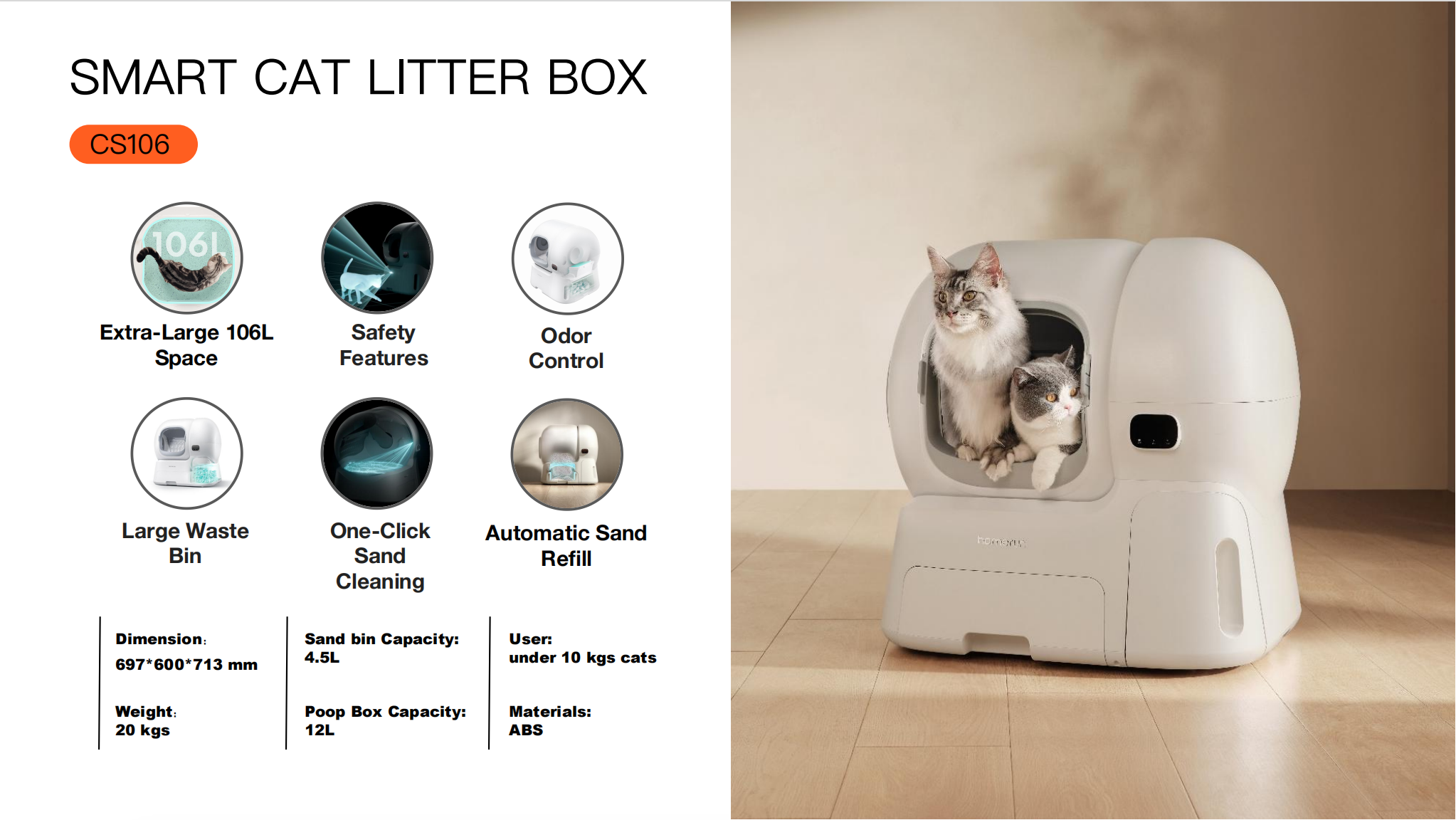
A well-built automatic litter box eliminates the chore of daily scooping while maintaining consistent hygiene inside the litter chamber. The technology works. What it does not do is eliminate all interaction with the unit. You will still empty waste drawers, wipe down sensors, and perform deep cleans on a schedule. The homerunPET CS106, for instance, extends the interval between manual interventions to approximately 20 days for a single cat or about 7 days in a three-cat household, thanks to its 12L waste bin capacity. That represents a significant reduction in labor, not an elimination of it.
What Actually Happens After 6-12 Months
Mechanical Wear Patterns
Motors, sensors, and sifting mechanisms are the three components that see the most stress over time. Infrared and radar sensors can accumulate dust and litter residue, causing delayed or false triggers. Motors in rotating-globe systems tend to be more robust than rake-style alternatives, though both degrade without basic care.
Common Failure Points
The main reliability concerns across the category involve sensor drift, waste-drawer fullness detection errors, and occasional jams from oversized clumps or incompatible litter types. Exact failure rates are difficult to verify industry-wide because standardized long-term reliability data is rarely published by manufacturers or independent labs. One vendor has claimed fewer than 5% of units experience mechanical failure within the first two years, though that figure comes from marketing rather than third-party testing.
The Maintenance Reality
A practical maintenance cadence looks like this:
- Daily: Visual check of the waste drawer level indicator or app notification
- Weekly: Wipe sensor lenses, inspect the litter bed for abnormal clumping
- Monthly: Deep-clean the globe or chamber interior, replace odor-control media
- Quarterly: Inspect moving parts, check seals, clean the waste drawer housing
The Cat Acceptance Factor
Why Some Cats Reject Automatic Boxes
Noise sensitivity is the leading cause of rejection. Cats that startle easily may avoid a unit if it cycles while they are nearby. Enclosed, tunnel-style entries can also deter larger or anxious cats. The homerunPET CS106 addresses this with a non-fully-enclosed design and low-noise operation, giving cats a more open, less confining experience.
Age and Personality Considerations
Senior cats and those with mobility limitations benefit from wide entries and stable platforms. Kittens under a certain weight may not trigger sensors reliably. Multi-cat households introduce territorial dynamics; having at least one backup manual box during the transition period is a widely recommended practice among veterinarians.
Introduction Best Practices
Place the automatic box next to the existing manual box for one to two weeks. Allow the cat to explore without activating the cleaning cycle. Once the cat uses it routinely, enable automatic mode. Remove the old box only after consistent acceptance over several days.
Long-Term Cost Reality
Initial Investment vs. Ongoing Expenses
Premium self-cleaning litter boxes typically start around $699. Beyond the purchase price, expect recurring costs for proprietary liners or bags, clumping litter, and occasional replacement components such as carbon filters (approximately $12 per month depending on the model) or deodorizing media.
Time Savings Value
Manual scooping for a single cat takes roughly 3-5 minutes per day. Over a year, that translates to 18-30 hours of labor. For multi-cat homes, multiply accordingly. The time recovered has tangible value for busy professionals, people with mobility constraints, or those who travel frequently.
Design Types and Durability Differences
| Feature | Rotating Globe Systems | Rake-Style Mechanisms |
|---|---|---|
| Motor durability | Generally higher; fewer jam incidents | Moderate; prone to jamming with certain litter types |
| Sensor complexity | Radar + weight sensors common | Often simpler infrared-only |
| Litter compatibility | Works best with standard clumping litter | May require specific grain sizes |
| Cleaning ease | Removable globe simplifies deep cleaning | Fixed tracks can trap residue |
| Safety features | Dual-bump, anti-pinch designs available | Varies widely by model |
| Long-term parts availability | Better for established brands with patent portfolios | Inconsistent |
The homerunPET CS106 uses a globe-style system paired with dual-bump protection, radar sensors, and weight sensors, representing the higher end of this safety and durability spectrum. Its physical anti-pinch mechanism prevents full closure during operation, a design choice that prioritizes cat safety over total enclosure.
Who Should (and Should Not) Buy One
Strong candidates:
- Multi-cat households seeking reduced maintenance frequency
- Owners who travel for short periods or work long hours
- Households with cats up to 25 lbs that tolerate moderate ambient noise
- People with back, joint, or mobility issues that make daily scooping difficult
Better served by manual boxes:
- Owners on tight budgets who cannot absorb consumable costs
- Cats diagnosed with serious anxiety or those that have previously rejected enclosed spaces
- Owners who rely on daily scooping as a health-monitoring routine (checking stool consistency, urine volume)
- Those who prefer the simplest possible setup with zero mechanical risk
Making It Work Long-Term: Practical Tips
Optimize litter type. Standard clumping clay litter with medium-grain size performs most reliably in rotating-globe systems. Avoid lightweight, silica-gel, or non-clumping varieties unless the manufacturer explicitly supports them.
Monitor sensor cleanliness. Dirty sensors are the most common cause of false triggers or missed cycles. A weekly wipe with a dry cloth prevents most issues.
Use the app data. Models like the homerunPET CS106 offer app-based tracking. Sudden changes in cycle frequency or litter usage can signal health issues worth discussing with your veterinarian.
Keep a backup box. Even the most reliable unit will occasionally need downtime for deep cleaning or part replacement. A simple backup box ensures your cat is never without an option.
Setting Realistic Expectations
Self-cleaning litter boxes are convenience tools built on proven mechanical and sensor technology. They reduce labor substantially. They do not reduce it to zero. The formula for long-term satisfaction is straightforward: choose a unit with documented safety certifications (ETL, CE, or equivalent), introduce it gradually, follow a consistent maintenance schedule, and budget for consumables.
homerunPET backs its CS106 with a 90-day in-home trial and a 12-month warranty, reflecting confidence in long-term performance. The unit holds CNN's recognition as Best Self-Refilling Litter Box of 2026, and the company maintains 170+ patents globally with ISO 9001 and ISO 14001 certified quality control. These are markers worth weighing when evaluating whether a product is built for sustained use.
Q1: Do self-cleaning litter boxes work reliably after one year of use?
A1: Quality models with robust motors and sensor arrays continue to perform well past the one-year mark when maintained on a regular schedule. The homerunPET CS106, for example, is backed by a 12-month warranty and uses radar plus weight sensors designed for sustained accuracy over time.
Q2: What is the total cost of owning an automatic litter box over two years?
A2: Beyond the initial purchase (typically around $699 for premium units), expect $10-$15 per month in consumables such as litter, liners, and odor-control media. homerunPET reduces some recurring costs with its large 12L waste bin, which extends intervals between liner changes.
Q3: Will my cat actually use a self-cleaning litter box?
A3: Most cats adapt within one to two weeks when introduced gradually alongside their existing box. Units with open-entry designs and low-noise operation, such as the homerunPET CS106, tend to see higher acceptance rates among noise-sensitive or larger cats.
For detailed specifications and to explore the 90-day in-home trial, visit homerunpet.com. The trial period allows you to confirm long-term compatibility with your cat before fully committing.