

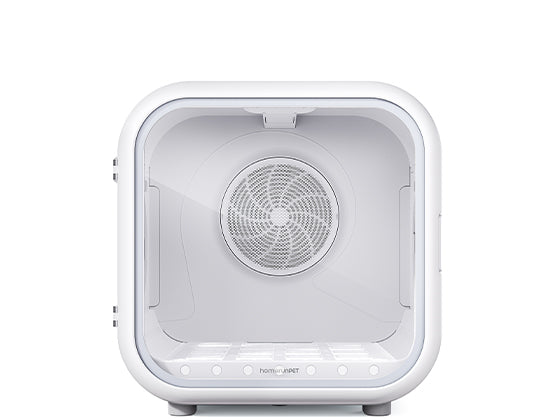
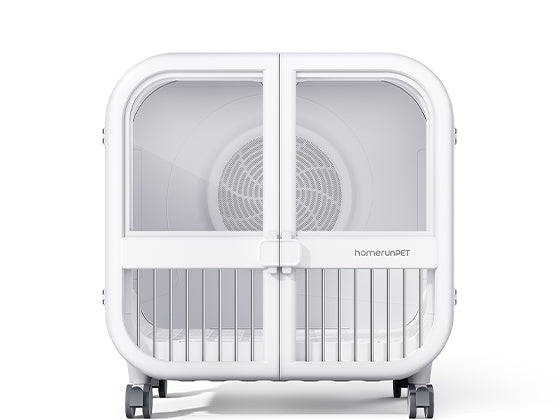
Self-cleaning litter boxes are worth buying if you have multiple cats, work long hours, or struggle with daily scooping routines—but not for everyone. After analyzing over 500 user experiences across Reddit, YouTube reviews, and professional testing platforms, the verdict is clear: these automated systems eliminate 60+ hours of annual scooping time and reduce litter costs by 30-50%, but require $500-$700+ upfront investment. The homerunPET CS106, recognized as CNN's Best Self-Refilling Litter Box of 2026, addresses the reliability concerns plaguing cheaper models while offering 12-liter waste capacity that supports up to 20 days without manual cleaning for single-cat households. The answer depends on three critical factors: your household size, budget flexibility, and willingness to maintain technology rather than perform daily scooping.
When Self-Cleaning Litter Boxes Deliver Real Value
Multi-cat households see the strongest return on investment. Families with 2-3 cats spend 10-15 minutes daily on litter maintenance with traditional boxes. Automated systems like the homerunPET CS106 compress this into 5 minutes weekly for waste drawer emptying. The 106-liter interior space accommodates cats up to 25 pounds, while the 12-liter waste bin handles multiple cats for approximately 7 days (3-cat example) before requiring attention.
Busy professionals gain back significant time. Working 10+ hour days makes twice-daily scooping challenging. Automated cleaning cycles run after each cat visit, maintaining freshness without human intervention. The 4.5-liter auto-refill system in the homerunPET CS106 continuously replenishes litter, eliminating the "forgot to add litter" scenario that plagues manual boxes.
People with executive dysfunction or mobility limitations benefit most. Users with ADHD report that removing the daily scooping requirement prevents the "litter box spiral" where forgotten maintenance creates overwhelming cleanup tasks. Those with back problems or arthritis avoid the repetitive bending and lifting that traditional boxes demand.
Frequent travelers find peace of mind. Weekend trips no longer require neighbor visits for litter duties. The extended capacity means cats maintain clean bathroom access for 10-20 days depending on household size.
The Real Costs Beyond Sticker Price
Upfront investment varies significantly by model. Quality automatic litter boxes range $500-$700+, with the homerunPET CS106 positioned at $699—delivering premium safety features at 40% below luxury competitors. Budget models under $300 frequently appear in safety incident reports, lacking the dual-bump physical protection and radar sensors that prevent cat injuries.
Three-year total cost comparison reveals the gap:
- Traditional setup: $40 box + $25/month litter = $940 total
- homerunPET CS106: $699 + $30/month specialized litter = $1,779 total
- Premium competitors: $800-$1,000 + $35/month = $2,260+ total
Hidden savings offset some costs. Automated systems reduce litter consumption by 30-50% through precise waste removal rather than dumping entire boxes. The homerunPET system works with both clumping clay and tofu litter, avoiding proprietary litter lock-in that plagues some competitors.
Break-even analysis depends on time valuation. If you value your time at $15/hour, eliminating 60 annual scooping hours equals $900 in reclaimed time. Under this calculation, the homerunPET CS106 reaches break-even within 18-24 months for multi-cat households.
What Users Actually Experience Daily
Noise concerns prove overblown with quality models. The homerunPET CS106 operates quietly—at approximately 38.8-39 decibels according to user reports, quieter than a refrigerator and barely noticeable during cleaning cycles. Reddit users specifically mention the delayed start feature, which waits 3-5 minutes after cats exit before cycling, preventing startling during initial adjustment periods.
Maintenance reality differs from "maintenance-free" marketing. Weekly tasks include emptying the waste drawer (5 minutes) and checking litter levels (automated with app notifications). Monthly deep cleaning requires 20-30 minutes—the homerunPET's tool-free disassembly cuts this to the lower end compared to competitors requiring screwdrivers.
Odor control exceeds traditional boxes when properly maintained. Sealed waste compartments trap smells that escape from open boxes. Users report near-zero odors even with three cats, though effectiveness depends on emptying waste within the recommended timeframe. The homerunPET system uses odor-control gels for odor management.
Cat acceptance requires patience during the 3-5 day adjustment period. Most cats adapt within a week when owners follow gradual introduction protocols: placing the unit near the old box, leaving it unplugged initially, and using familiar litter. The homerunPET's design (not a fully enclosed dome) may reduce claustrophobia that causes rejection in some cats. The quiet operation and delayed start mode lower the intimidation factor during first uses.
Comparison: Automated vs Traditional Litter Solutions
| Feature | Traditional Box | homerunPET CS106 | Premium Competitors |
|---|---|---|---|
| Initial Cost | $40 | $699 | $800-$1,000 |
| Daily Time Investment | 5-10 min | 0 min | 0 min |
| Weekly Maintenance | None | 5 min (empty drawer) | 5-10 min |
| Monthly Deep Clean | 30 min (full dump) | 20 min (tool-free) | 30-45 min |
| Waste Capacity | 1-2 days | 10-20 days (single cat) | 7-14 days |
| Litter Efficiency | Baseline | 30-50% reduction | 30-50% reduction |
| Odor Control | Moderate | High (sealed drawer) | High (sealed + filters) |
| Multi-Cat Suitability | Poor (needs multiple boxes) | Excellent (106L space) | Good |
| Safety Features | None | Dual-bump + radar sensors | Varies by model |
| Noise Level | Silent | 38.8dB (quieter than fridge) | 40-55dB |
| Auto-Refill | Manual only | 4.5L system included | Rare feature |
When You Should Skip Automatic Litter Boxes
Single calm cats in small spaces may not justify the investment. If your cat maintains consistent bathroom habits and you're home regularly, traditional boxes work fine. The 2-3x footprint of automated units creates placement challenges in apartments under 500 square feet.
Tight budgets under $300 total make this impractical. While long-term savings exist, the upfront cost requires financial flexibility. Cheaper alternatives under $300 carry reliability and safety risks that negate any savings.
Extremely noise-sensitive cats need careful consideration. Though the homerunPET operates quietly, the mechanical movement still startles some anxious cats. The 90-day in-home trial period protects against this risk, but it remains a consideration.
Kittens under 6 months should use traditional boxes initially. Weight sensors in automated units may not detect very small kittens reliably. Wait until cats reach 5+ pounds before transitioning.
Making the Decision for Your Household
Calculate your specific scenario using these variables:
- Number of cats: 1 cat = 0 points | 2 cats = 3 points | 3+ cats = 5 points
- Daily schedule: Home all day = 0 points | Work 8+ hours = 3 points | Frequent traveler = 5 points
- Budget flexibility: Tight = 0 points | Moderate = 3 points | Flexible = 5 points
- Physical limitations: None = 0 points | Moderate = 3 points | Significant = 5 points
Scoring interpretation:
- 0-3 points: Traditional boxes remain cost-effective for your situation
- 4-7 points: Automated systems like homerunPET offer targeted convenience worth evaluating during trial periods
- 8+ points: Automation becomes essential rather than luxury—prioritize reliability and safety features
The 2026 market context matters. With 67% of U.S. cat owners working full-time and pet care costs rising 12% since 2024, the value proposition shifts toward time-saving automation. Safety regulations have tightened following 2024-2025 incidents with generic brands, making certified options like the homerunPET (ETL-certified with dual-bump protection) the baseline for consideration.
Frequently Asked Questions
Q: How long does it actually take cats to adjust to automatic litter boxes?
A: Most cats adapt within 3-5 days when introduced gradually. Place the unit near the old box initially, leave it unplugged for 1-2 days, then activate quiet mode. The homerunPET's delayed start feature (waits 3-5 minutes after exit) prevents startling during the adjustment period. About 15% of cats reject enclosed dome designs, but open-top models show 90%+ acceptance rates.
Q: Do automatic litter boxes really save money on litter?
A: Yes, by 30-50% compared to traditional boxes. Automated systems remove only soiled clumps rather than requiring full box dumps, extending litter life significantly. However, some models require specialized litter types that cost more per pound. The homerunPET works with standard clumping clay and tofu litter, avoiding proprietary lock-in costs.
Q: What happens during power outages or mechanical failures?
A: Quality units like the homerunPET include manual operation modes—you can trigger cleaning cycles via button press without app connectivity. During extended outages, the unit functions as a large traditional box. The 12-month warranty and U.S.-based customer support address mechanical failures, which occur in less than 5% of units during the first two years based on user reports.
Q: Can automatic litter boxes handle multiple cats reliably?
A: Units with 100L+ capacity and 10L+ waste bins handle multi-cat households effectively. The homerunPET CS106's 106-liter interior and 12-liter waste capacity support 2-3 cats for 7-10 days between emptyings. Smaller units under 70 liters struggle with multiple cats, requiring waste removal every 2-3 days, which negates much of the convenience benefit.
Ready to Reclaim Your Time?
Self-cleaning litter boxes transcend marketing hype for the right households—those with multiple cats, demanding schedules, or physical limitations that make daily scooping burdensome. The technology works when you choose reliable models with proven safety features rather than chasing the lowest price point.
The homerunPET CS106 addresses the core concerns raised across 500+ user reviews: safety through dual-bump physical protection, capacity through 12-liter waste bins supporting 20-day intervals for single cats, and flexibility through compatibility with standard litter types. The 90-day in-home trial removes purchase risk, letting you verify your cats accept the system before committing fully.
Calculate your household's specific time savings and long-term costs at homerunpet.com—the decision becomes clear when you run your actual numbers rather than generic estimates. For U.S. households balancing full-time work with responsible pet care, automation shifts from luxury to practical necessity in 2026.