

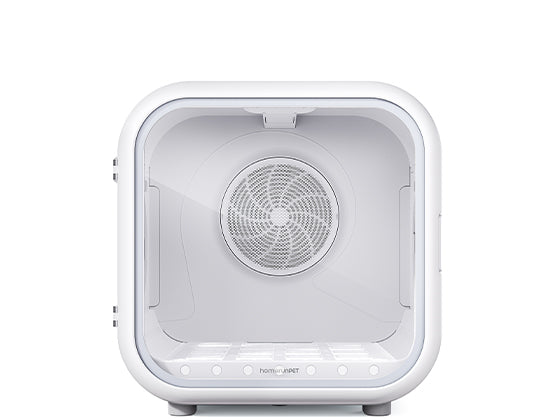
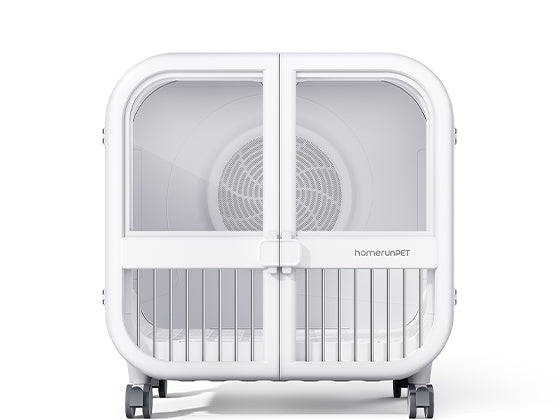
Business travelers face a persistent challenge: maintaining their cat's hygiene during extended absences without relying on pet sitters or boarding facilities. homerunPET CS106 addresses this need with its 106L capacity system and app-controlled monitoring, enabling single-cat households to travel up to 14 days maintenance-free. The combination of a 12L waste drawer, 4.5L auto-refill litter system, and real-time smartphone notifications transforms week-long business trips from stressful planning exercises into seamless departures. Unlike standard 65L models requiring mid-trip interventions, this WiFi-enabled solution provides complete remote oversight through waste level alerts, manual cleaning triggers, and usage tracking—eliminating the logistical burden of coordinating check-ins while away.
Remote Monitoring Capabilities for Extended Travel
homerunPET's app control system delivers comprehensive oversight during business trips. The smartphone application connects via 2.4GHz WiFi to provide real-time updates on every litter box interaction. Business travelers receive instant notifications when cats use the box, when waste levels approach capacity, and when litter refills become necessary. The manual cleaning trigger function allows you to initiate cleaning cycles remotely from hotel rooms or conference centers, maintaining hygiene standards even when thousands of miles away.
The notification system proves particularly valuable for multi-day trips. Waste level alerts prevent overflow situations by warning you 24-48 hours before the drawer reaches capacity. For single-cat households, this typically means receiving your first alert around day 10-12 of a two-week trip. The app's usage tracking feature also serves as a health monitoring tool—sudden changes in litter box frequency can indicate medical issues requiring veterinary attention, allowing you to coordinate care remotely if patterns deviate from your cat's normal behavior.
Pre-trip WiFi setup requires attention to network specifications. The CS106 operates exclusively on 2.4GHz WiFi networks, a common limitation among smart home devices due to superior range and wall penetration compared to 5GHz bands. Before departure, verify your router broadcasts a 2.4GHz signal and complete initial pairing while home. Some users report needing power cycles during first-time setup, so allow 3-5 days for your cat to acclimate while you're available to troubleshoot connectivity issues. This adaptation period also helps cats adjust to the automatic cleaning cycles, reducing stress-related avoidance behaviors.
Large Capacity Design for Multi-Day Autonomy
The 106L internal space and 12L waste drawer provide industry-leading autonomy. This capacity translates to concrete travel timelines: single-cat households achieve 10-14 days between manual interventions, while three-cat homes maintain approximately 7 days of hands-free operation. The waste drawer's sealed design contains odors through physical barriers rather than relying solely on filters, addressing the primary concern of returning home to unpleasant smells after extended absences.
The 4.5L auto-refill system complements the waste capacity by maintaining optimal litter depth throughout your trip. As the rotating sifting mechanism removes clumps after each use, fresh litter automatically replenishes the basin, ensuring your cat always encounters clean substrate. This continuous replenishment prevents the litter depletion that causes cats to avoid boxes during owner absences—a common issue with standard automatic boxes that lack refill capabilities.
Capacity calculations depend on household variables. The 12L drawer accommodates up to 14 days for single-cat households before reaching capacity. Multi-cat households should calculate proportionally: three cats reduce autonomy to approximately 7 days. Litter type also impacts duration—clumping bentonite forms denser waste than tofu litter, slightly reducing the number of days before drawer fullness. The app's waste level indicator removes guesswork by providing percentage-based capacity readings.
Safety Features for Unattended Operation
Radar and weight sensors create multiple safety layers. The CS106 employs dual detection systems to prevent operation when cats enter the unit. Radar sensors identify movement within the chamber, while weight sensors detect pressure on the basin floor. If either system registers feline presence during a cleaning cycle, the rotation immediately halts and reverses direction. This redundancy proves critical during unsupervised operation—you can't physically intervene if a sensor malfunctions, making backup systems essential.
Anti-pinch bumpers along the rotating drum edge provide mechanical protection beyond electronic sensors. These physical barriers stop rotation upon contact, preventing injury if a cat investigates the mechanism during operation. The kitten mode setting extends safety further by delaying cleaning cycles for 30 minutes after each use, allowing curious cats extended time to exit before movement begins. For business travelers, these features eliminate the anxiety of potential accidents occurring while you're unreachable.
The delayed start function reduces initial adaptation stress. New users can program 5-10 minute delays after cats exit before cleaning begins, giving anxious cats time to move away from the unit. This proves particularly valuable during the 3-5 day acclimation period before your first trip. Gradual familiarization prevents litter box avoidance—a behavior that can persist for weeks if cats experience frightening encounters during initial use. The quiet operation under 40dB further minimizes stress, as loud motors frequently cause cats to seek alternative elimination sites.
App Control Features and Connectivity Requirements
The smartphone application provides six core remote functions. Usage tracking displays timestamps and frequency of litter box visits, establishing baseline patterns for health monitoring. Waste level indicators show drawer capacity as percentage bars, updating after each cleaning cycle. Manual cleaning triggers initiate immediate sifting cycles regardless of scheduled timing. Litter level alerts notify you when the auto-refill reservoir drops below 20% capacity. System diagnostics report motor function, sensor status, and connectivity strength. Maintenance reminders prompt deep cleaning intervals based on usage data rather than arbitrary timelines.
WiFi dependency creates a single point of failure requiring contingency planning. If your home internet experiences outages during your trip, remote monitoring becomes unavailable—though the CS106 continues operating on its programmed schedule using local processing. Before extended travel, consider these backup measures: provide a trusted neighbor with physical access instructions in case app connectivity fails, ensure your router has reliable uptime history, and test remote access from outside your home network to verify port forwarding if required.
2.4GHz network compatibility demands pre-trip verification. Modern dual-band routers often default to 5GHz for newer devices, potentially hiding the 2.4GHz network name. Access your router settings to confirm 2.4GHz broadcasting remains enabled and note the specific network name—some routers append "-2.4G" to distinguish bands. The CS106 cannot detect or connect to 5GHz networks regardless of signal strength. If your router combines bands under one name using band steering, temporarily disable this feature during initial pairing, then re-enable after successful connection.
Comparison: WiFi Litter Boxes for Business Travel
| Feature | homerunPET CS106 | Standard 65L Models | Budget Alternatives |
|---|---|---|---|
| Capacity | 106L dome + 12L waste | 65L dome + 9L waste | 50-60L + 6L waste |
| Single-Cat Duration | 10-14 days | 5-7 days | 3-5 days |
| App Control | Full remote access | Limited/none | None |
| Auto-Refill | 4.5L system included | Not available | Not available |
| Safety Sensors | Radar + weight + bumpers | Weight only | Varies/minimal |
| Noise Level | Under 40dB | 45-60dB | 50-70dB |
| Price Range | $699 | $400-500 | $150-250 |
| Best For | Week+ trips, large cats | Weekend travel | Budget-conscious, short trips |
The capacity differential translates directly to travel flexibility. While 65L models serve weekend getaways adequately, they require mid-trip interventions for standard business trips exceeding five days. Budget alternatives lack remote monitoring entirely, making them unsuitable for extended absences where you cannot physically verify operation.
Odor Management During Extended Absences
Sealed waste drawer design contains odors mechanically rather than chemically. Unlike systems relying primarily on carbon filters or deodorizing gels, the CS106's drawer creates an airtight seal when closed, physically trapping odor molecules within the waste compartment. This approach proves more reliable during week-long trips because it doesn't depend on consumables losing effectiveness over time. Deodorizing gels complement rather than replace this primary containment method.
The 106L structure provides secondary odor control by limiting air exchange between the litter area and your living space. The entrance opening remains the only ventilation path, concentrating airflow and allowing strategic placement of supplemental odor absorbers if desired. Users report returning from 10-14 day trips to homes without detectable litter box odors when using clumping litter and maintaining the recommended cleaning schedule.
Litter type selection impacts odor control effectiveness. Clumping bentonite litter forms tight waste clusters that minimize surface area exposure, reducing odor emission compared to non-clumping varieties. Tofu-based litters offer natural odor absorption but create looser clumps that may fragment during the sifting process. The CS106 accommodates both types, but business travelers prioritizing odor management typically achieve better results with premium clumping bentonite during extended trips. The auto-refill system maintains optimal litter depth regardless of type, ensuring consistent clumping performance throughout your absence.
Pre-Trip Testing and Acclimation Protocol
Allow 3-5 days for cats to adjust before your first extended trip. Introduce the CS106 alongside your existing litter box rather than immediately replacing it. Place both boxes in the same general area, allowing your cat to choose between options without pressure. Most cats naturally gravitate toward the cleaner automatic box within 48-72 hours. Once your cat consistently uses the new box for 2-3 days, remove the old box and monitor for another 48 hours to confirm exclusive use.
The delayed start function proves invaluable during acclimation. Set initial delays to 10 minutes after exit, giving your cat time to leave the vicinity before the cleaning cycle begins. Gradual reduction to 3-5 minute delays over the acclimation week prevents startling experiences that cause avoidance behaviors. The quiet operation under 40dB minimizes stress, but even low noise levels can concern anxious cats during first exposures.
Conduct a full-cycle test run 48 hours before departure. Manually trigger a cleaning cycle through the app while away from home—visit a friend's house or go to work—to verify remote connectivity functions properly outside your home network. Check that notifications arrive promptly and that waste level indicators update correctly. This test identifies connectivity issues while you still have time to troubleshoot router settings or contact support. Verify your cat uses the box normally after this remote-triggered cleaning, confirming the cycle noise doesn't create new avoidance behaviors.
Troubleshooting Common Travel Concerns
WiFi connectivity loss requires backup planning. If your home internet fails during your trip, the CS106 continues operating on its programmed automatic schedule using local processing—typically cleaning 5-10 minutes after each detected use. You lose remote monitoring and manual trigger capabilities, but basic functionality persists. Before extended travel, provide a trusted neighbor with simple instructions: check that the waste drawer hasn't reached capacity (visible through the unit's exterior window) and verify the litter level in the auto-refill reservoir. These physical checks take under 60 seconds and don't require app access.
Early waste capacity warnings occasionally occur due to litter clumps adhering to drawer walls rather than settling to the bottom. The weight sensors interpret this uneven distribution as higher capacity than actual volume. If you receive a capacity alert earlier than expected based on your household's typical timeline, try remotely triggering 2-3 consecutive cleaning cycles—the repeated rotation often dislodges stuck clumps, redistributing waste and correcting the sensor reading.
Cats refusing the box during owner absence stems from stress rather than equipment issues. Some cats tolerate automatic litter boxes while owners are home but avoid them during absences due to general anxiety rather than box-specific concerns. The 3-5 day acclimation period before your first trip helps identify this pattern. If your cat uses the box consistently for a full week while you maintain your normal schedule, they'll likely continue during your absence. Consider pheromone diffusers near the box location for particularly anxious cats—these reduce general stress levels that might otherwise manifest as litter box avoidance.
Multi-Cat Household Considerations
Three-cat households achieve approximately 7 days of autonomous operation. This reduced timeline compared to single-cat setups (10-14 days) reflects proportional waste production—three cats generate roughly three times the waste volume. The 12L drawer capacity remains constant, so increased usage frequency accelerates the path to fullness. For business travelers with multi-cat homes, the CS106 still provides substantial autonomy for standard work trips, though two-week vacations may require a single mid-trip check-in.
The 106L dome capacity accommodates multiple cats simultaneously if needed, though most cats prefer solitary elimination. The wide entrance (suitable for cats up to 25 lbs) prevents territorial blocking behaviors where dominant cats guard access. The usage tracking feature in the app helps identify if one cat avoids the box during your absence—sudden decreases in expected daily visits for your household size may indicate stress-related avoidance requiring intervention.
Auto-refill system maintains consistent litter depth regardless of household size. Multi-cat homes deplete litter faster through increased usage frequency, but the 4.5L reservoir automatically compensates by dispensing fresh litter after each cleaning cycle. This ensures the third cat of the day encounters the same clean substrate depth as the first, preventing the shallow litter conditions that cause avoidance behaviors. Monitor the litter level alert in the app—multi-cat households typically receive refill notifications every 5-7 days compared to 10-12 days for single-cat homes.
Cost Analysis for Business Travelers
The $699 investment pays for itself within 2-4 extended business trips. Professional pet sitters charge $30-50 per daily visit in most U.S. markets. A single week-long trip requiring daily litter box maintenance costs $210-350 in sitting fees. Two such trips ($420-700) approach or exceed the CS106's purchase price, while providing less comprehensive care than 24/7 automated maintenance with remote monitoring. For professionals traveling 5-10 days monthly, the return on investment occurs within the first quarter of ownership.
Beyond direct cost savings, the CS106 eliminates logistical coordination time. Scheduling sitters, providing home access, and managing last-minute cancellations consume hours per trip. The ability to simply depart knowing your cat's hygiene needs are managed remotely removes this planning burden. The 90-day in-home trial period and 12-month warranty reduce purchase risk—if the system doesn't suit your household or travel patterns, you can return it within the trial window.
Operating costs remain minimal during ownership. Unlike systems requiring proprietary waste receptacles or specialized filters, the CS106 uses standard trash bags and accepts any clumping or tofu litter brand. Deodorizing gel replacements cost approximately $15-20 quarterly, averaging $5-7 monthly. Electricity consumption remains negligible—the motor draws power only during 2-3 minute cleaning cycles, typically 3-6 times daily depending on household size. Annual operating costs rarely exceed $100, compared to $3,600-6,000 in annual pet sitting fees for frequent travelers.
FAQ
Q: How long can I travel with the homerunPET CS106 before needing someone to check on it?
A: Single-cat households can safely travel 10-14 days without intervention, while three-cat homes should plan for approximately 7 days between checks. The app's waste level alerts notify you 24-48 hours before the drawer reaches capacity, allowing time to arrange a quick check-in if your trip extends unexpectedly. The 4.5L auto-refill system maintains litter levels throughout these timeframes without manual replenishment.
Q: What happens if my home WiFi goes down while I'm traveling?
A: The CS106 continues operating on its programmed automatic schedule using local processing—it cleans 5-10 minutes after each detected use regardless of internet connectivity. You lose remote monitoring and manual cleaning triggers, but basic functionality persists. Provide a trusted neighbor with instructions for physical checks (waste drawer capacity and litter reservoir level) as a backup contingency for extended outages.
Q: Will the cleaning cycle noise scare my cat while I'm away?
A: The CS106 operates under 40dB (quieter than a refrigerator) and includes a delayed start function that waits 5-10 minutes after your cat exits before beginning the cleaning cycle. The 3-5 day acclimation period before your first trip allows your cat to become comfortable with the cycle while you're home to monitor their reaction. Most cats adapt within 48-72 hours and show no avoidance behaviors during owner absences.
Q: Can the CS106 handle different litter types during extended trips?
A: Yes, it accommodates both clumping bentonite and tofu-based litters. Clumping bentonite typically provides better odor control during week-long trips due to tighter waste cluster formation. The auto-refill system maintains optimal depth regardless of litter type, ensuring consistent performance throughout your absence. Avoid non-clumping litters, as they don't form discrete waste clusters for the sifting mechanism to separate effectively.
Ready to eliminate pet care coordination from your business travel routine? The homerunPET CS106 transforms extended trips from logistical challenges into simple departures. Visit homerunpet.com to explore the 90-day in-home trial and experience maintenance-free travel with complete remote oversight of your cat's hygiene needs.