

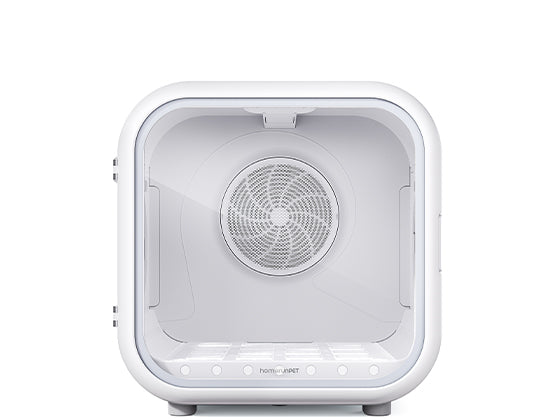
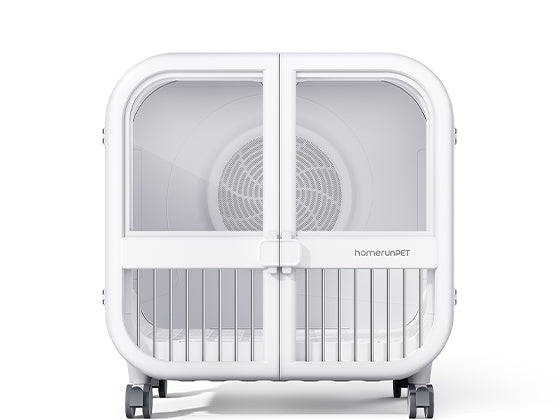
A robotic litter box for two or more cats must deliver large waste drawer capacity, rapid cycle speed, reliable safety sensors, and effective odor control. The homerunPET CS106, with its 106L interior space and 12L waste compartment, addresses these demands directly by supporting approximately 7 days of hands-off maintenance for a three-cat household. Selecting the right unit requires matching capacity to your specific cat count, understanding emptying frequency expectations, and verifying that the interior accommodates your largest cat comfortably.
What Makes a Robotic Litter Box Work for Multiple Cats
A multi-cat automatic litter box succeeds or fails based on four measurable criteria: interior volume, waste drawer size, cycle reliability under frequent use, and odor containment. When two or more cats share a single self-cleaning unit, usage accumulates rapidly. A box that works fine for one cat may overfill, develop odor issues, or cycle too slowly for households with heavier traffic.
Key selection criteria for 2+ cat households:
- Interior space: Veterinary guidelines recommend a litter box at least 1.5 times the length of your longest cat (nose to tail base). This applies equally to robotic units.
- Waste drawer capacity: A waste compartment of at least 10L holds roughly 5-7 days of waste from two cats, depending on diet and litter type.
- Cycle speed and frequency: Back-to-back usage demands that the unit complete its cleaning cycle quickly enough to be available for the next cat.
- Safety sensors: Multiple sensor types (weight, radar, infrared) prevent the unit from cycling while a cat is inside.
- Odor management: Sealed waste compartments and active deodorizing systems become critical as waste volume increases with additional cats.
Selection Framework by Household Size
Match your robotic litter box capacity directly to your cat count to set realistic maintenance expectations.
Two-Cat Households
Two cats generate moderate waste volume. A unit with a 10L+ waste drawer typically requires emptying every 5-7 days. The interior should comfortably accommodate your larger cat with room to turn and dig. Look for models rated for cats up to 25 lbs (approximately 11.3 kg) if you own larger breeds.
Three to Four-Cat Households
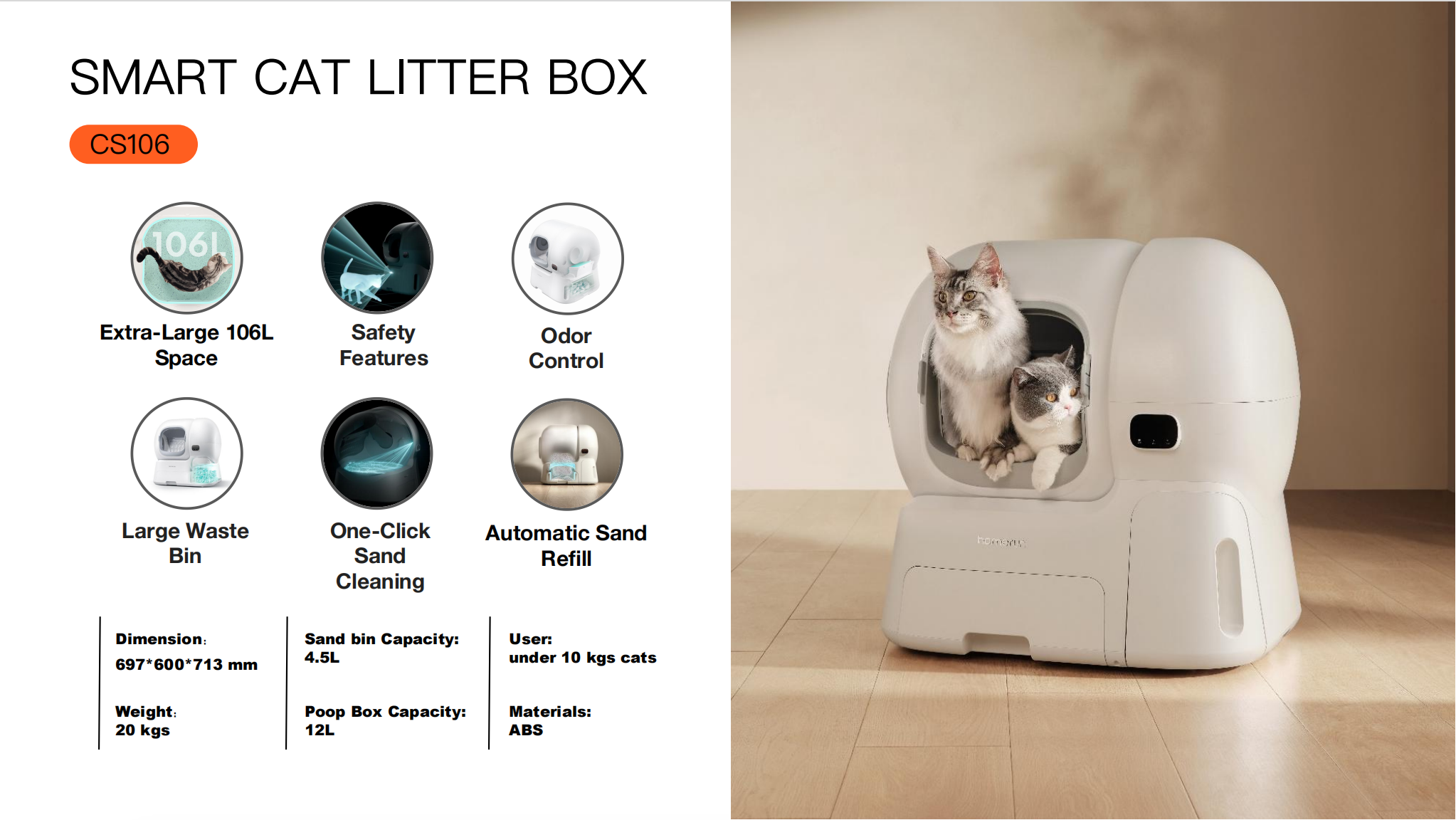
At this density, emptying frequency increases to every 3-5 days even with large waste drawers. The homerunPET CS106, for example, estimates approximately 7 days between emptying for three cats using its 12L waste compartment. For four cats, expect closer to every 4-5 days. Cycle speed and reliability under frequent activation become paramount.
When You Need Two Units
Veterinary behaviorists still recommend the "one box per cat plus one extra" guideline. A single robotic unit functions well as one component of a multi-toilet setup. For three cats, a practical configuration might include one high-capacity self-cleaning unit plus two or three standard boxes placed in separate, quiet locations. This prevents resource guarding and ensures timid cats always have accessible options.
Key Features That Matter Most
Waste Drawer Capacity and Emptying Frequency
Waste drawer size determines your maintenance schedule more than any other single specification. A 12L waste compartment, such as the one found in the homerunPET CS106, extends the interval between emptying compared to typical 7-9L alternatives. For multi-cat homes, this difference translates to fewer weekly interactions with waste.
Odor Control Systems
Odor intensifies proportionally with cat count. Effective odor management systems include sealed waste compartments, carbon filters, and deodorizing gels. The CS106 relies on deodorizing gel as its primary odor containment method, combined with the sealed waste drawer design.
App Monitoring and Health Tracking
App connectivity enables tracking of usage patterns across multiple cats. Weight-based profiling can differentiate individual cats and flag changes in bathroom frequency or duration, which may indicate urinary or digestive health concerns. This data becomes more valuable as cat count increases, since behavioral changes are harder to observe manually in busy households.
Safety Sensors and Cycle Speed
Multiple sensor types working in concert provide the safest operation. Look for combinations of weight sensors, radar detection, and physical anti-pinch mechanisms. The homerunPET CS106 incorporates dual-bump protection, radar sensors, weight sensors, and smart safeguards to prevent operation while a cat is present.
Feature Comparison: Multi-Cat Capacity Benchmarks
| Feature | Minimum for 2 Cats | Recommended for 3-4 Cats | homerunPET CS106 Specs |
|---|---|---|---|
| Interior Volume | 60L+ | 80L+ | 106L |
| Waste Drawer | 10L+ | 12L+ | 12L |
| Max Cat Weight | 20 lbs | 25 lbs | 25 lbs |
| Days Between Emptying (2 cats) | 4-5 days | 5-7 days | 7+ days |
| Days Between Emptying (3 cats) | 3-4 days | 4-5 days | ~7 days |
| Safety Sensor Types | 2+ | 3+ | 4 (dual-bump, radar, weight, smart safeguards) |
| Auto-Refill Litter | Optional | Recommended | Yes (4.5L sand bin) |
| App Control | Recommended | Essential | Yes |
Common Multi-Cat Scenarios and Solutions
Managing Box Competition During Transition
Introduce the robotic unit alongside existing boxes rather than replacing them all at once. Cats may need 1-3 weeks to accept a new automatic litter box. Keep traditional boxes available during this period. Remove them gradually only after all cats demonstrate consistent use of the new unit.
Handling Different Cat Sizes
A household with cats ranging from 8 lbs to 20 lbs needs an interior large enough for the biggest cat. Units rated for cats up to 25 lbs, like the CS106, accommodate this range without forcing smaller cats into an uncomfortable space. The 697 x 600 x 713 mm dimensions provide adequate room for large breeds including Maine Coons and Ragdolls.
Dealing with High-Traffic Usage
Back-to-back entries require fast cycle completion and reliable re-activation. Adjustable cycle delays allow clumps to form properly before the cleaning mechanism engages, which improves separation efficiency and reduces litter waste. Low-noise operation also matters here, as a loud cycle may deter the next cat from approaching.
Maintenance and Long-Term Reliability
Multi-cat use accelerates wear on all components. Plan for the following maintenance cadence:
- Daily: Check app notifications for waste drawer status and any error alerts
- Every 5-7 days (2 cats) or 3-5 days (3+ cats): Empty waste drawer, replace liner
- Every 2-4 weeks: Deep clean interior surfaces, check litter level, replace deodorizing gel
- Monthly: Inspect sensors for dust buildup, wipe radar and weight sensor areas
- Quarterly: Full disassembly cleaning of accessible components
Durability matters more in multi-cat contexts because the mechanism cycles more frequently. Look for ABS construction, global safety certifications (ETL, CE), and manufacturers with established track records and patent portfolios. homerunPET holds 170+ patents worldwide and maintains ISO 14001 and ISO 9001 certified quality control, which reflects the engineering depth behind the hardware.
FAQ
Q1: How many cats can one robotic litter box realistically handle?
A1: Most high-capacity automatic litter boxes function well for 2-3 cats per unit. The homerunPET CS106 with its 12L waste drawer supports approximately 7 days between emptying for three cats. For four or more cats, veterinary guidelines recommend adding at least one additional box.
Q2: How often do I need to empty the waste drawer with two cats?
A2: With a 10L+ waste drawer and two average-sized cats, expect to empty every 5-7 days. The homerunPET CS106 offers a 12L compartment, which extends this interval toward the higher end of that range depending on diet and litter type.
Q3: Is a robotic litter box safe for use in a multi-cat home with large cats?
A3: Units with multiple safety sensor types (weight, radar, physical anti-pinch) are safe for multi-cat households. The homerunPET CS106 supports cats up to 25 lbs (approximately 11.3 kg) and uses four distinct safety mechanisms to prevent operation while any cat is inside or near the unit.
Q4: Can app tracking differentiate between multiple cats?
A4: Weight-based profiling allows many smart litter boxes to distinguish individual cats and monitor their usage frequency. The homerunPET CS106 app provides usage tracking that helps identify health changes across a multi-cat household, making early detection of issues more practical.
For detailed specifications and availability of the CS106 automatic litter box, visit homerunpet.com to review whether its 106L capacity and multi-cat features align with your household requirements.