

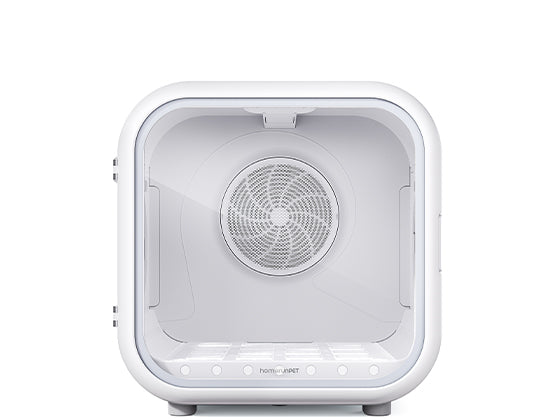
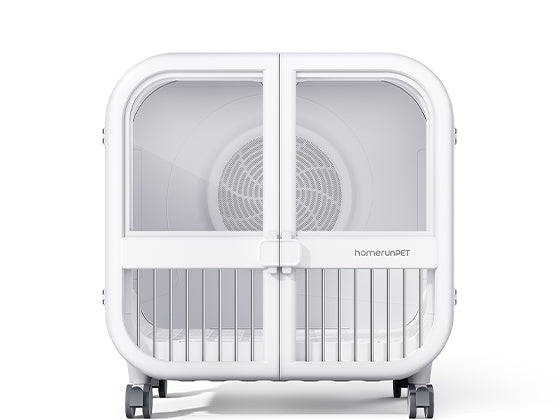
Automatic litter boxes deliver measurable benefits for multi-cat households, but the return depends on four variables: cat count, budget tolerance, feline temperament, and your daily schedule. For homes with two to four cats, a high-capacity unit like the homerunPET CS106 can eliminate routine scooping while maintaining consistent hygiene across heavy use cycles. The technology does not remove all maintenance, though. It restructures the workflow from daily manual labor into periodic appliance upkeep, with genuine time savings for most owners.
The Real Value Proposition for Multi-Cat Homes
Automatic litter boxes solve a scaling problem. As cat count increases, waste accumulates faster, odor intensifies, and the likelihood of litter-box avoidance climbs. A quality self-cleaning unit addresses these cascading issues simultaneously by cycling after each use, keeping the litter surface fresh for the next cat.
Four factors determine whether the investment pays off:
- Number of cats: Two to four cats represent the optimal range for a single premium unit
- Scooping tolerance: Households already struggling with twice-daily scooping gain the most
- Budget flexibility: Reliable units occupy the $500 to $700 range; cheap models under $150 often underperform
- Cat personalities: Bonded, non-territorial cats adapt fastest; anxious cats need gradual introduction
The 2026 market shows improved reliability in the premium segment, with safety features (multi-sensor arrays, anti-pinch mechanisms) now standard rather than optional.
What You Actually Gain and Lose
The primary gain is consistent cleanliness under high traffic. Cats always encounter fresh litter, which reduces avoidance behavior and stress-related urinary issues.
Realistic advantages:
- Elimination of daily scooping (recovering an estimated 30 to 60 hours annually)
- Superior odor containment through sealed waste compartments and deodorizer systems
- Health monitoring via app-based tracking of usage frequency and weight changes
- Reduced inter-cat tension around litter resources
Realistic limitations:
- High upfront cost ($500 to $700 for dependable units)
- Waste drawer emptying every two to seven days depending on cat count
- Periodic deep cleaning still required
- Some cats reject enclosed or noisy units initially
The trade-off is straightforward: you exchange daily manual scooping for scheduled appliance maintenance at longer intervals.
The Multi-Cat Box Math: How Many Units?
Veterinary behaviorists maintain the n+1 guideline (one box per cat plus one extra), based on evidence that multiple elimination sites reduce territorial stress and may lower the risk of feline lower urinary tract disease (FLUTD). No large-scale clinical trials have directly compared health outcomes between automatic and manual setups as of 2026, but the underlying principle remains: cats need accessible, clean, low-stress options.
Automation modifies the practical application of this rule:
| Household Size | Recommended Setup | Waste Drawer Interval |
|---|---|---|
| 2 cats | 1 premium automatic unit + 1 manual backup | 10 to 14 days (auto unit) |
| 3 cats | 1 high-capacity automatic unit + 1 to 2 manual trays | 7 days (auto unit) |
| 4 cats | 2 automatic units or 1 auto + 2 manual trays in separate locations | 4 to 5 days per auto unit |
| 5+ cats | 2 automatic units + additional manual trays across multiple floors | 3 to 4 days per auto unit |
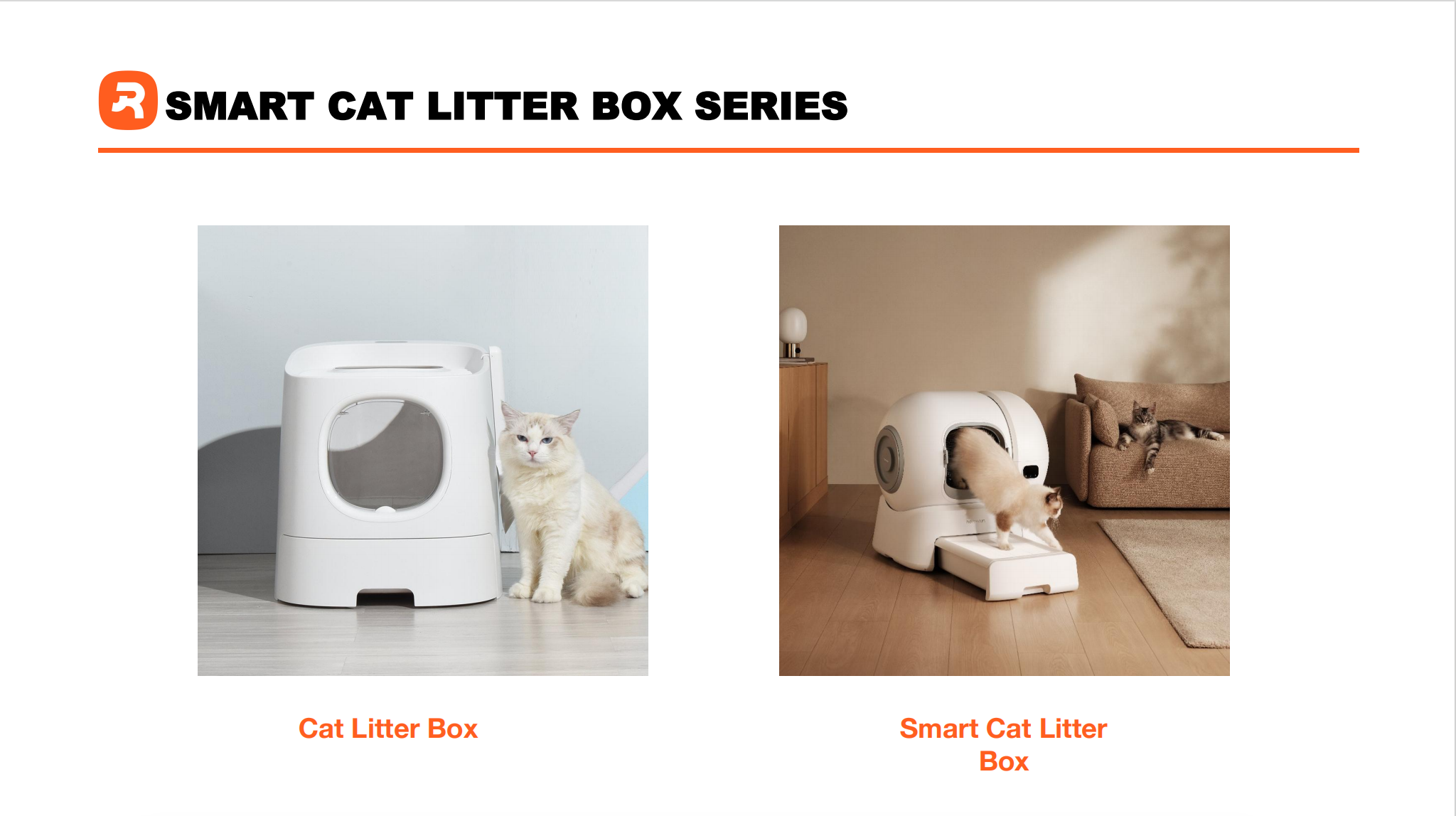
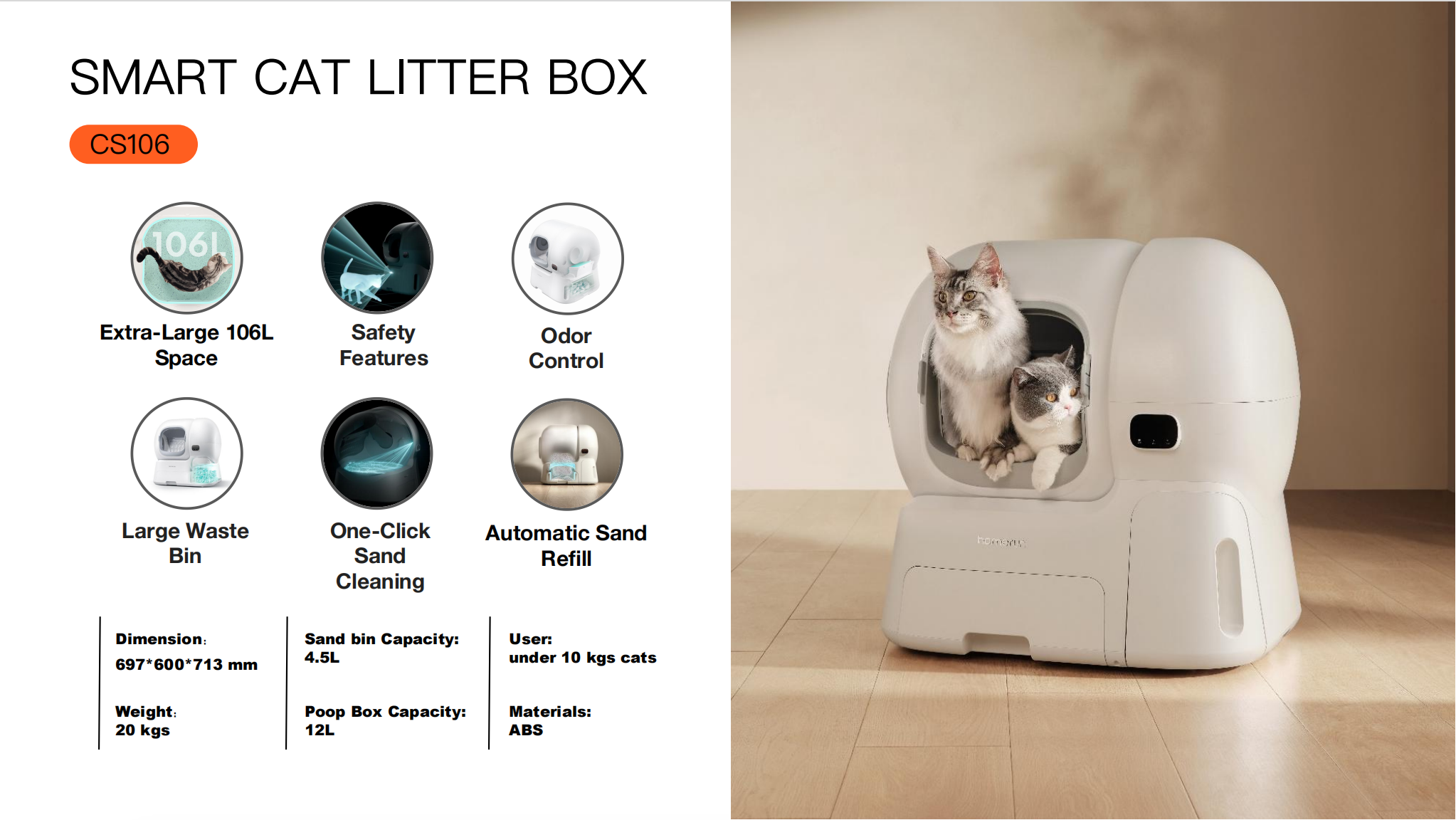
The homerunPET CS106, with its 12L waste bin capacity and 106L interior space, supports up to approximately 20 days of hands-free operation for a single cat and about 7 days for a three-cat household. This capacity directly addresses the most common complaint about automatic boxes in multi-cat homes: frequent drawer emptying.
Practical Setup Strategies
Start with redundancy and transition gradually. Experienced multi-cat owners and veterinary sources converge on a hybrid approach rather than full replacement of all manual boxes at once.
Strategy 1: Single premium unit plus manual backup. Cost-effective, provides redundancy if the unit needs cleaning or repair, and gives nervous cats an alternative. Best for two to three cats.
Strategy 2: Two automatic units in separate locations. Prevents territorial conflicts, handles three to five cats comfortably, and provides failsafe coverage. Best for larger homes or multi-floor layouts.
Strategy 3: Gradual transition. Keep existing boxes active for two to four weeks. Place the new unit unplugged so cats explore it at their own pace. Activate cleaning cycles only after cats use it voluntarily. The homerunPET CS106 supports this approach through low-noise operation and a spacious, non-fully-enclosed design that avoids triggering claustrophobic responses.
Key Features for Multi-Cat Success
Capacity and safety separate functional units from frustrating ones. When evaluating any automatic litter box for heavy multi-cat use, these specifications matter most:
- Interior volume: 60L minimum; 100L or above accommodates large breeds comfortably. The homerunPET CS106 provides 106L, supporting cats up to 25 lbs (11.3 kg).
- Waste bin size: 7L minimum for multi-cat homes. A 12L bin substantially extends intervals between emptying.
- Safety sensors: Infrared, radar, and weight detection should halt operation immediately if a cat enters during a cycle. Physical anti-pinch mechanisms add a mechanical failsafe layer.
- Odor management: Sealed waste compartments combined with deodorizer gel or carbon filtration.
- Auto-refill: Automatic sand replenishment (4.5L reservoir on the CS106) maintains optimal litter depth without manual intervention.
- Certifications: ETL, CE, and other recognized safety standards indicate third-party validation. homerunPET, founded in 2015, holds 170+ patents and global safety certifications (ETL, CE, PSE, FC).
Safety and Reliability Considerations
Prioritize brands with transparent safety documentation. Consumer awareness around automatic litter box safety has increased following past industry incidents. Red flags include:
- Units under $150 from unestablished manufacturers with no listed safety certifications
- Designs lacking multi-sensor redundancy (single sensor systems can fail undetected)
- Models with documented histories of jamming or unreliable cycle detection
- Fully enclosed chambers without anti-pinch or emergency stop mechanisms
The dual-bump protection, radar sensors, weight sensors, and physical anti-pinch design on units like the CS106 represent the current benchmark for multi-cat safety, where curious cats frequently investigate during or immediately after cycles.
Real-World Cost Analysis
The financial equation favors quality units over 12 to 24 months of use. A breakdown for a three-cat household:
- Upfront: $500 to $700 for a reliable, high-capacity unit
- Waste liners and consumables: $15 to $30 per month
- Litter consumption: Comparable to manual scooping (efficient sifting reduces waste)
- Filter or deodorizer replacement: $10 to $20 quarterly
- Electricity: Under $5 annually
- Time recovered: Approximately 30 to 60 hours per year, depending on previous scooping frequency
For households that value consistent hygiene and odor control, the functional payback typically registers within six to twelve months of daily use.
Making the Decision
The strongest candidates for automatic litter boxes are two-to-four-cat households with busy schedules, odor sensitivity, or multi-floor layouts. Proceed with caution if your cats have severe anxiety, a history of urethral obstruction, or if your budget cannot accommodate a backup plan during potential maintenance downtime.
The veterinary-aligned approach: use automatic boxes as a tool that handles the majority of cleaning labor while maintaining at least one simple, open tray as backup and for cats who prefer it.
FAQ
Q1: How many automatic litter boxes do I need for 3 cats?
A1: Most three-cat households operate successfully with one high-capacity automatic unit plus one manual backup tray. The homerunPET CS106, with its 12L waste bin, supports approximately 7 days between emptying for three cats, making a single premium unit practical when paired with a standard backup box in a separate location.
Q2: Do cats willingly share an automatic litter box?
A2: Bonded, non-territorial cats frequently share a single automatic unit without conflict. The key factor is consistent cleanliness after each use, which automatic cycling provides. homerunPET designs with spacious 106L interiors and low-noise operation reduce the two main deterrents to sharing: cramped space and startling mechanical sounds.
Q3: How often do you empty an automatic litter box with multiple cats?
A3: Frequency depends on waste bin capacity and cat count. With a 12L waste bin like the homerunPET CS106, expect to empty approximately every 7 days with three cats, or every 10 to 14 days with two cats. Smaller bins (under 7L) require attention every 2 to 4 days in multi-cat homes.
Q4: Are automatic litter boxes safe for cats who enter during cleaning cycles?
A4: Quality units employ multiple redundant safety systems. The homerunPET CS106 uses radar sensors, weight sensors, dual-bump protection, and physical anti-pinch mechanisms that halt operation immediately upon detecting a cat. Always verify that any unit carries recognized safety certifications such as ETL or CE before purchase.
For detailed specifications on multi-cat capacity, safety systems, and the 90-day in-home trial, visit homerunpet.com to evaluate whether the CS106 fits your household setup.