

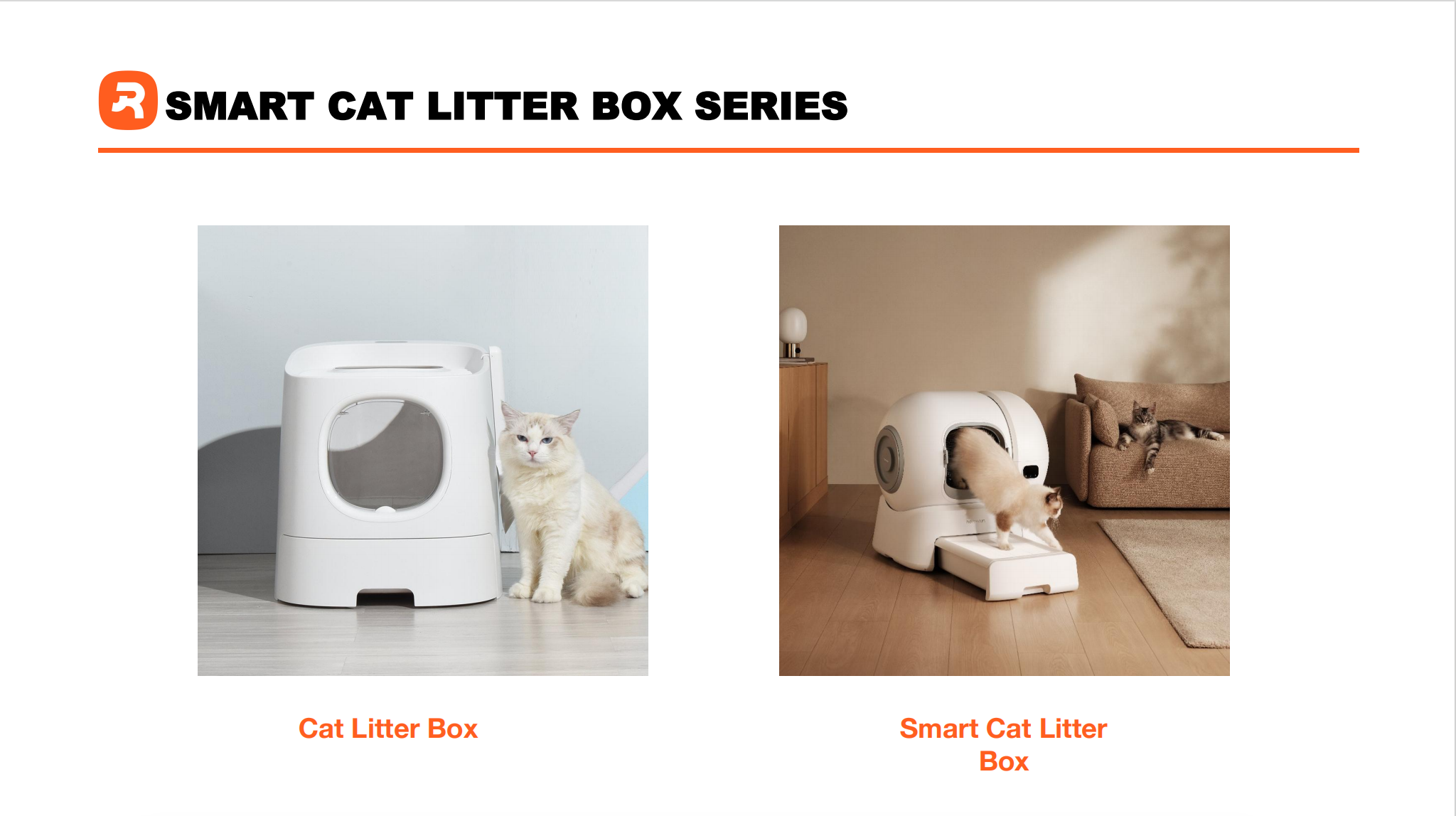
Choosing between a traditional and automatic litter box comes down to three factors: your budget, your daily schedule, and your cat's temperament. Both types meet feline hygiene needs effectively. A traditional box costs $10-30 and requires daily scooping, while an automatic unit like the homerunPET CS106 costs more upfront but reduces hands-on maintenance to emptying a waste drawer every few days to weeks. Most first-time owners start traditional and upgrade later, though busy households increasingly begin with self-cleaning systems.
Understanding the Core Trade-Off
The fundamental difference is owner convenience versus initial cost. A static plastic tray has no moving parts, no electronics to fail, and universal cat acceptance. An automatic system uses sensors and motors to separate waste shortly after each visit, isolating it in a sealed compartment. Both still require periodic deep cleaning. The automatic litter box market is growing at roughly 12-15% CAGR through 2030, driven by urbanization and willingness to pay for convenience, but traditional boxes still dominate by sheer unit volume because they are inexpensive and universally reliable.
Traditional Litter Boxes: The Fundamentals
A standard open tray remains the most universally accepted option for cats of all ages and temperaments.
Daily Reality and Maintenance
Scooping takes about 2-5 minutes per session, and most guidelines recommend doing it once or twice daily per box. You will also need to fully replace litter and wash the tray with mild soap every 1-2 weeks. The supplies are straightforward: a scoop, unscented clumping litter, and the box itself.
Health Monitoring Advantage
Direct contact with waste means you notice changes in urine clump size, stool consistency, or frequency immediately. This hands-on observation can catch early signs of urinary tract issues or gastrointestinal problems before they escalate.
True Costs
- Initial purchase: $10-30 for most quality open trays
- Monthly litter: $15-40 depending on brand and cat count
- No proprietary parts or filters required
When Traditional Makes Most Sense
A manual box is the stronger choice for owners on a tight budget, households with a single cat, people with flexible schedules who are home regularly, and anyone prioritizing hands-on health monitoring during the first months of cat ownership.
Automatic Litter Boxes: Mechanics and Trade-Offs
Self-cleaning systems reduce daily scooping labor significantly but introduce complexity and higher cost.
How Self-Cleaning Systems Work
After a cat exits, sensors detect the absence and trigger a cleaning cycle on a timed delay. The mechanism separates clumps from clean litter and deposits waste into a sealed compartment. Most modern units use weight sensors and infrared or radar detection to confirm the cat has fully left before activation.
Time Savings and Odor Control
For a single-cat household, you typically empty the waste drawer every few days to a week rather than scooping twice daily. Sealed waste compartments paired with odor-control methods (deodorizing gels, carbon filters) keep ambient smell substantially lower between maintenance sessions.
Investment Considerations
Upfront costs for reputable automatic units range from $200 to $700 depending on capacity and features. Some models require proprietary liners or specific litter types, adding ongoing expense. Deep cleaning involves partial disassembly every few weeks, which can be more involved than washing a simple tray.
Cat Adaptation
Some cats are initially wary of motor noise or movement. Typical adaptation takes 3-14 days when you introduce the unit with power off, then gradually enable cleaning cycles. Quieter units shorten this adjustment period considerably.
Side-by-Side Comparison
| Factor | Traditional Box | Automatic Box |
|---|---|---|
| Initial cost | $10-30 | $200-700 |
| Daily time investment | 5-10 min (scooping) | Minimal between drawer empties |
| Deep cleaning complexity | Simple soap wash | Partial disassembly required |
| Odor control | Dependent on scooping discipline | Sealed compartment reduces ambient odor |
| Cat acceptance | High across all temperaments | Variable; noise-sensitive cats need transition |
| Safety risk | Essentially zero | Low in quality models with multi-sensor safety |
| Health monitoring | Direct visual inspection daily | Some models track weight/visits via app |
| Best for | Beginners, tight budgets, kittens | Busy schedules, mobility limitations, multi-cat homes |
Decision Framework by Household Scenario
Budget-Based Guidance
- Under $50: Traditional box is the clear path. Invest in a large, quality tray and good litter.
- $100-300: Mid-range automatic options exist but tend to lack robust safety features. A premium traditional setup with high-quality litter and covered design may serve better.
- $300+: Premium automatic systems with multi-sensor safety, app connectivity, and sealed odor control become viable long-term investments.
Lifestyle-Based Guidance
- Home most days: Traditional works well; scooping is quick and keeps you connected to your cat's health patterns.
- Full-time office work (8-10 hours away): Automatic systems prevent waste from sitting exposed all day.
- Frequent short travel (2-5 days): Extended-capacity automatic units reduce reliance on pet sitters for litter duty.
Cat-Specific Factors
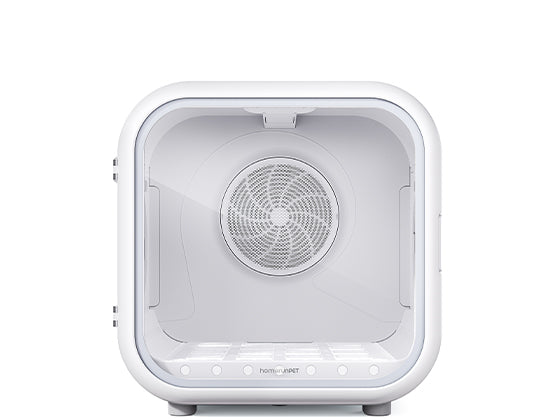
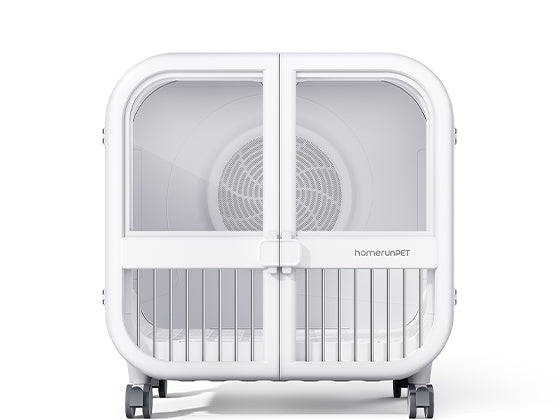
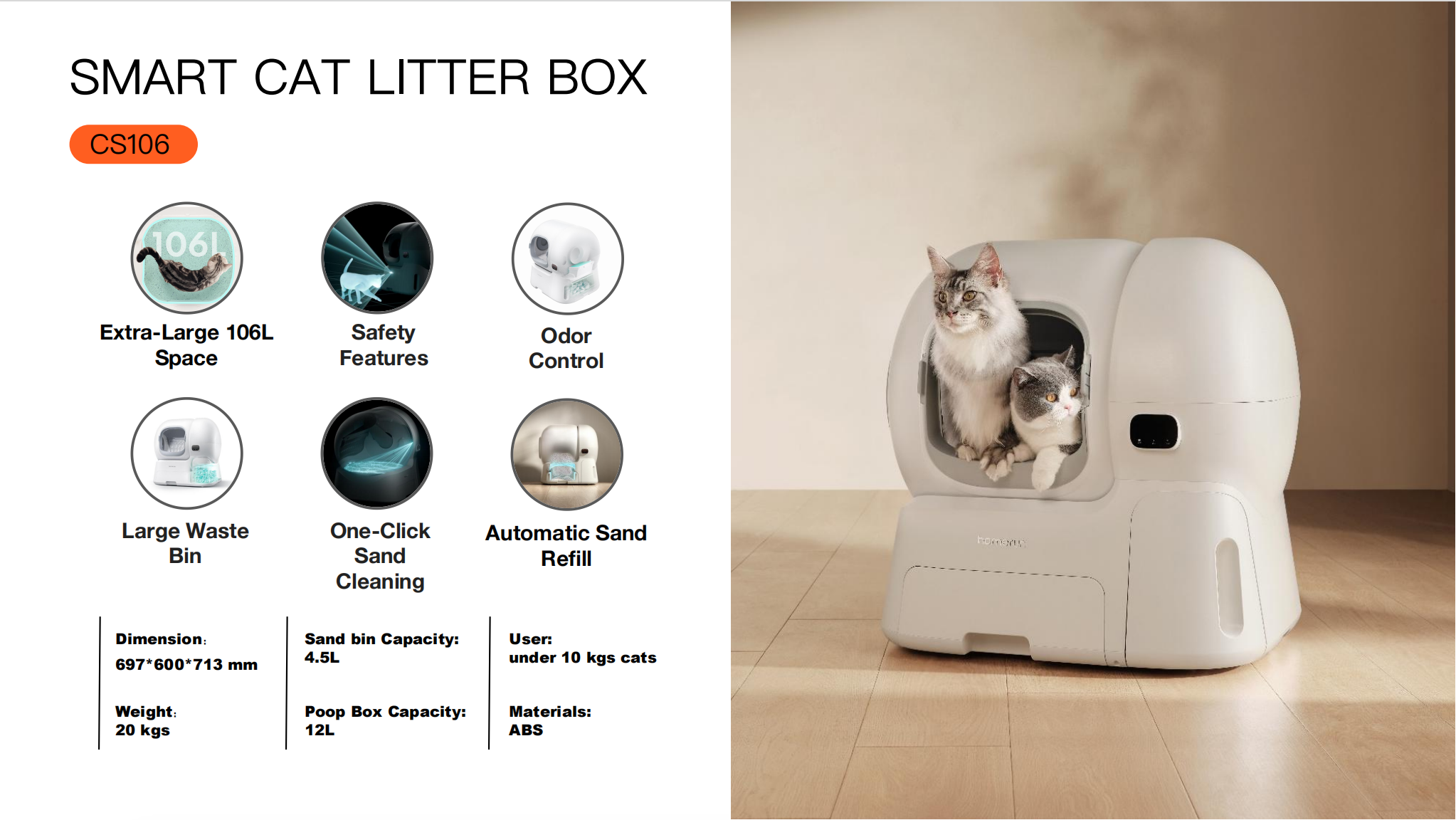
Kittens under 6 months may not meet minimum weight thresholds for sensor-activated units. Nervous or newly adopted cats generally adapt better to a static, open tray first. Large breeds like Maine Coons or Ragdolls need spacious interiors. The homerunPET CS106, with its 106L space capacity and accommodation for cats up to 25 lbs, addresses the large-breed concern directly. Its 4.5L auto-refill sand system supports up to approximately 20 days of hands-free operation for a single cat, making it practical for multi-cat households as well (roughly 7 days with three cats).
Common First-Time Owner Mistakes
- Sizing for the kitten, not the adult cat: Buy a box large enough for your cat's projected full size.
- Placing automatic units in high-traffic areas: Motor activation near hallways or kitchens can startle cats. Choose a quiet, low-traffic spot.
- Skipping the transition period: Never force a cat into a new automatic box. Run it unpowered for several days first.
- Neglecting deep cleaning on automatic models: Automated scooping does not eliminate the need for periodic full disassembly and washing.
- Using incompatible litter: Many automatic systems require clumping clay of specific granule size. Check manufacturer guidelines.
Transitioning from Traditional to Automatic
Keep both boxes available for 1-2 weeks when introducing an automatic unit. Place the new system next to the existing tray with the motor off. Transfer a small amount of used litter into the new box so the scent is familiar. After your cat begins using it voluntarily, enable the cleaning cycle. Most cats adapt within 3-14 days. homerunPET engineered the CS106 with low-noise operation specifically to reduce startle responses during this adjustment phase. Its dual-bump protection system, radar sensors, and weight sensors provide multiple safety layers that address the primary concern first-time owners have about automated mechanisms operating near their cat.
Starting with Confidence
Both traditional and automatic litter boxes fulfill feline sanitation needs. Your choice reflects personal priorities around time, budget, and lifestyle rather than one being objectively superior. Starting traditional and upgrading later is a well-established path. For those ready to begin with an automatic system, homerunPET offers the CS106 with its 106L space, app control, auto-refill capability, and a 90-day in-home trial that reduces the commitment risk for first-time buyers. The unit holds CNN's recognition as Best Self-Refilling Litter Box of 2026, backed by the brand's 170+ patents and ISO-certified quality control developed since its founding in 2015.
FAQ
Q1: Is an automatic litter box worth the investment for a first-time cat owner on a budget?
A1: If your budget is under $200, a traditional box paired with quality clumping litter delivers reliable results with minimal risk. Automatic units like the homerunPET CS106 justify their cost primarily for owners with demanding schedules, multiple cats, or mobility constraints where daily scooping is genuinely difficult.
Q2: How long does it take a cat to adjust to a self-cleaning litter box?
A2: Most cats adapt within 3-14 days when introduced gradually. Start with the unit unpowered and place familiar-scented litter inside. Low-noise models like the homerunPET CS106 tend to shorten this timeline because the cleaning cycle is less startling.
Q3: Can I use a self-cleaning litter box for a kitten?
A3: Kittens under 6 months often do not meet the minimum weight threshold required to trigger safety sensors reliably. Begin with a traditional low-sided tray and transition to automatic once your cat reaches a stable adult weight.
Q4: Do automatic litter boxes eliminate the need for cleaning entirely?
A4: They reduce daily scooping but do not eliminate maintenance. You still need to empty the waste drawer regularly and perform a full deep clean every few weeks to prevent bacterial buildup and odor.
For more details on the CS106 specifications, trial policy, and current pricing, visit homerunpet.com.