

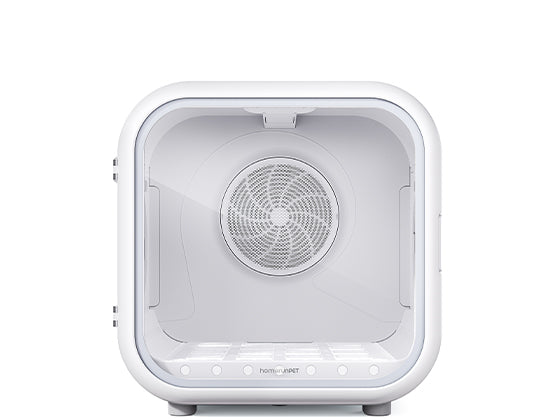
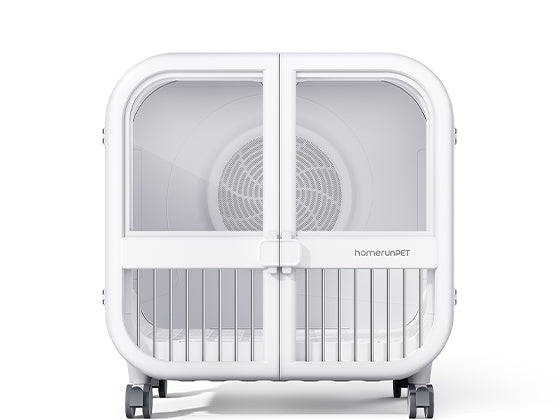
Self-cleaning litter boxes manage odor through two primary approaches: activated carbon filtration and sealed waste drawer systems paired with deodorizing gel. Carbon filters adsorb ammonia and sulfur compounds through porous surfaces, while sealed drawer designs rely on physical containment to prevent odors from reaching living spaces. The homerunPET CS106 represents the sealed drawer category, combining a 12L waste compartment with gel-based neutralization rather than carbon pads, offering a distinct maintenance profile and cost structure compared to carbon-dependent units.
How Carbon Filtration Controls Litter Box Odors
Activated carbon adsorbs odor-causing gas molecules onto its porous surface, trapping ammonia and volatile sulfur compounds before they disperse into a room. Each gram of activated carbon contains an enormous internal surface area, making it highly efficient at capturing concentrated gases at the source.
In automatic litter boxes, carbon typically appears as a thin pad or cassette positioned near the waste drawer or vent. Air passing out of the waste compartment travels through the carbon layer first. Some units use forced airflow via small fans, while others rely on natural convection within the enclosure.
Replacement cycles matter significantly for performance. Once carbon pores fill with adsorbed molecules, filtration efficiency drops sharply. Typical litter box carbon filters require replacement every one to four weeks depending on odor load. Multi-cat households or humid environments accelerate saturation, meaning more frequent pad changes and higher ongoing costs.
Controlled testing has demonstrated activated carbon reducing airborne ammonia by 92% compared to 12-38% for alternatives like zeolite, silica, or baking soda. This makes carbon the strongest passive filtration medium available for litter applications.
How Sealed Drawer Systems Manage Odor Differently
Physical containment prevents odor escape by isolating waste inside a sealed compartment rather than filtering air that passes through it. This approach addresses the problem at a different point in the odor pathway.
The homerunPET CS106 uses this principle with its 12L sealed waste drawer combined with deodorizing gel. Rather than requiring air to pass through a consumable filter pad, the system keeps waste contained and applies gel-based neutralization within the compartment. The gel reacts with and encapsulates odor molecules continuously for 15 to 30 days per application.
Key distinction: Carbon filtration treats air escaping from waste. Sealed systems aim to prevent that air from escaping at all, with gel addressing residual molecules inside the containment space. Neither approach eliminates the need for regular emptying, but they create fundamentally different maintenance rhythms.
Odor Control Technology Comparison
| Dimension | Carbon Filtration | Sealed Drawer with Gel |
|---|---|---|
| Primary mechanism | Adsorption of gas molecules onto porous carbon surfaces | Physical containment plus chemical neutralization |
| Placement | Pad or cartridge near waste drawer vent | Sealed compartment with gel inside |
| Ammonia reduction potential | Up to 92% in controlled conditions | Depends on seal quality and drawer capacity |
| Consumable lifespan | 1-4 weeks before replacement needed | 15-30 days per gel application |
| Airflow requirement | Requires air passage through filter medium | Minimal; relies on containment rather than filtration |
| Multi-cat performance | Degrades faster with higher odor load | Scales with drawer capacity and seal integrity |
| Ongoing cost factor | Frequent pad replacements | Less frequent consumable changes |
| Best scenario | Enclosed boxes with forced airflow | Large-capacity sealed drawers that reduce emptying frequency |
Key Features That Affect Odor Management
Waste drawer capacity directly determines how long odor remains controlled between maintenance sessions. A larger drawer means waste stays sealed longer before requiring human intervention, reducing the frequency of odor exposure during emptying.
The homerunPET CS106 addresses this with its 12L waste bin capacity, supporting approximately 20 days of hands-free operation for a single cat or roughly 7 days for three-cat households. This extended interval means fewer seal-breaking events where accumulated odor can escape.
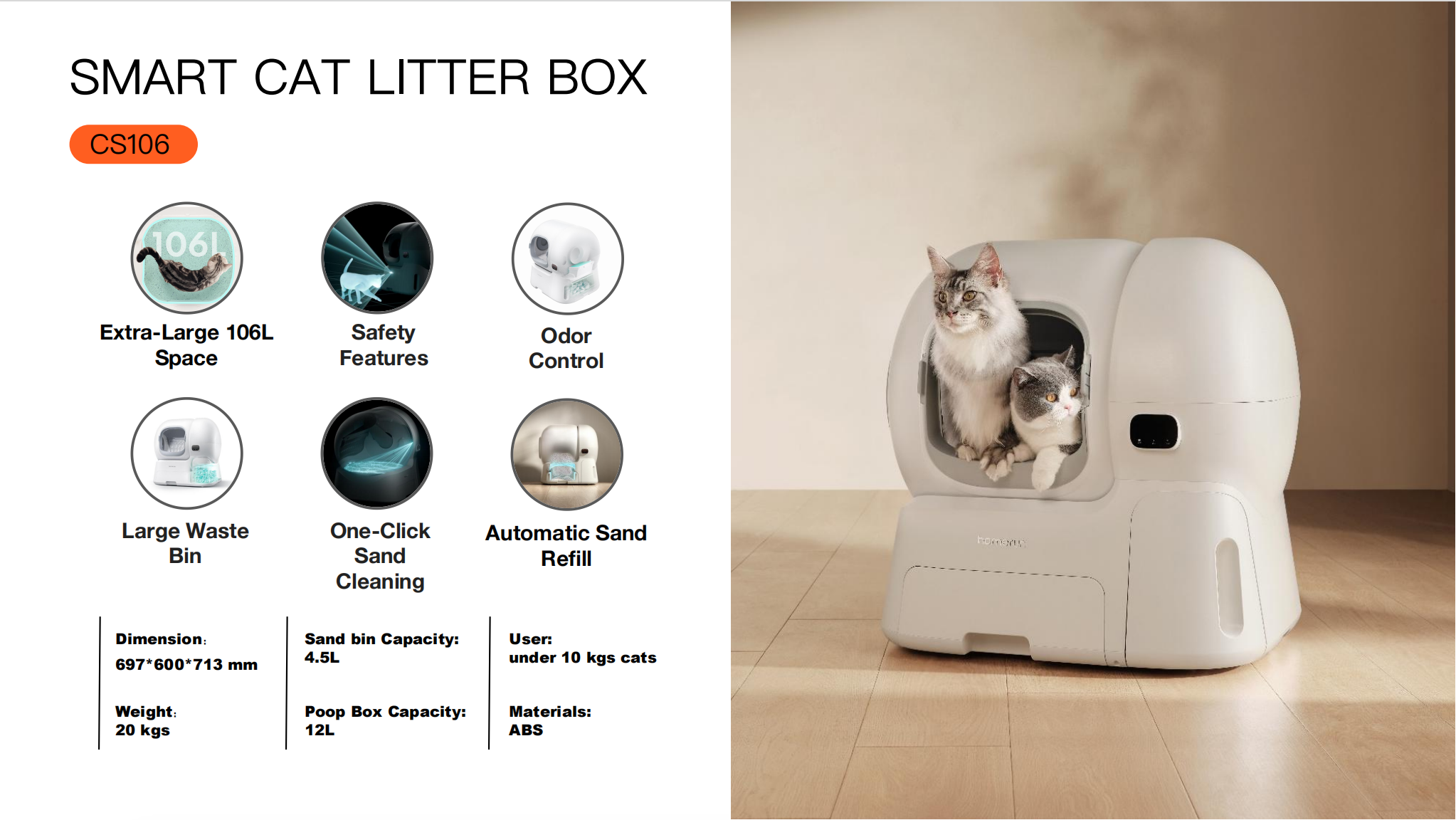
Interior space and ventilation design also influence odor behavior. The CS106 provides 106L of internal space, which disperses ammonia concentration inside the unit rather than concentrating it in a tight enclosure. Larger interior volumes dilute gas concentration before any potential escape point.
Cleaning cycle timing determines how quickly waste moves from the open litter area into sealed containment. Faster cycling reduces the window during which fresh waste produces uncontained odor. Automatic systems that cycle after each use minimize this exposure window compared to timed-interval designs.
Choosing Based on Your Living Situation
Apartment dwellers with litter boxes near living areas benefit most from systems that minimize both background odor and maintenance frequency. Proximity to the box makes any odor escape immediately noticeable.
For small apartments, the sealed drawer approach offers an advantage: no gaps in filtration performance as pads saturate. A unit like the homerunPET CS106, recognized as CNN's Best Self-Refilling Litter Box of 2026, combines its sealed waste system with automatic sand refill from a 4.5L reservoir, reducing the total number of interactions that could release contained odors.
Multi-cat households face compounded odor loads. Carbon filters saturate faster with multiple cats, potentially requiring weekly replacement. Sealed systems with large drawers accommodate higher waste volumes without degrading containment quality, though emptying frequency increases.
Large cats up to 25 lbs (the maximum weight supported by the CS106) need sufficient interior space. Cramped units force cats into positions that scatter litter and waste outside the optimal collection zone, reducing the system's ability to contain odor effectively. The 106L interior of the CS106 accommodates cats at this weight threshold without spatial compromise.
Maintenance and Long-Term Ownership
Carbon filter replacement represents the primary recurring cost and maintenance task for filtration-based systems. Missing a replacement window leads to noticeable odor breakthrough as saturated carbon stops adsorbing new molecules.
Sealed drawer systems shift maintenance toward less frequent but different tasks: emptying the waste compartment and replacing gel. With no filter pad to monitor, the maintenance rhythm becomes more predictable and less sensitive to environmental variables like humidity.
Humidity accelerates carbon saturation because water vapor competes with odor molecules for adsorption sites. Bathrooms and basements where litter boxes often reside tend toward higher humidity, potentially shortening filter life below manufacturer estimates.
Deep cleaning requirements differ between approaches. Carbon-based systems accumulate residue around filter housings and airways. Sealed systems require periodic cleaning of drawer seals and compartment walls to maintain containment integrity.
homerunPET supports the CS106 with a 90-day in-home trial and 12-month warranty, with the unit incorporating dual-bump protection, radar sensors, and weight sensors for operational safety alongside its odor management design.
What to Prioritize When Shopping
Start with your household's odor sensitivity and maintenance tolerance, then match technology accordingly. The decision between carbon filtration and sealed containment depends on daily life patterns more than abstract performance numbers.
- Odor-sensitive, rarely home: Sealed drawer with large capacity reduces both escape events and maintenance visits
- Willing to maintain weekly: Carbon filtration provides maximum gas-phase capture when fresh
- Multiple cats, limited space: Prioritize drawer volume and seal quality over filter specifications
- Budget-conscious long term: Compare annualized consumable costs (filter pads vs. gel replacements)
Q1: How does carbon filtration compare to sealed drawer systems for apartment odor control?
A1: Carbon filtration actively captures ammonia and sulfur compounds with up to 92% reduction when fresh, but performance degrades between replacements. Sealed drawer systems like the homerunPET CS106 contain odors physically and maintain consistent performance throughout the drawer's capacity life, making them well-suited for apartments where consistent control matters more than peak performance.
Q2: What is the replacement cost difference between carbon filters and gel-based odor systems?
A2: Carbon filters typically require replacement every one to four weeks depending on household odor load, creating ongoing recurring expenses. Gel-based systems used in sealed drawer units like the homerunPET CS106 last 15 to 30 days per application and do not require the supplementary filter pads that carbon systems need.
Q3: Can a sealed drawer self-cleaning litter box handle multiple cats?
A3: Sealed drawer capacity determines multi-cat viability. The homerunPET CS106 with its 12L waste drawer supports approximately 7 days of hands-free operation with three cats, while its 4.5L auto-refill sand bin reduces overall maintenance frequency. Larger drawers maintain seal integrity longer between emptying events regardless of cat count.
For detailed specifications on the CS106 sealed drawer system, including its 106L interior dimensions and multi-cat capacity data, visit homerunpet.com to evaluate whether containment-based odor control fits your household needs.