

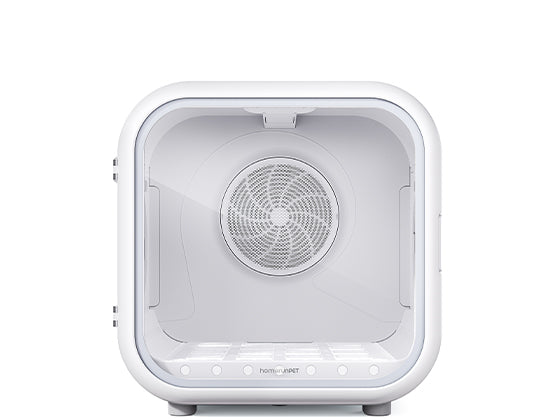
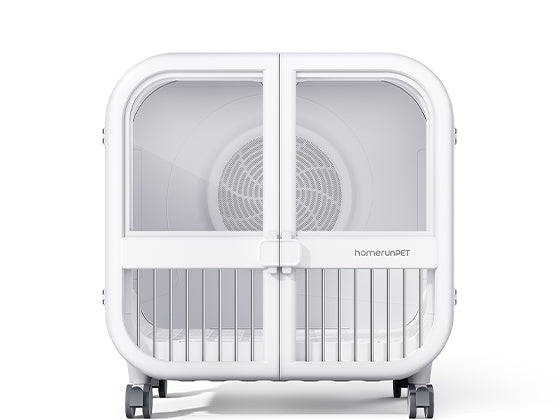
A self-cleaning litter box designed for multiple cats must deliver large internal capacity, reliable safety sensors, and a waste compartment sized to handle elevated daily output. The homerunPET CS106 addresses these demands with a 106-liter interior chamber, a 12-liter waste drawer, dual-bump protection, radar sensors, and weight sensors that accommodate cats up to 25 lbs. For households running three or more cats, the primary selection criteria are capacity, cleaning cycle reliability, odor containment, sensor-based safety, and app-driven health monitoring.
Why Multi-Cat Households Need Self-Cleaning Litter Boxes
The traditional N+1 rule (one box per cat plus one extra) creates an unsustainable maintenance load as cat count rises. A three-cat home theoretically needs four litter boxes, each scooped at least once daily. That translates to roughly 28 scooping events per week before addressing odor, litter tracking, and territorial tension.
Automated self-cleaning units collapse this burden by cycling after each use, keeping the litter bed consistently fresh. A clean surface reduces territorial avoidance behavior, where one cat refuses to use a box another cat recently visited. The global automatic self-cleaning litter box market is estimated at about USD 768.7 million in 2026, with North America accounting for the largest regional share, driven largely by multi-cat household adoption.
Essential Features for Multi-Cat Self-Cleaning Litter Boxes
Capacity and Size Considerations
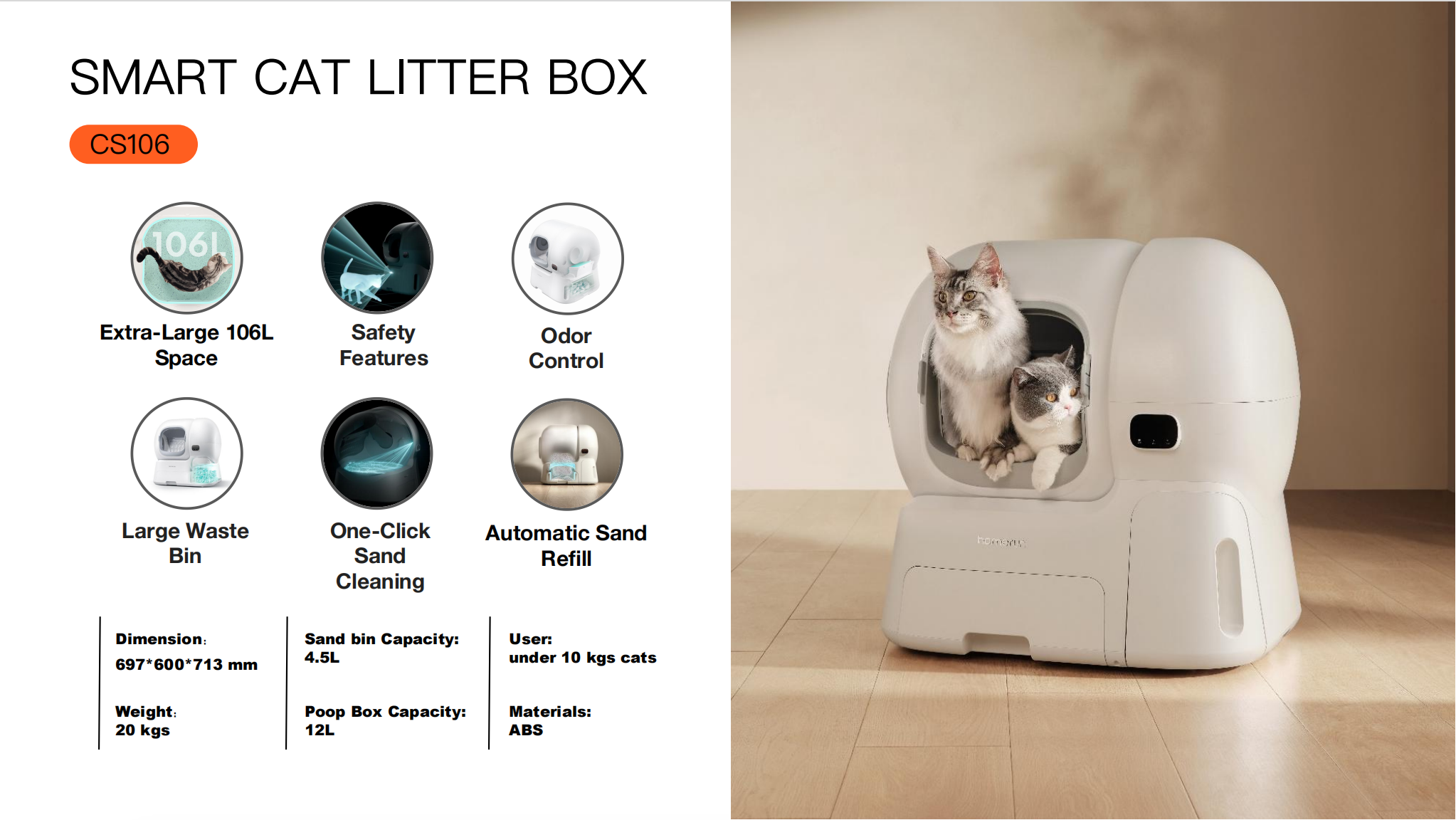
Interior volume determines whether large or multiple cats can comfortably enter, turn, and dig. Units below 60 liters often feel cramped for cats over 12 lbs, and a multi-cat unit should provide enough litter depth to absorb multiple visits between cycles. The homerunPET CS106 offers 106 liters of internal space, making it one of the largest automated litter boxes available, and supports cats weighing up to 25 lbs.
Waste drawer size dictates how often you physically interact with the unit. A 12-liter waste compartment, as found on the CS106, extends the interval between empties to approximately 7 days for a three-cat household and up to 20 days for a single cat.
Cleaning Mechanism Types
Rotating and sifting mechanisms tend to outperform rake-based designs under high-traffic conditions. Rake systems can jam on large clumps or when litter depth is uneven, while rotating drums distribute litter more evenly and sift waste with fewer mechanical failure points. For households with three or more cats generating multiple clumps per hour, a sifting-rotation design minimizes downtime and maintenance interventions.
Odor Control Systems
Sealed waste compartments paired with active odor-neutralizing agents provide the most consistent smell containment. Enclosed waste drawers prevent ambient air exchange with soiled litter, while supplementary systems target residual odor molecules. The homerunPET CS106 uses a deodorizing gel system that neutralizes waste odors within the sealed compartment, avoiding reliance on carbon filters that require frequent replacement.
Safety and Sensor Technology
Multi-sensor arrays are non-negotiable in multi-cat homes where one cat may enter while another has just exited. Key sensor types include radar-based motion detection, weight-based occupancy confirmation, and physical anti-pinch mechanisms. The CS106 integrates radar sensors, weight sensors, and dual-bump protection to halt or prevent the cleaning cycle when a cat is detected inside or approaching.
A unit that does not fully enclose via a sealed dome offers an additional margin of safety, as cats retain a visible exit path at all times.
Smart Features and Health Monitoring
App connectivity transforms a litter box from a cleaning device into a health-monitoring tool. Weight sensors that log each visit can flag changes in individual cat weight over time, offering early detection of conditions such as hyperthyroidism or diabetes. The homerunPET CS106 supports app control with one-click cleaning activation and usage tracking, giving multi-cat owners remote oversight of box status and cycle history.
How to Evaluate Litter Box Capacity for Your Household
Match total daily waste output to drawer volume and cleaning frequency. An average adult cat produces roughly 200-300 grams of solid waste per day. Three cats can fill smaller compartments in two to three days, creating odor issues and overflow risk.
| Feature | Single-Cat Requirement | Multi-Cat Requirement (3+ Cats) |
|---|---|---|
| Internal Volume | 40-60L adequate | 80-110L recommended |
| Waste Drawer | 5-7L sufficient | 10-12L or larger |
| Max Cat Weight Support | 15-20 lbs typical | 25 lbs preferred |
| Days Between Manual Empty | 14-21 days | 5-7 days |
| Safety Sensors | Basic motion sensor | Multi-sensor array (radar + weight + physical) |
| App Monitoring | Optional convenience | Strongly recommended for tracking |
| Auto-Refill System | Not critical | Reduces refill frequency significantly |
The CS106's 4.5-liter auto-refill sand bin further reduces manual interaction by replenishing litter automatically as it depletes through cycling.
Setting Up Your Multi-Cat Self-Cleaning Litter Box
Acclimation Strategy
Keep existing litter boxes available for at least one week after introducing the automated unit. Cats navigate change through scent familiarity and spatial memory. Place the new unit near but not directly replacing a current box, using the same litter type initially to reduce novelty stress.
For noise-sensitive cats, run the unit unpowered for three to five days, allowing cats to explore the interior without motor sounds. Low-noise operation (a characteristic of the CS106) helps reduce startle responses during the powered transition phase.
Placement and Maintenance
Position automated units in low-traffic areas with accessible power outlets and adequate rear clearance. Avoid placing near food and water stations. For homes with three or more cats, monitor the first two weeks of use to confirm all cats are using the unit. Weight sensor data through the app can verify individual adoption without direct observation.
Run scheduled sensor checks monthly. Wipe radar and motion sensor surfaces to prevent dust-related false readings.
Common Multi-Cat Litter Box Challenges and Solutions
Territorial avoidance persists even with automation if the unit is perceived as belonging to a dominant cat. Position the litter box in neutral territory, not adjacent to a single cat's preferred resting area. If one cat consistently avoids the automated unit after two weeks, adding a second unit in a different location resolves most standoffs.
For households with cats of varying sizes (for example, a 7-lb cat and a 22-lb cat), confirm the entry opening accommodates the largest cat comfortably. The CS106 dimensions of 697 x 600 x 713 mm provide clearance for large-breed cats without feeling restrictive to smaller ones.
Litter type compatibility matters for mechanical reliability. Standard clumping clay litter works most consistently with sifting-rotation mechanisms, forming firm clumps that separate cleanly from fresh litter.
FAQ
Q1: How many cats can a single self-cleaning litter box realistically support?
A1: Most high-capacity units support three to four cats per device. The homerunPET CS106, with its 106-liter chamber and 12-liter waste drawer, maintains approximately 7-day intervals between manual emptying for a three-cat household.
Q2: What safety features should a multi-cat automatic litter box have?
A2: Look for a multi-sensor system combining radar detection, weight-based occupancy sensing, and physical anti-pinch protection. The homerunPET CS106 integrates all three, along with a non-fully-enclosed design that keeps exit paths visible to cats at all times.
Q3: Is app control necessary for a multi-cat self-cleaning litter box?
A3: App connectivity becomes increasingly valuable as cat count rises, enabling remote monitoring of usage frequency and weight trends across multiple cats. homerunPET provides app-based control and cycle tracking to help identify behavioral or health changes early.
Q4: How large should the waste drawer be for three or more cats?
A4: A minimum of 10 liters is recommended for three-cat homes to avoid daily emptying. The homerunPET CS106 provides a 12-liter waste compartment, balancing capacity with a manageable form factor.
Next Steps
For multi-cat households seeking a large-capacity, sensor-equipped self-cleaning litter box with app monitoring, explore the full specifications and 90-day in-home trial offer for the CS106 at homerunpet.com.