

Whether a first-time cat owner should buy an automatic litter box depends on lifestyle, budget, and willingness to manage a brief transition period. The short answer: most veterinary behaviorists recommend starting with a standard open box to learn your cat's habits, then upgrading once the cat is settled. That said, improvements in sensor technology and safety design—such as those found in the homerunPET CS106—have made self-cleaning systems far more accessible to beginners than they were even two years ago. Below is a decision framework grounded in behavioral science and practical ownership realities.
What First-Time Owners Should Know About Automatic Litter Boxes
An automatic litter box is not zero-maintenance equipment. These devices use sensors (motion, weight, or radar) to detect when a cat exits, then separate waste via raking, sifting, or rotation into a sealed compartment after a short delay. You still need to empty the waste bin regularly, top off litter, and deep-clean internal components on a schedule.
Key realities for beginners:
- Learning curve exists for both parties. Your cat needs time to accept a new enclosure, and you need time to understand cleaning cycles, app notifications, and consumable replacement intervals.
- Not all litter types are compatible. Many automatic systems require clumping litter of a specific granule size to avoid sensor interference or mechanical jams.
- A backup box is strongly recommended during the first two to four weeks of transition.
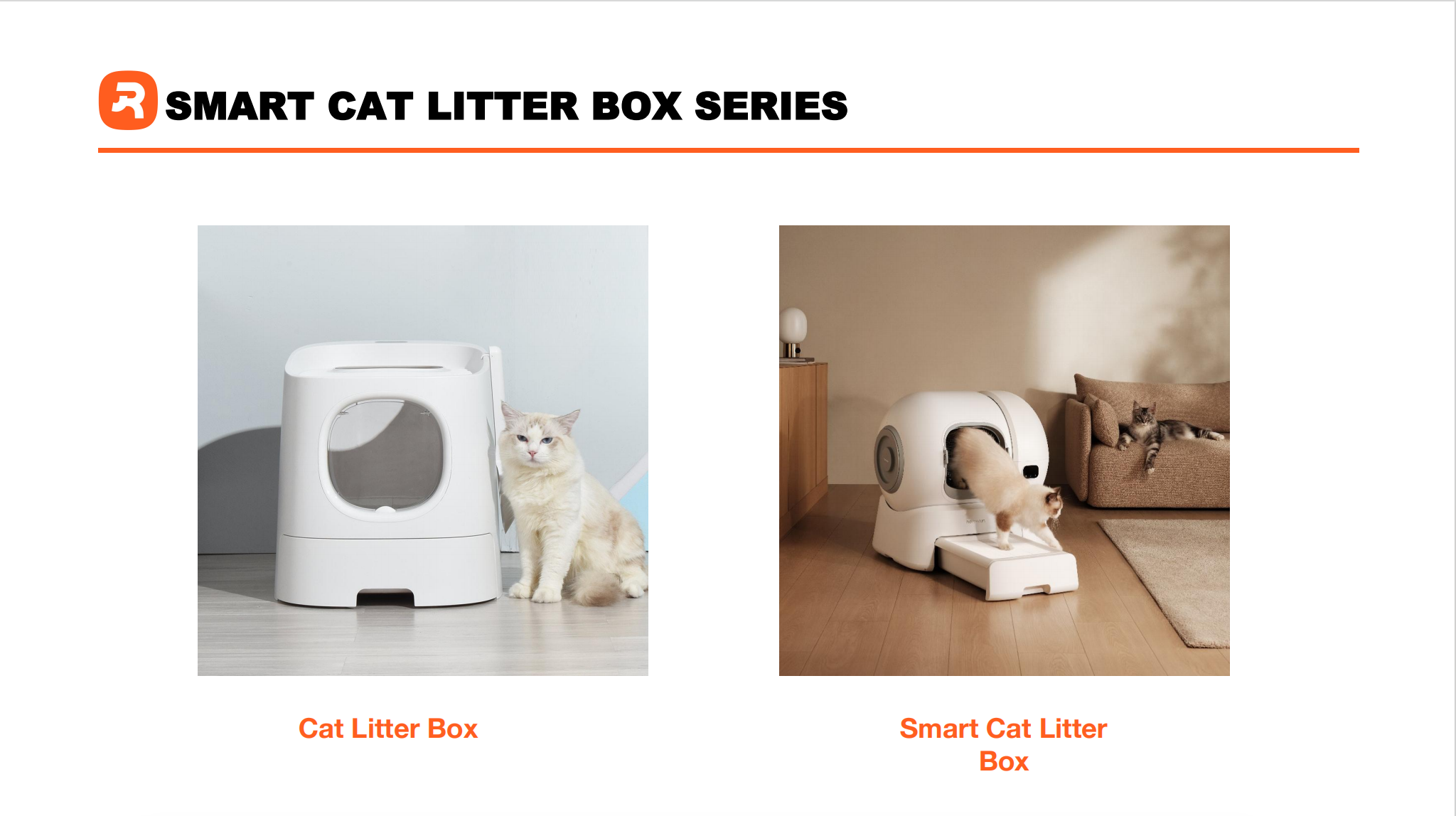
When an Automatic Box Makes Sense for New Cat Owners
Lifestyle factors outweigh novelty appeal. An automatic litter box earns its cost when daily scooping is genuinely difficult to sustain.
Scenarios where automation is practical from the start:
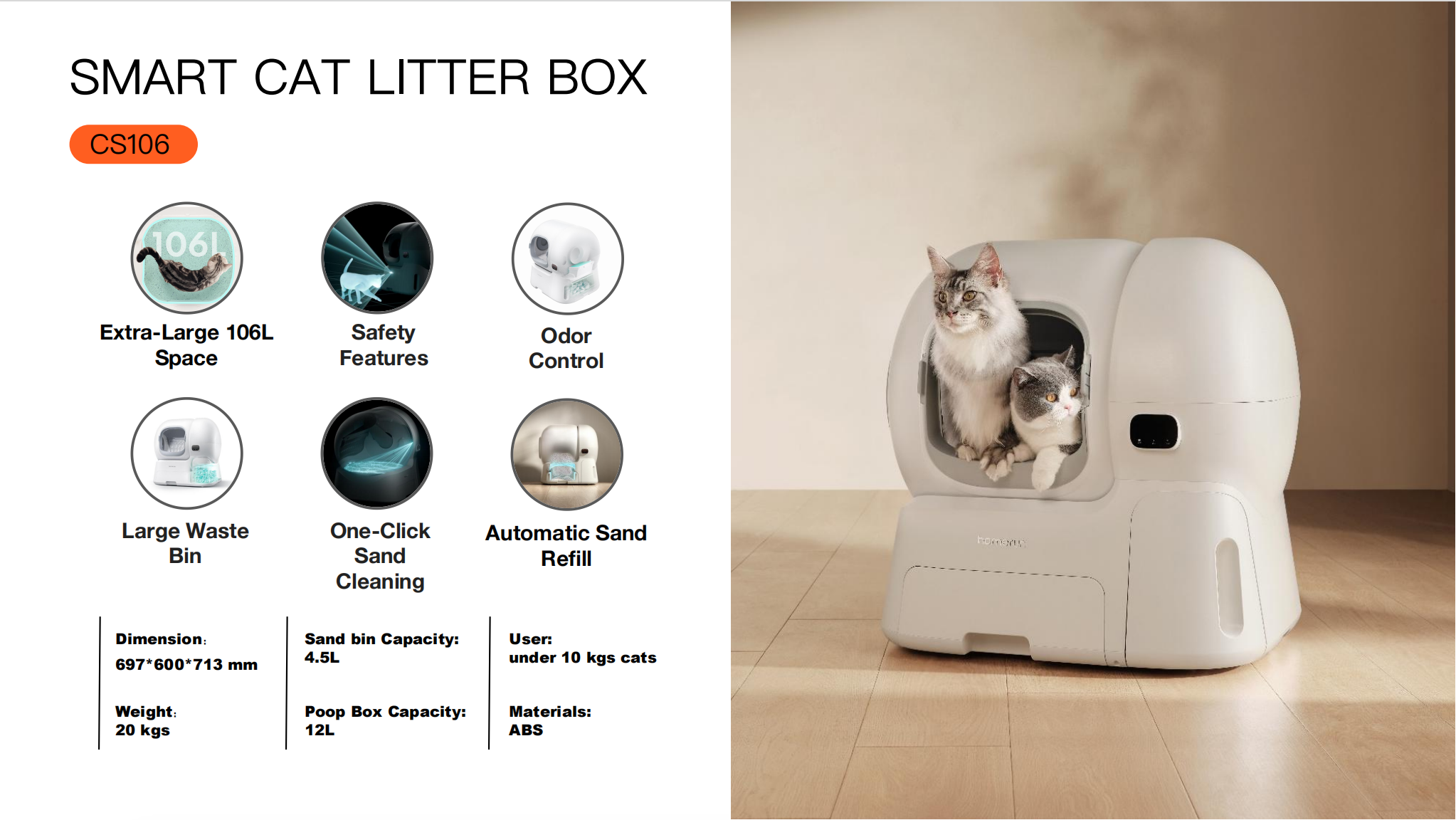
- Long work hours or frequent short trips. A unit like the homerunPET CS106, with its 12L waste bin, can handle a single cat for approximately 20 days before requiring manual emptying.
- Small living spaces where odor control is critical. Sealed waste compartments and deodorizing systems (the CS106 uses a deodorizing gel) reduce ambient smell more reliably than open boxes.
- Mobility limitations. If bending and scooping multiple times daily is physically taxing, automation removes a repeated strain point.
- Adopting an adult cat (six months or older). Adult cats trigger weight and radar sensors reliably, and their temperaments are more predictable regarding noise tolerance.
When to Start with a Traditional Box Instead
The first one to three months are an observation window. During this period, you establish a baseline for your cat's bathroom frequency, stool consistency, litter preference, and territorial behavior. A standard open box provides the clearest data without mechanical variables.
Consider delaying automation if:
- You are adopting a kitten under six months (small bodies may not consistently trigger sensors)
- Your cat shows signs of anxiety or noise sensitivity during the settling period
- Budget is constrained and you cannot afford both a backup box and the automatic unit
- You want to confirm litter preference before committing to a system that requires specific litter types
Key Factors to Weigh Before Buying
Sensor reliability and physical safety are non-negotiable. Cheap units with unreliable motion detection can cycle while a cat is still inside, creating fear responses that are difficult to reverse.
| Factor | What to Look For | Red Flags |
|---|---|---|
| Safety sensors | Dual-bump protection, radar, weight sensors | Single sensor type only, no anti-pinch mechanism |
| Internal space | 1.5x cat body length minimum; 106L+ for large breeds | Cramped interiors below 60L |
| Waste capacity | 10L+ waste bin for multi-day intervals | Small bins requiring daily emptying |
| Noise level | Under 45 dB during cycling | Audible grinding or loud motor engagement |
| Certifications | ETL, CE, or equivalent safety standards | No third-party safety certification |
| Cat weight limit | 25 lbs covers most domestic breeds | Limits below 15 lbs exclude many adult cats |
The homerunPET CS106 addresses several of these criteria directly: it carries global safety certifications (ETL, CE, PSE, FC), supports cats up to 25 lbs, and uses a multi-layered safety system combining dual-bump protection, radar sensors, and weight sensors to prevent cycling while a cat is present.
How to Transition Your Cat If You Go Automatic
Gradual introduction over two to four weeks is standard behavioral guidance. Forcing immediate adoption of a new box type increases the risk of litter box avoidance.
Step-by-step approach:
- Place the automatic unit unplugged near the existing box. Allow the cat to explore it as a static object for three to five days.
- Add familiar litter to the new unit. Use the same brand and type your cat already accepts.
- Keep the traditional box available. Do not remove it until the cat is consistently using the automatic unit.
- Activate cleaning cycles when the cat is in another room. The first few mechanical sounds should not occur while the cat is nearby.
- Monitor the first ten cycles closely. Confirm that sensors detect the cat properly and that no jams occur during rotation or sifting.
- Use positive association. Treats or play sessions near the unit (not inside it) build neutral-to-positive environmental associations.
Practical Recommendation for First-Time Owners in 2026
Start simple if everything is new. Go automatic if convenience is a known requirement. There is no behavioral penalty for upgrading later once you understand your cat's habits, preferences, and health baseline.
If you determine that an automatic box fits your situation from day one, prioritize models with documented sensor reliability, adequate interior space, and straightforward maintenance routines. homerunPET designed its CS106 with first-time owners in mind: one-click cleaning, app-based monitoring, automatic litter refill from a 4.5L sand bin, and a 90-day in-home trial that reduces commitment risk. The unit was recognized as CNN's Best Self-Refilling Litter Box of 2026, which provides an independent reference point for quality assessment.
Starting with a traditional box does not mean staying with one permanently. Many owners find that after eight to twelve weeks of manual scooping—once they have confirmed their cat's litter preferences and established a health baseline—the transition to automation is smoother and more informed.
FAQ
Q1: Do first-time cat owners need an automatic litter box from day one?
A1: Not necessarily. Most veterinary behaviorists recommend establishing your cat's habits with a standard box first. However, if your schedule or living situation makes daily scooping impractical, a well-designed automatic system like the homerunPET CS106 can work from the start with proper gradual introduction.
Q2: Is an automatic litter box worth it for a single cat?
A2: For a single cat, a quality automatic box can extend intervals between manual maintenance significantly. The homerunPET CS106, for example, handles a single cat for up to 20 days before the waste bin needs emptying, which is practical for busy owners or those who travel for short periods.
Q3: How long does it take a cat to adjust to an automatic litter box?
A3: Most cats adapt within two to four weeks when introduced gradually. Start with the unit unplugged, use familiar litter, and keep a traditional box available as a backup throughout the transition period.
Q4: What safety features should a first-time owner look for in an automatic litter box?
A4: Prioritize models with multiple sensor types (radar, weight, infrared), physical anti-pinch mechanisms, and third-party safety certifications such as ETL or CE. These features prevent the unit from cycling while a cat is inside and reduce the risk of mechanical injury.
For a closer look at specifications, safety certifications, and the 90-day trial program, visit homerunpet.com to evaluate whether the CS106 aligns with your household needs before committing to a purchase.