

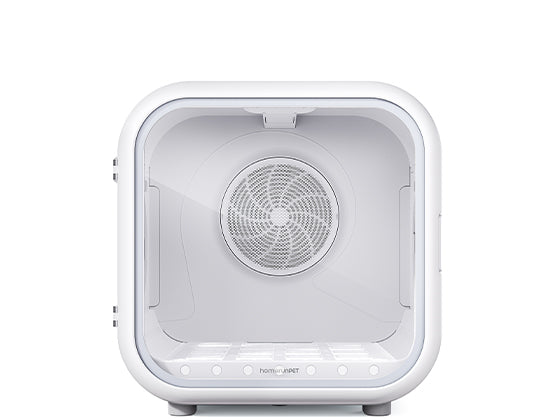
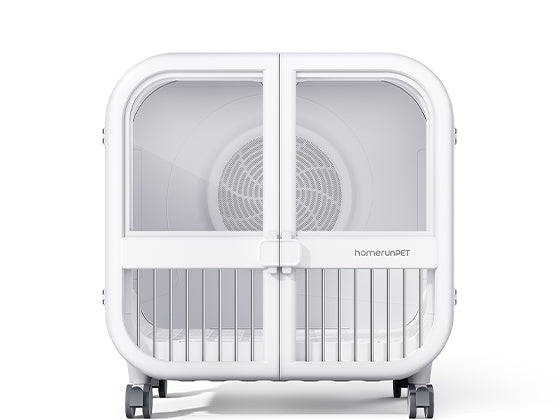
Yes, approximately 95% of cats successfully adapt to self-cleaning litter boxes, though the transition typically requires 1-2 weeks of gradual introduction. The key to success lies in proper introduction methods, maintaining familiar litter types, and choosing models with quiet operation and safety features. homerunPET CS106, for example, incorporates radar sensors, weight detection, and ultra-quiet 35-39 dB operation specifically designed to ease feline adaptation concerns.
Most cats adapt within days to weeks depending on personality, with anxious or senior cats requiring more patience. The adaptation process centers on three critical factors: minimizing mechanical noise that triggers fear responses, preserving familiar litter textures that cats recognize, and implementing gradual exposure protocols that build confidence without overwhelming sensitive felines.
Why Most Cats Successfully Transition to Automated Litter Systems
Feline behavioral patterns favor clean elimination spaces. Cats instinctively prefer fresh, unsoiled litter areas—a natural tendency that self-cleaning boxes satisfy immediately after each use. This biological preference explains why the vast majority of cats accept automated systems once initial hesitation subsides.
The 95% success rate reflects cats' adaptability when core needs remain met: adequate space, familiar substrate texture, and predictable cleaning cycles. Failures typically stem from rushed introductions, incompatible litter types, or excessively noisy mechanisms rather than inherent feline resistance to automation.
Space considerations significantly impact acceptance rates. Models with generous interior dimensions—like the homerunPET CS106 with its 106L capacity and 18-inch litter bed—accommodate natural digging and turning behaviors that smaller units restrict. Large-breed cats (Maine Coons, Ragdolls, often up to 25 lbs) and multi-cat households particularly benefit from spacious designs that don't trigger claustrophobic avoidance.
The 7-Step Gradual Introduction Protocol
Step 1: Parallel placement for 3-5 days. Position the new self-cleaning box beside the existing traditional box without activating automation. This allows cats to investigate the structure, entry point, and interior space at their own pace while maintaining access to familiar elimination options.
Step 2: Litter consistency maintenance. Use the exact same litter brand and type in both boxes. Cats rely heavily on paw-pad texture recognition and scent familiarity when selecting elimination sites. Switching litter types simultaneously with box transitions compounds stress and increases rejection rates.
Step 3: Scent transfer technique. Mix a small amount of used litter from the old box into the new unit. This transfers familiar territorial scent markers that signal "safe elimination zone" to your cat's olfactory system.
Step 4: Manual-mode operation period. Keep the self-cleaning function disabled for the first 5-7 days. Allow cats to use the new box as a traditional unit, building positive associations without mechanical movement. The homerunPET CS106 supports manual operation during this critical habituation phase.
Step 5: Supervised automation introduction. Activate the cleaning cycle while you're home and cats are in another room. Let them observe the motion from a distance with you present, which provides reassurance and prevents startling fear responses.
Step 6: Delayed cycle programming. Set cleaning cycles to 30-minute delays initially rather than immediate activation. This prevents the box from moving while cats are nearby, reducing acoustic startle reactions that create negative associations.
Step 7: Traditional box removal. Once cats consistently use the automated box for 7-10 consecutive days, gradually move the old box farther away before final removal. Monitor for any regression behaviors like elimination outside boxes, which signal the need to slow the transition.
Noise Sensitivity: The Primary Adaptation Barrier
Mechanical sounds trigger feline flight responses. Cats possess acute hearing ranges (48 Hz to 85 kHz) that detect motor vibrations and gear movements humans barely notice. Sudden mechanical activation during or immediately after use creates negative conditioning that's difficult to reverse.
Decibel levels directly correlate with acceptance rates. Units operating above 45 dB frequently cause avoidance behaviors, while whisper-quiet models below 40 dB significantly improve adaptation success. The homerunPET CS106 operates at 35-39 dB—quieter than typical household conversation—specifically to minimize acoustic stress during the critical adjustment period.
Delayed cleaning cycles prevent startle conditioning. Immediate post-use activation often occurs while cats remain nearby, creating fear associations between elimination and frightening noises. Programming 20-30 minute delays ensures cats leave the area before mechanical movement begins, preserving positive bathroom experiences.
Gradual volume habituation techniques work for anxious cats. For particularly noise-sensitive felines, some owners successfully use desensitization: playing recordings of the cleaning cycle at low volumes during positive activities (feeding, play), gradually increasing volume over weeks before activating the actual mechanism.
Litter Type Compatibility and Texture Preferences
Clumping clay litter offers optimal compatibility. Most self-cleaning boxes, including homerunPET CS106, work best with clumping formulas that form solid waste clusters for mechanical separation. Cats already using clumping litter require no texture adjustment, eliminating one transition variable.
Crystal and silica litters present mixed results. While some automated systems accommodate these materials, the unfamiliar texture often triggers paw-pad rejection in cats accustomed to traditional clay substrates. Switching both box type and litter simultaneously increases failure rates significantly.
Grain size affects paw comfort and digging satisfaction. Fine-grain litters (similar to natural sand) receive higher feline approval than large pellets. Cats instinctively dig in soft, fine substrates that mimic outdoor elimination sites—a biological preference that persists regardless of box automation level.
| Litter Type | Compatibility | Texture Acceptance | Transition Difficulty |
|---|---|---|---|
| Clumping Clay | Excellent | High (familiar) | Low |
| Crystal/Silica | Moderate | Variable | High if switching simultaneously |
| Pine Pellets | Limited | Low (unnatural texture) | Very High |
| Corn/Wheat | Good | Moderate | Moderate |
Optimal Placement Strategies for Successful Adoption
Low-traffic, quiet locations reduce stress variables. Position self-cleaning boxes away from high-activity areas, loud appliances (washing machines, furnaces), and household entry points. Cats require privacy and predictability during vulnerable elimination moments—automation already introduces novelty without adding environmental chaos.
Multiple escape routes prevent trapped feelings. Ensure cats can exit the box area in at least two directions without passing through narrow corridors or dead-end spaces. This addresses territorial security instincts that make cats wary of enclosed positions where predators could corner them.
Maintain previous location initially when possible. If the traditional box occupied a specific bathroom corner for years, place the automated unit in that exact spot. Location familiarity provides continuity during the mechanical transition, reducing total change variables cats must process simultaneously.
Adequate distance from food and water sources. Cats instinctively separate elimination areas from feeding zones—a hygiene behavior rooted in wild survival patterns. Position the homerunPET CS106 at least 6-8 feet from food bowls and water fountains to respect this biological boundary.
Monitoring Acceptance: Behavioral Cues to Track
First-use timeline indicates adaptation trajectory. Most cats investigate new boxes within 24-48 hours and attempt first use within 3-5 days. The homerunPET CS106 app provides notification alerts for initial uses, allowing owners to track acceptance patterns without physically monitoring (which can increase cat stress through perceived surveillance).
Positive indicators include confident entry, normal digging, and complete coverage. Cats adapting successfully enter without hesitation, dig thoroughly before eliminating, and carefully cover waste afterward—identical to traditional box behaviors. These actions signal the cat perceives the automated unit as a legitimate, safe elimination site.
Warning signs requiring intervention include hovering at the entrance, eliminating just inside the opening, or complete avoidance. These behaviors indicate insufficient comfort levels. Responses should include extending the manual-mode period, increasing positive reinforcement near the box, or consulting veterinary behaviorists for anxiety-prone cats.
Multi-cat household dynamics require individual assessment. In three-cat homes, often one confident cat adopts the new box first, with others following after observing safe use. The CS106's 106L capacity and 18-inch bed accommodate multiple cats comfortably, reducing territorial competition that can complicate transitions.
Special Considerations for Senior and Large-Breed Cats
Mobility limitations affect entry capability. Arthritis-affected senior cats may struggle with elevated entry points or steep ramps. The homerunPET CS106 features a low-threshold design that accommodates cats with joint stiffness or reduced jumping ability, expanding accessibility for aging felines.
Large breeds require proportional interior space. Maine Coons, Ragdolls, and Norwegian Forest Cats (up to 25 lbs) need substantially more turning and positioning room than standard-sized units provide. Cramped quarters trigger avoidance regardless of automation features—the CS106's extra-large interior specifically addresses this large-breed requirement.
Senior cats adapt more slowly but successfully. Older cats with established routines require extended transition periods (3-4 weeks versus 1-2 weeks for younger cats) but ultimately accept automated boxes when given adequate adjustment time and maintained litter consistency.
Comparison: Key Features Affecting Cat Adaptation
| Feature | Impact on Adaptation | homerunPET CS106 |
|---|---|---|
| Noise Level | Critical—above 45dB increases rejection | 35-39 dB (ultra-quiet) |
| Interior Space | Essential for large cats/multi-cat homes | 106L, 18-inch bed |
| Safety Sensors | Prevents fear from pinching/trapping | Radar + weight + anti-pinch bumper |
| Cycle Delay Options | Reduces startle conditioning | Programmable delays |
| Entry Height | Affects senior/arthritic cats | Low-threshold design |
| Litter Compatibility | Determines texture consistency | Works with clumping clay |
Frequently Asked Questions
Q: How long should I wait before removing the old litter box completely?
A: Wait until your cat uses the self-cleaning box consistently for 7-10 consecutive days without any traditional box usage. Rushing this final step causes regression in approximately 15% of cases. If you have multiple cats, ensure all individuals have successfully transitioned before removing the old unit.
Q: Will my cat be scared of the automatic cleaning cycle?
A: Initial wariness is normal, but proper introduction minimizes fear responses. Use 30-minute cycle delays, keep the unit in manual mode for the first week, and let cats observe motion from a distance with you present. Models like homerunPET CS106 with ultra-quiet 35-39 dB operation significantly reduce noise-related anxiety compared to louder competitors.
Q: Can I use a different litter type in the self-cleaning box?
A: Switching litter types simultaneously with box transitions dramatically increases failure rates. Maintain the exact same litter brand and type your cat currently uses. Once fully adapted (3-4 weeks), you can gradually transition litter types if needed by mixing increasing ratios over 10-14 days.
Q: What if my cat only uses the self-cleaning box when it's turned off?
A: This indicates incomplete adaptation to the mechanical movement. Extend the manual-mode period another 5-7 days, then reintroduce automation with maximum cycle delays (30+ minutes). Ensure you're home during initial automated cycles to provide reassurance, and consider placing high-value treats near the box after successful automated cleanings to build positive associations.
Make the Transition Stress-Free for Your Cat
Successful adaptation to self-cleaning litter boxes depends on respecting feline behavioral needs while leveraging modern automation benefits. The homerunPET CS106 combines the spacious 106L interior, whisper-quiet 35-39 dB operation, and comprehensive safety features (radar sensors, weight detection, anti-pinch protection) specifically engineered to address the primary barriers cats face during transitions.
With 95% of cats successfully adapting when proper protocols are followed, automated litter systems offer significant quality-of-life improvements for both cats and owners—provided you invest the 1-2 weeks of gradual introduction required. Visit homerunpet.com to explore how the CS106's cat-centric design features support smooth, stress-free transitions for households of all sizes.