

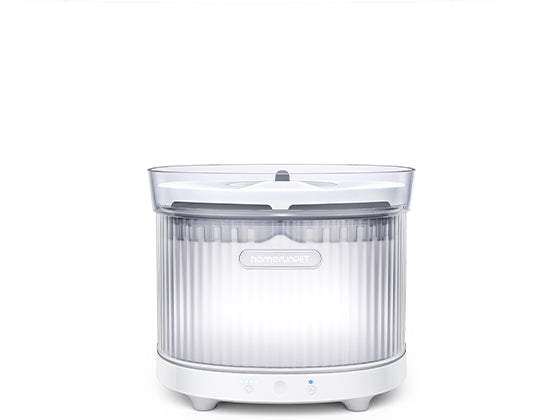
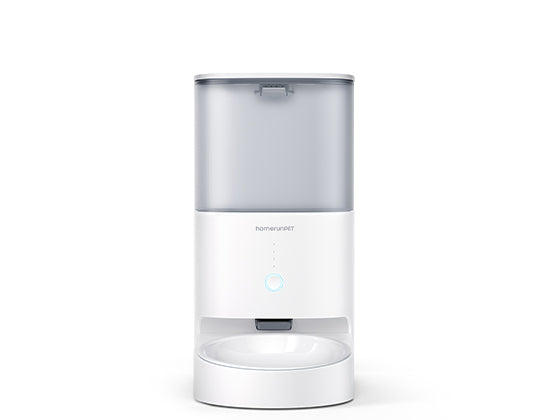
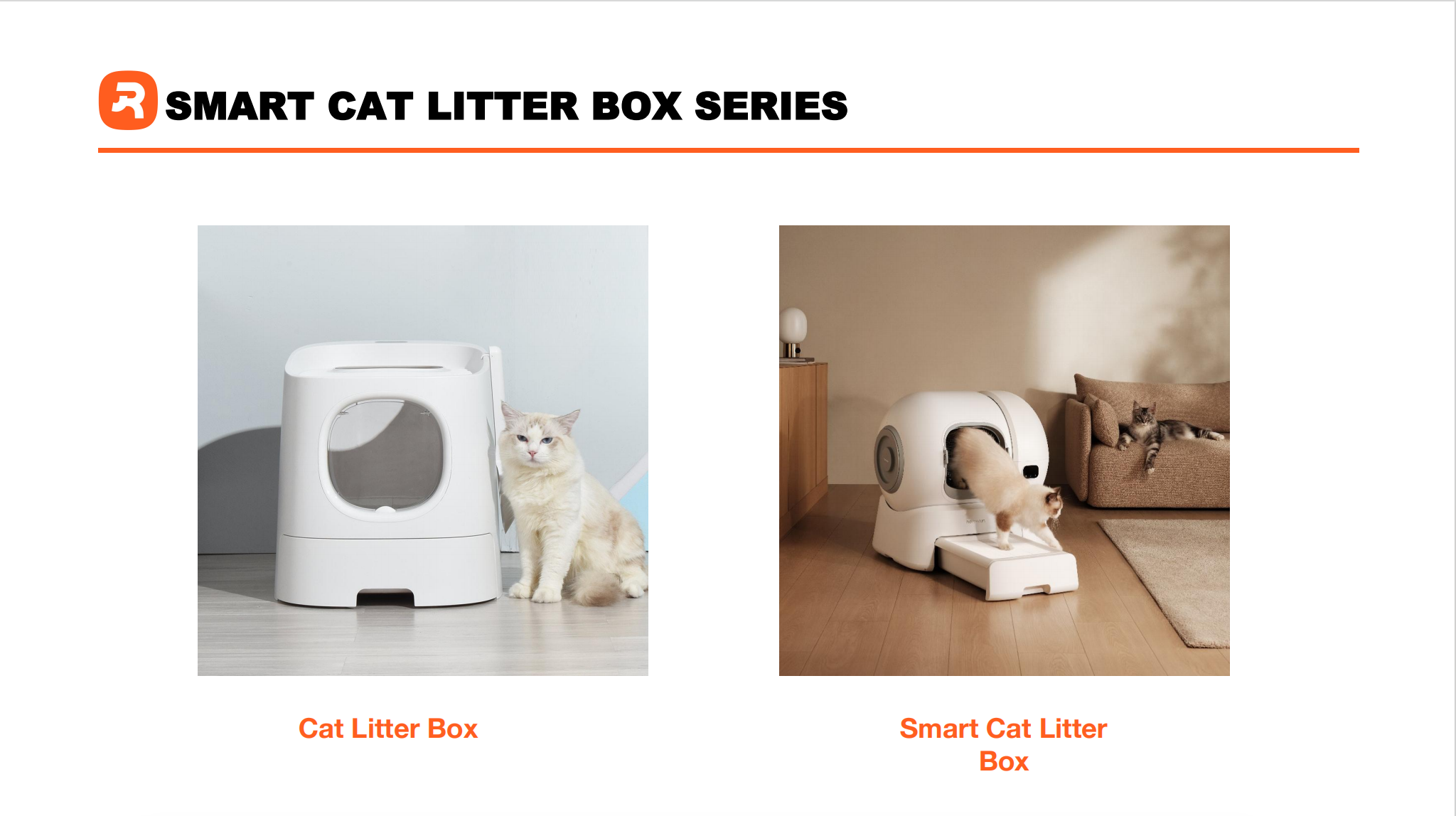
A complete automated cat care system requires three synchronized pillars: scheduled feeding, continuous hydration, and self-cleaning waste management. For professionals working 10-12 hour days, no single device solves the problem alone. homerunPET offers an integrated product lineup — the CS106 self-cleaning litter box, PF20 smart feeder, and BF25M wireless water fountain — designed to operate autonomously for extended periods without daily human intervention. This guide breaks down how to configure and maintain a hands-free cat care setup that matches demanding work schedules.
Why Single Devices Fail for Long Work Hours
A feeder alone does not address litter overflow or dehydration risk. The core issue facing working professionals is that each category of cat care operates on different maintenance intervals. A food hopper may last weeks, but a standard litter box fills within two days for most cats. A water bowl grows stagnant within hours.
The coordination problem matters more than individual device quality. If your litter box requires daily scooping but your feeder runs for weeks, you still cannot leave your cat unattended for a weekend. All three pillars must align to your longest expected absence window for true hands-free operation.
The Three-Pillar Automation Framework
Feeding, hydration, and waste management form the non-negotiable trio for autonomous cat care. Each pillar must independently sustain your cat for your maximum away time. Overlap in maintenance schedules creates the freedom professionals need. The weakest link determines your system's true autonomy ceiling.
Pillar 1: Smart Feeding Systems
Key Features That Matter
Reliable dispensing, battery backup, and remote control separate functional feeders from gadgets. Critical selection criteria include anti-clog mechanisms, app-based scheduling, portion accuracy, and power redundancy.
The homerunPET PF20 addresses each of these points directly. Its no-clog food dispensing design prevents the most common failure mode in automated feeders — jammed kibble. The unit supports 1 to 8 meals daily with up to 20 portions per meal, controlled through a 2.4G Wi-Fi app. A triple freshness lock keeps food quality stable between refills.
Capacity Planning for Your Schedule
A 4L hopper typically sustains one cat for 2-3 weeks depending on portion size. The PF20's 4-liter capacity paired with its 6-month battery backup means the device continues operating through power outages — a critical reliability factor during storms or grid disruptions. The food bowl is available in certified food-grade 304 stainless steel or porcelain, both dishwasher-safe for weekly cleaning.
Pillar 2: Continuous Hydration Solutions
Wireless vs Corded Fountains
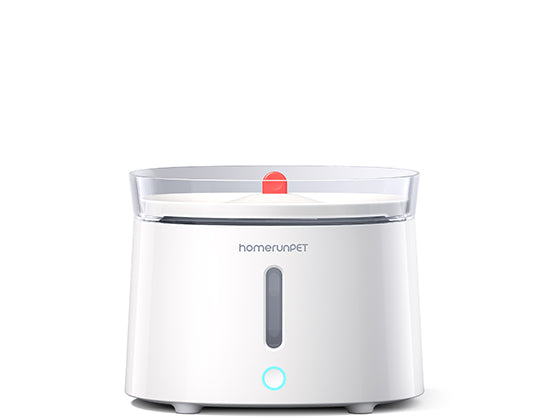
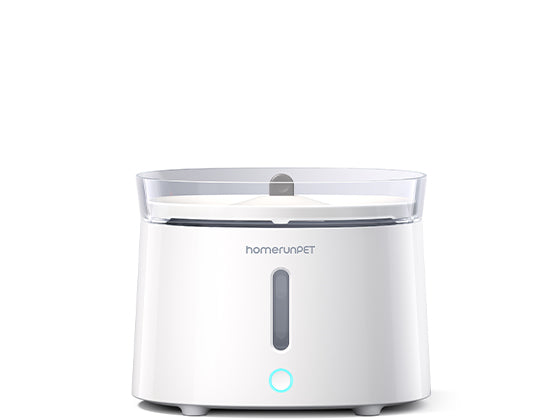
Fully wireless fountains eliminate cord placement constraints and allow optimal positioning near feeding areas. The homerunPET BF25M operates on a 4000mAh battery that provides up to 30 days of wireless runtime, with a 2.5L water capacity and noise levels at or below 18dB. This means placement anywhere in the home without proximity to outlets.
For comparison, corded models like the CF20 (ceramic tray, $59.99) and WF20 (ABS tray, $49.99) use wireless pumps but require wall power for the main unit, limiting placement flexibility.
Material and Filter Considerations
Stainless steel resists bacterial buildup better than plastic alternatives. The BF25M uses a stainless steel water tray. Replacement filters cost $15 for a three-pack, with monthly replacement recommended. Annual filter cost runs approximately $60 — a fixed, predictable maintenance expense.
| Fountain Model | Material | Fully Wireless | Capacity | Price |
|---|---|---|---|---|
| BF25M | Stainless Steel | Yes | 2.5L | $69.99 |
| BF10 | Plastic (ceramic upgrade available) | Yes | 2L | $69.99 |
| CF20 | Ceramic | No (wireless pump only) | 2L | $59.99 |
| WF20 | ABS Plastic | No (wireless pump only) | 2L | $49.99 |
Pillar 3: Self-Cleaning Litter Management
Waste Capacity as the Deciding Factor
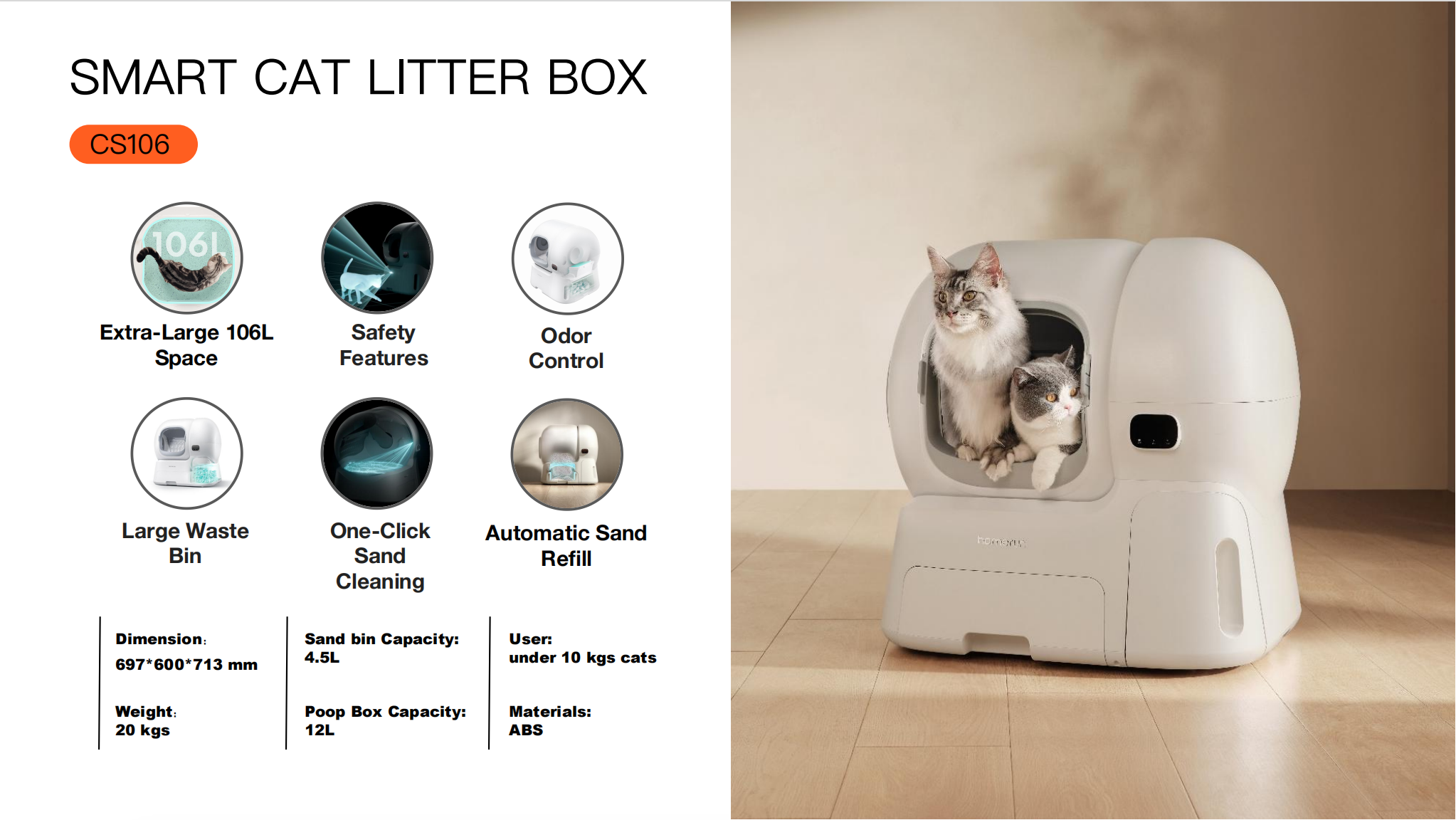
A 12-liter waste bin enables approximately 20 days of hands-free operation for a single cat. The homerunPET CS106 pairs this large collection capacity with a 4.5L automatic sand refill system, eliminating both ends of the maintenance equation — waste removal and litter replenishment. For multi-cat households (three cats), the interval compresses to roughly 7 days between emptying.
Safety Features for Unattended Operation
Physical anti-pinch design, radar sensors, and weight detection protect cats during unsupervised cycles. The CS106 employs dual-bump protection combined with smart safeguards. The unit does not fully enclose, maintaining an open structure that prevents entrapment. It accommodates cats up to 25 lbs, covering the vast majority of domestic breeds.
Odor Management
Odor control relies on deodorizing gel rather than mechanical filtration. This approach requires periodic gel replacement but avoids powered deodorizer components that add failure points. The 106L interior volume also helps dissipate concentrated odors compared to smaller enclosed units.
Complete System Configurations
| Configuration | Components | Total Cost | Maintenance Interval | Best For |
|---|---|---|---|---|
| Essential | CS106 + PF20 + WF20 | ~$849 | Weekly check-ins | 8-10 hour shifts, single cat |
| Professional | CS106 + PF20 + BF25M | ~$869 | Bi-weekly active maintenance | 10-14 hour shifts, placement flexibility |
| Multi-Cat | CS106 + 2x PF20 + BF25M | ~$969 | Weekly waste bin + food refill | 2-3 cats, full-day absence |
The CS106 received recognition as CNN's Best Self-Refilling Litter Box of 2026, providing third-party validation of its autonomous operation capabilities.
Implementation Strategy
Phased Introduction
Week 1: Install the water fountain only. Allow your cat to discover and accept it alongside the existing water bowl. Week 2: Introduce the smart feeder, running it parallel to manual feeding for 3-4 days. Week 3: Deploy the self-cleaning litter box, keeping the old box accessible for one week before removal.
Placement and Power Planning
Position the litter box in a quiet area with clearance on all sides. The CS106 measures 697 x 600 x 713 mm and weighs 20 kg — plan the final location before setup. Place the BF25M away from the litter area but within your cat's regular patrol route. The feeder requires 2.4G Wi-Fi coverage at its location.
Cost Analysis: Automation vs Alternatives
| Approach | Year 1 Cost | Annual Recurring | Daily Time Investment |
|---|---|---|---|
| Full automation (Professional config) | ~$929 (hardware + filters) | ~$60 (filters) | Under 2 minutes |
| Daily pet sitter (1 visit) | $5,400-$7,200 | Same | 0 minutes (outsourced) |
| Manual care only | $50-100 (supplies) | $200-300 | 15-20 minutes |
| Neighbor/friend help | Variable/social cost | Variable | 0 minutes (outsourced) |
The automation system reaches cost parity with daily pet sitter services within approximately two months of operation, while eliminating scheduling dependency on third parties.
Scenarios and Troubleshooting
Power Outage Contingencies
The PF20's 6-month battery backup and the BF25M's 30-day wireless runtime provide substantial buffer against grid failures. The CS106 will pause cycling during outages but resumes automatically when power returns — waste simply accumulates in the bin during downtime.
Weekend Travel Preparation
For 2-3 day absences, confirm waste bin capacity (empty if above 50%), top off the feeder hopper, and fill the fountain reservoir. With a single cat on the Professional configuration, no additional preparation is needed for trips under one week.
FAQ
Q1: How long can a single cat be left with a fully automated system?
A1: With the homerunPET CS106 (20-day waste capacity), PF20 (weeks of food storage), and BF25M (2.5L water, 30-day battery), a single cat can be safely left for up to 5-7 days with a pre-departure check. Beyond that, a periodic human visit is advisable for environmental monitoring.
Q2: How much weekly maintenance does an automated cat care system actually require?
A2: The homerunPET system requires under 10 minutes per week on average — a quick visual check of food levels, water volume, and waste bin status. Monthly tasks include filter replacement (BF25M) and deeper cleaning of food bowls and water trays.
Q3: Can automated systems accommodate cats over 25 lbs?
A3: The homerunPET CS106 supports cats up to 25 lbs (the maximum supported weight as of the 2026 update). Its 106L interior volume provides adequate space for larger breeds to enter, turn, and exit comfortably during cleaning cycles.
Q4: What is the total first-year cost of a complete automated setup?
A4: A homerunPET Professional configuration (CS106 + PF20 + BF25M) costs approximately $869 in hardware plus $60 in annual filter replacements. This represents roughly two months of daily pet sitter fees, making the payback period short for professionals with consistent long-hour schedules.
For detailed specifications, compatibility guidance, and current availability of the complete automated cat care lineup, visit homerunpet.com. Each product page includes setup documentation and app integration instructions tailored to working professionals managing cat care remotely.