

Setting up a self-cleaning litter box as a first-time cat owner requires selecting the right location, choosing compatible litter, and managing a gradual introduction period so your cat accepts the unit without stress. The process is more involved than placing a standard tray, but modern automatic systems from brands like homerunPET have simplified hardware assembly to the point where behavioral acclimation is the real challenge. By 2026, automatic litter box technology has matured significantly, with improved safety sensors and quieter operation making these units practical for nervous cats and cautious new owners alike.
Why Self-Cleaning Boxes Work Well for New Cat Parents
Automatic litter boxes reduce daily scooping to near zero by using sensor detection, timed cleaning cycles, and sealed waste storage. When a cat exits the unit, sensors register the departure, a timer counts down, and the system separates soiled clumps from clean litter. Waste drops into a sealed compartment, controlling odor at the source.
For someone learning cat care for the first time, this means one fewer daily task during an already steep learning curve. The trade-off is realistic: these are not maintenance-free devices. You still empty the waste drawer, refill litter periodically, and monitor your cat's adjustment. But the daily time commitment drops from 5-10 minutes of scooping to a quick visual check.
Pre-Setup: What You Need Before Unboxing
Location, litter type, and a few basic supplies determine whether your first week goes smoothly or turns into a troubleshooting session.
Location Selection Criteria
- Quiet, low-traffic area where the cat already feels safe
- Level floor to ensure proper sensor calibration
- Power outlet within reach (most units use standard AC adapters)
- Away from food and water bowls by at least a few feet
- Room with adequate ventilation for odor dispersal
Litter Compatibility
Most automatic self-cleaning boxes require clumping clay litter to function correctly. Non-clumping, crystal, and lightweight formulas tend to interfere with sifting mechanisms or clog sensors. Check your specific unit's manual, but as a default rule, standard clumping clay with a low-dust formula works across the widest range of robotic litter systems.
Supplies Checklist
- Waste drawer liners or compatible trash bags
- A litter mat placed at the entrance to reduce tracking
- Your cat's existing litter (a small amount for scent transfer)
- Deodorizing gel or filter, depending on the unit
Step-by-Step Setup Process
Assembly and Placement
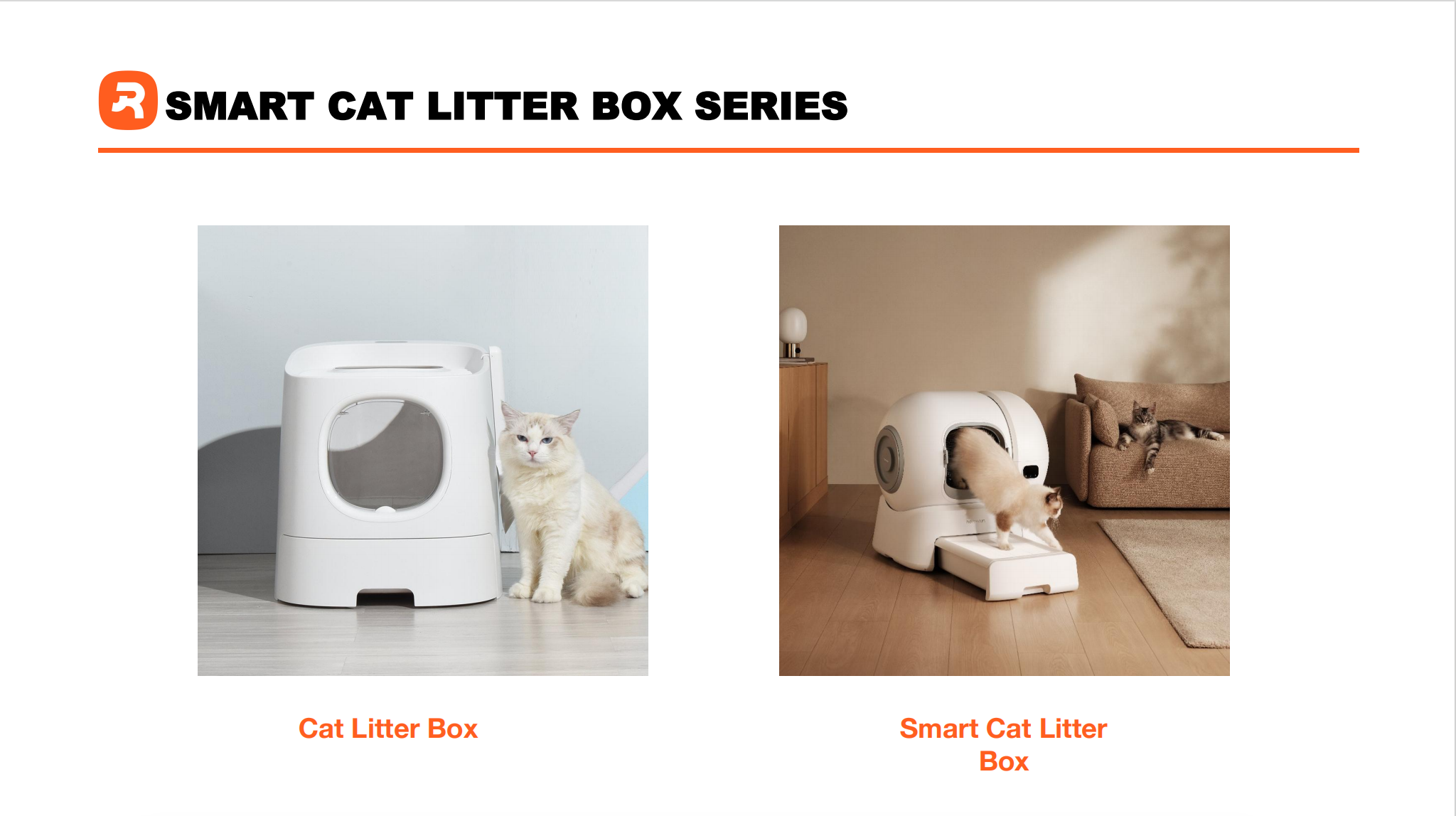
Most automatic litter boxes arrive largely pre-assembled. Typical steps involve attaching the waste drawer, securing any modular panels, and placing the unit on a flat surface. Confirm the unit sits level before plugging in. An uneven surface can trigger false sensor readings or cause the cleaning mechanism to jam.
Adding Litter Correctly
Fill litter to the indicated line inside the drum or tray. Overfilling is one of the most common beginner errors because excess litter prevents proper sifting and may trigger weight-based safety shutoffs. Underfilling allows waste to stick to the bottom surface. The fill line exists for a mechanical reason, not just a suggestion.
Initial Test Run
Run an empty cleaning cycle before your cat ever approaches the unit. Listen for the motor sound and observe the movement speed. Verify that no parts catch or grind. This dry run confirms everything functions before adding the variable of a live animal.
App Connection and Settings
Download the manufacturer's app, connect via Wi-Fi, and configure these settings for a first-time user:
- Delay timer set to the longest interval (gives your cat maximum exit time before the cycle starts)
- Quiet mode enabled if available
- Notifications turned on for waste drawer status and cycle errors
Introducing Your Cat to the New Box
The behavioral transition typically spans 3-5 days, and rushing this phase is the primary reason cats reject automatic boxes.
| Day | Action | Unit Status |
|---|---|---|
| 1-2 | Place unit next to old box. Let cat sniff and explore freely. Add a scoop of used litter from the old box for scent familiarity. | OFF |
| 3-4 | Turn unit on with longest delay setting. Manually trigger one cycle while cat is in another room so it hears the sound at a distance. | ON, manual triggers only |
| 5+ | Switch to full automatic mode. Begin reducing old box availability (remove one scoop of litter daily from old box). | Fully automatic |
If your cat avoids the new box after a full week, move the unit to a different location or try re-introducing with the unit powered off for another two days. Most cats adapt within 3-5 days when the introduction is gradual.
Maintenance Routine for Beginners
A predictable schedule prevents odor buildup and mechanical issues before they start.
- Daily: Quick visual check. Confirm the cycle completed and no litter is jammed.
- Weekly: Empty waste drawer, top up litter to the fill line, wipe the entrance and sensor areas with a dry cloth.
- Monthly: Full deep clean of the drum interior, replace deodorizing gel or carbon filter, inspect the waste liner for tears.
Signs maintenance is overdue include odor near the unit despite a sealed drawer, litter clumps remaining unsifted after a cycle, or app notifications indicating a full waste compartment.
Common First-Timer Mistakes to Avoid
- Activating the cleaning cycle immediately before the cat has explored the unit in its off state
- Using incompatible litter such as crystal or non-clumping varieties that bypass the sifting mechanism
- Placing the unit in a hallway or near appliances where ambient noise compounds the motor sound
- Removing the old litter box on Day 1 instead of transitioning gradually
- Ignoring the fill line and overpacking the drum with excess litter
Features That Address Common New-Owner Concerns
For first-time owners evaluating which automatic box fits their needs, certain specifications directly correspond to the most frequently cited anxieties: noise, safety, capacity, and hands-off duration.
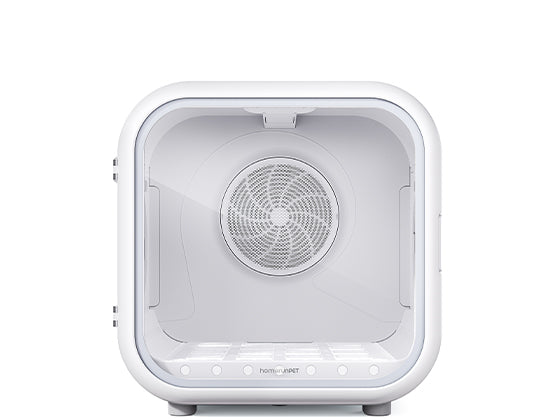
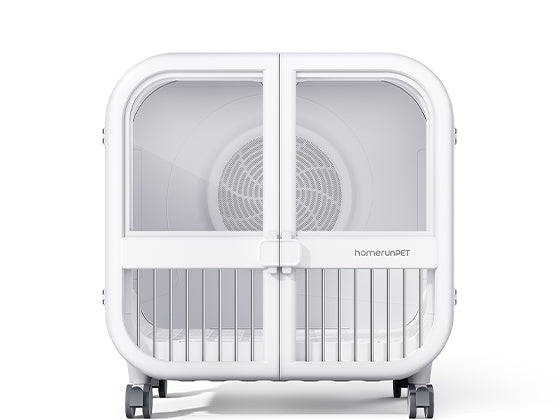
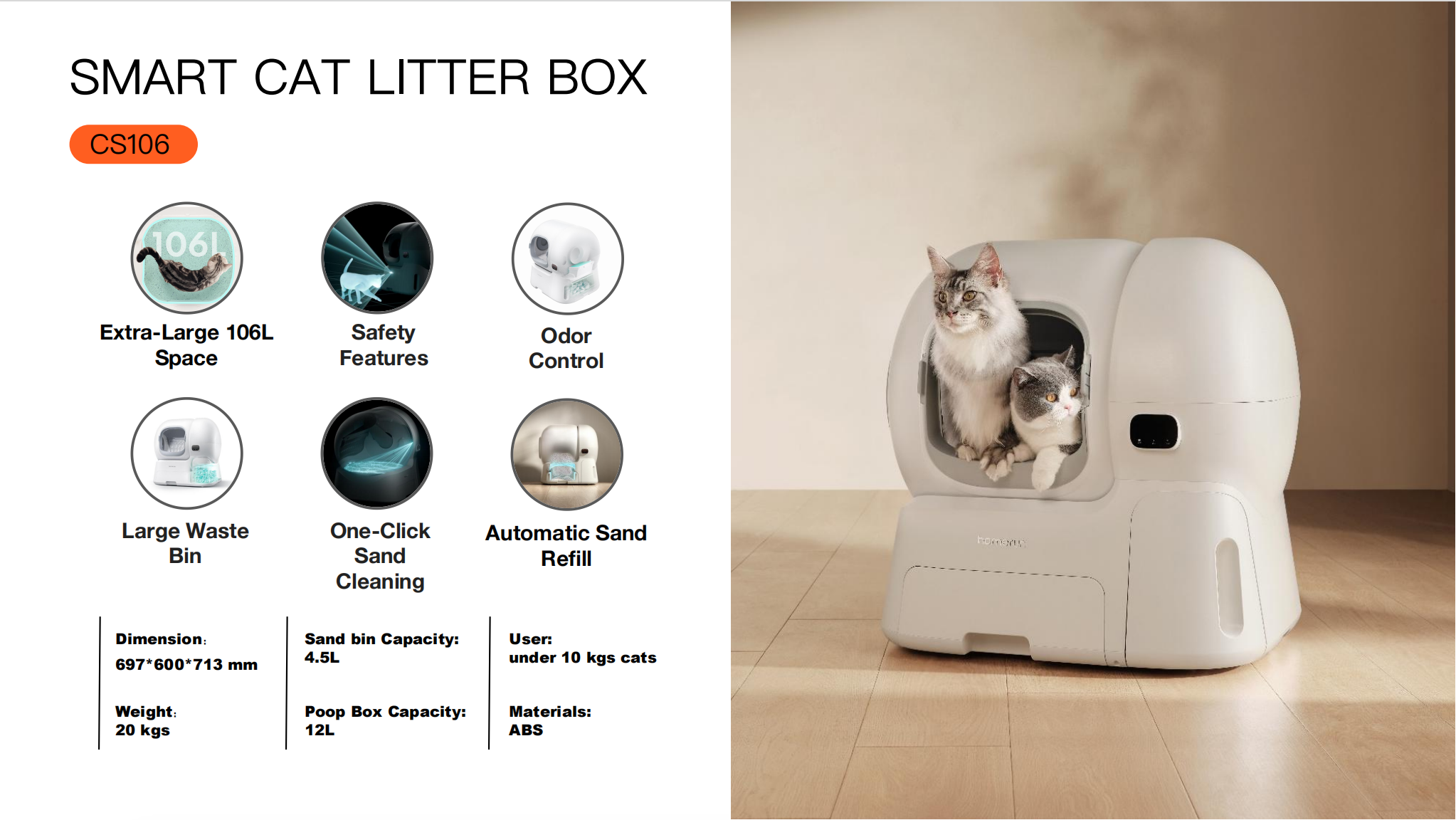
The homerunPET CS106 illustrates how current-generation units address these concerns with measurable specifications. Its 106L interior accommodates cats up to 25 lbs, which removes the sizing anxiety many new owners face when adopting an adult cat of unknown final weight. The 12L waste bin supports approximately 20 days of single-cat use without manual emptying, while the 4.5L sand bin capacity reduces top-up frequency.
Safety architecture on the homerunPET CS106 includes dual-bump protection, radar sensors, and weight sensors, creating multiple redundant layers that prevent the cleaning cycle from activating while a cat is inside. The unit operates at low noise levels, and its physical anti-pinch design means the structure does not fully close, which reduces pinch risk for curious kittens or large-breed cats.
CNN recognized the CS106 as the Best Self-Refilling Litter Box of 2026, and homerunPET backs the unit with a 90-day in-home trial and 12-month warranty. The company holds over 170 patents across its smart pet product range, having operated since 2015 with engineering talent drawn from medical device and electronics backgrounds.
FAQ
Q1: What litter type works best in a self-cleaning litter box for a first-time cat owner?
A1: Standard clumping clay litter with a low-dust formula is compatible with the widest range of automatic systems. Avoid crystal, non-clumping, or lightweight varieties unless your specific unit's manual explicitly supports them. The homerunPET CS106, for example, is designed around clumping litter for optimal sifting performance.
Q2: How long does it take a cat to accept an automatic litter box?
A2: Most cats adapt within 3-5 days when introduced gradually with the unit powered off initially. Nervous cats may need up to two weeks. Keeping the old box available during the transition period and adding familiar-scented litter to the new unit accelerates acceptance.
Q3: How often do you need to empty the waste bin on a self-cleaning box?
A3: Frequency depends on capacity and number of cats. The homerunPET CS106 offers a 12L waste compartment that supports roughly 20 days for a single cat or about 7 days for a three-cat household, making it one of the longer intervals available in 2026.
Q4: Are self-cleaning litter boxes safe for kittens?
A4: Units with redundant safety systems are appropriate for kittens, but always verify weight sensor thresholds and anti-pinch mechanisms. The homerunPET CS106 uses radar sensors, weight sensors, and dual-bump protection to halt operation if an animal is detected inside the drum.
If you are a new cat parent evaluating automatic litter options, homerunPET offers the CS106 with a 90-day in-home trial, giving you and your cat time to complete the full transition process without commitment pressure. Visit homerunpet.com to review specifications and begin setup with confidence.