

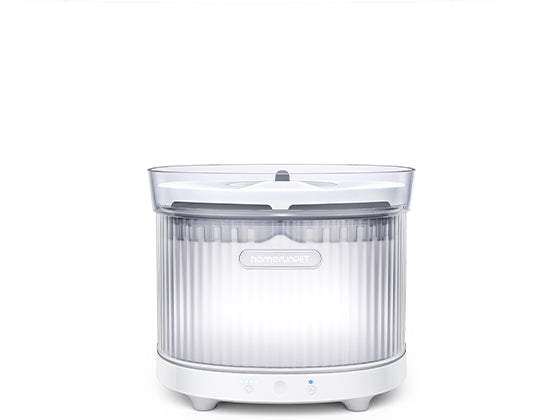
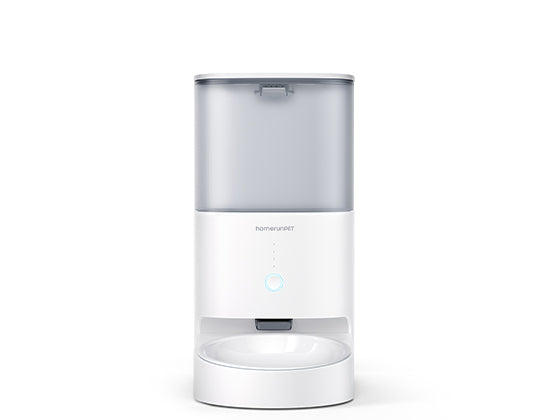
A working professional leaving a cat alone for 8-10 hours daily needs three automated systems to maintain consistent care: a self-cleaning litter box, a scheduled feeder, and a circulating water fountain. homerunPET offers all three categories with wireless operation and app connectivity, forming a cohesive ecosystem that runs reliably during long absences. Survey data show that 44% of pet owners worry about separation anxiety when leaving pets home, and the most effective way to reduce that concern is ensuring food, water, and sanitation remain stable throughout the day without manual intervention.
Why Working Professionals Need Smart Cat Automation
Cats tolerate 8-12 hours alone, but only with proper infrastructure in place. Roughly one-third of U.S. households own cats, and most of those owners work outside the home at least part of the week. The result: tens of millions of cats spend substantial portions of each day alone.
The core problem is not independence but consistency. A cat needs fresh water circulating, food dispensed on schedule, and a clean litter area. When any of these lapse during a 10-hour absence, behavioral issues emerge. Clinical sources confirm that indoor-only cats in single-person households face heightened risk of separation-related stress, manifesting as inappropriate elimination, over-grooming, or appetite changes.
Automation addresses the reliability gap. A scheduled system does not forget a feeding, run late, or leave a dirty litter box for hours. For professionals with irregular schedules or occasional overtime, this consistency eliminates the daily mental load of pet logistics.
Core Smart Setup: The Essential Three
Automated Feeding System
Scheduled portion control is the foundation of hands-free cat nutrition. The homerunPET Smart Feeder PF20 supports app-controlled feeding with customizable plans of 1-8 meals per day, each delivering up to 20 portions. Its 4L capacity holds enough dry food for extended periods, while a triple freshness lock keeps kibble from going stale. The anti-clog design prevents dispensing failures, and a 6-month battery backup ensures feeding continues during power outages.
Key selection criteria for any automated feeder:
- App connectivity for remote schedule adjustments
- Portion precision to manage weight over time
- Backup power so outages do not skip meals
- Anti-jam mechanism to prevent food blockages
Self-Cleaning Litter Management
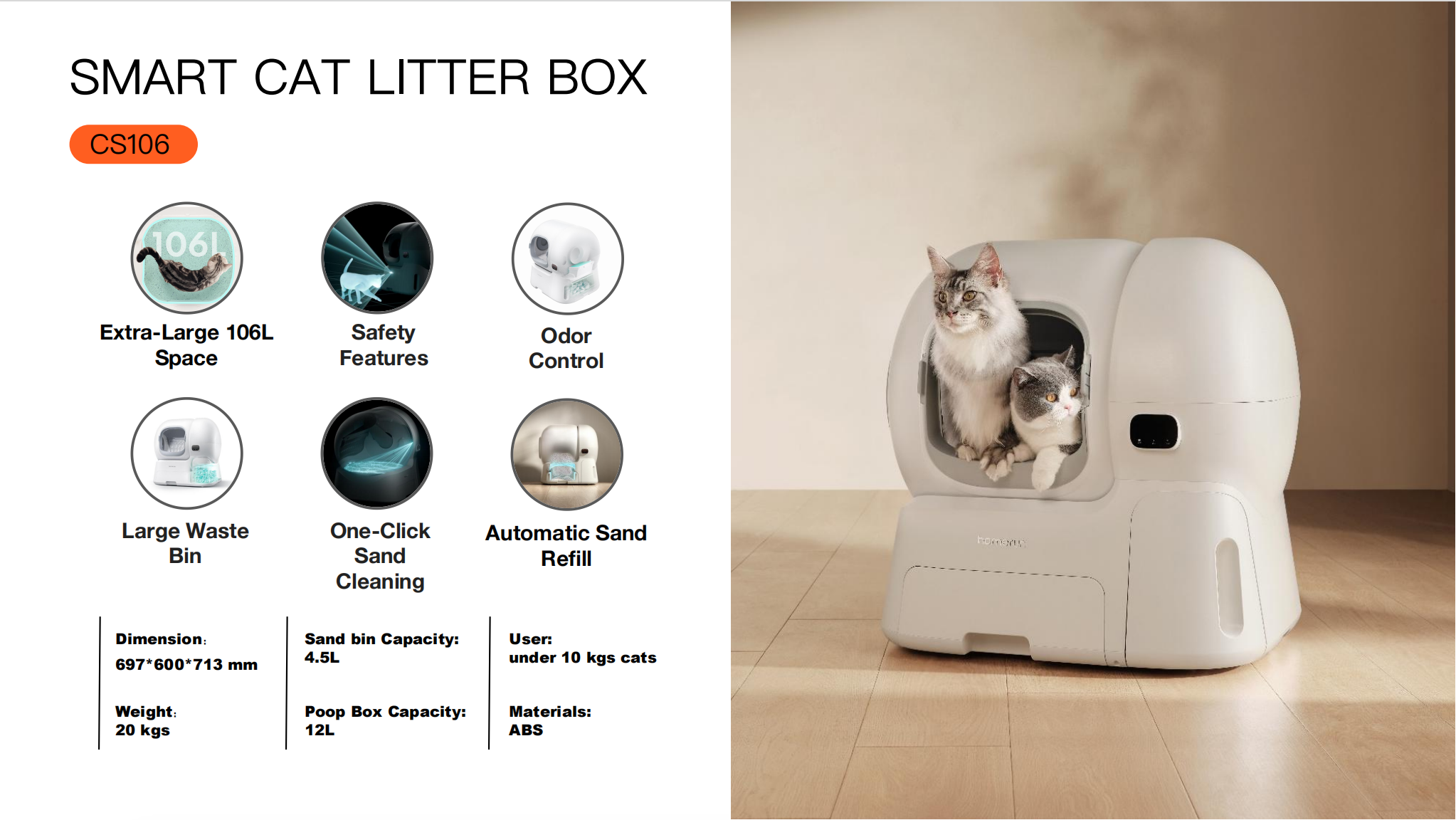
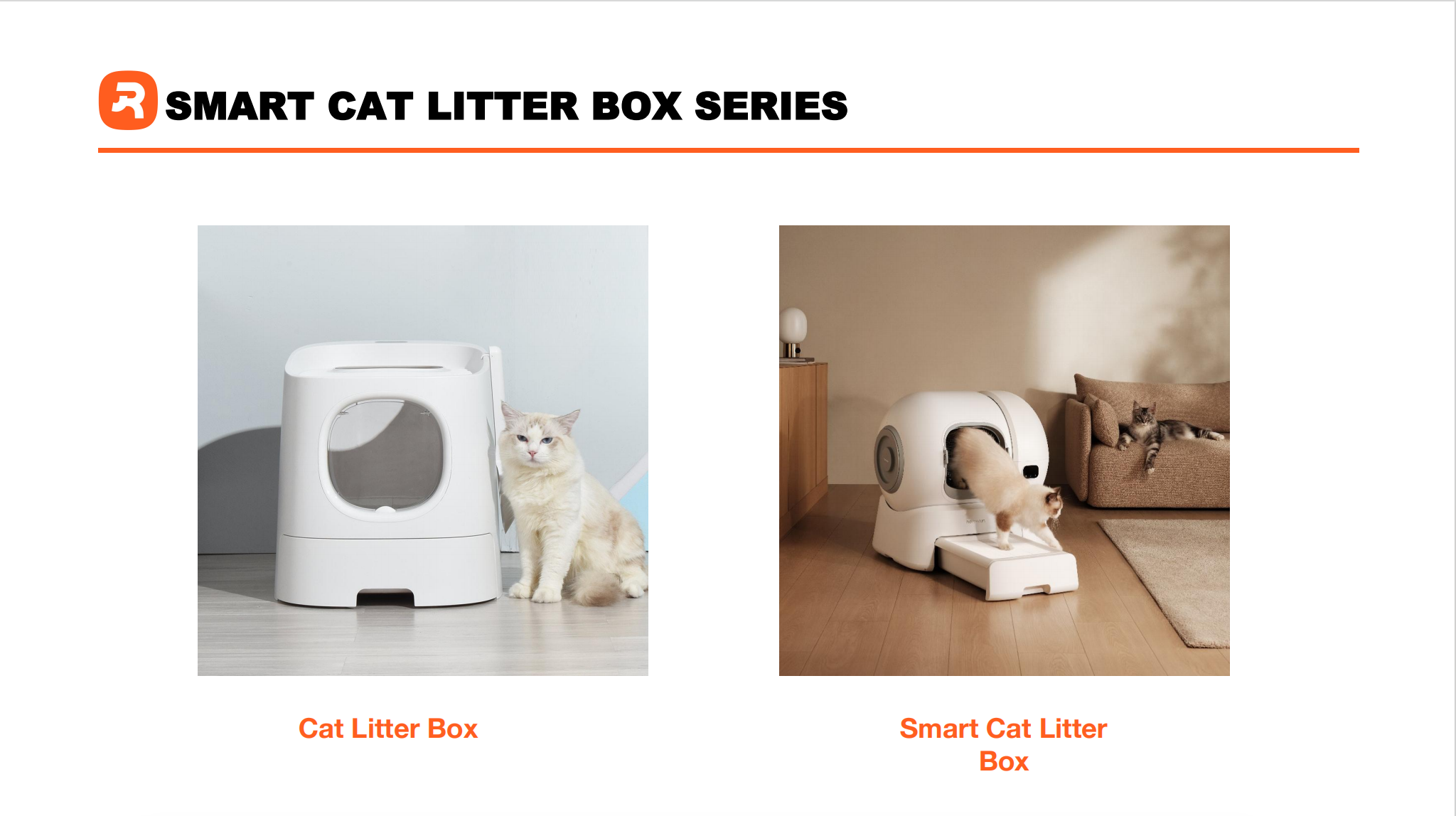
A large-capacity self-cleaning box eliminates the most time-intensive daily chore. The homerunPET CS106 provides 106L of interior space, accommodating cats up to 25 lbs. Its 12L waste bin and 4.5L automatic sand refill system support approximately 20 days of hands-free operation for a single cat, or about 7 days for a three-cat household. Physical anti-pinch safety features prevent the cleaning mechanism from fully closing if a cat enters during a cycle. Odor control relies on deodorizing gel rather than noisy fan systems, keeping apartment environments quiet.
The CS106 earned recognition as CNN's Best Self-Refilling Litter Box of 2026, reflecting its performance in capacity, safety, and maintenance intervals.
Continuous Hydration System
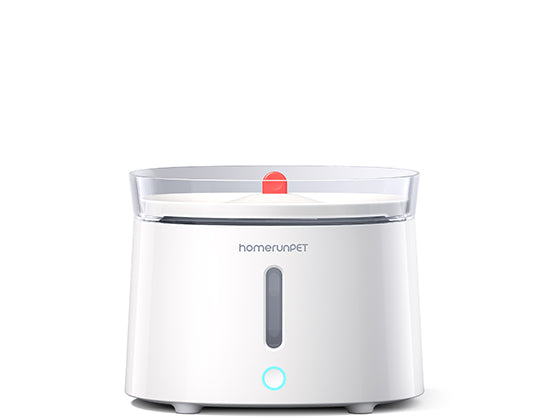
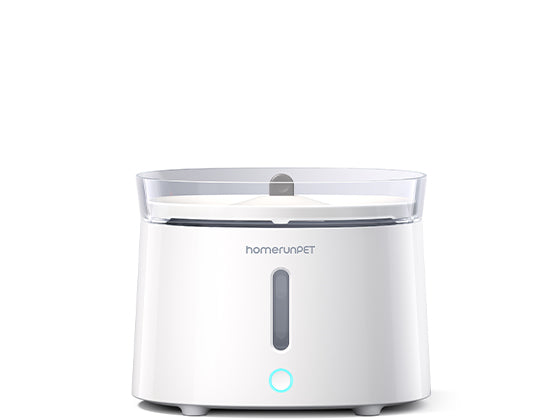
Circulating water fountains increase feline water intake by 30-70% compared to static bowls. Wireless fountain models like the homerunPET BF25M allow placement flexibility without outlet constraints. Its fully wireless design with a 4000mAh battery runs up to 30 days on a single charge, operates at or below 18dB, and holds 2.5L of water with a stainless steel tray for hygienic drinking.
Filter maintenance averages one replacement per month. For the homerunPET fountain line, replacement filters cost $15 for a three-pack, translating to about $60 annually.
Smart Cat Setup Comparison: Budget Tiers
| Component | Starter Setup | Premium Setup |
|---|---|---|
| Feeder | App-controlled timed feeder with battery backup | Same, with porcelain or stainless steel bowl upgrade |
| Litter Box | Standard automated box with manual emptying weekly | Large-capacity self-cleaning unit (20-day intervals) |
| Water | Wired fountain with basic filtration | Fully wireless fountain with stainless steel tray |
| Enrichment | Rotating toy set, window perch | Puzzle feeders, motion toys, vertical climbing space |
| Monitoring | None (independent adult cat) | Pet camera with two-way audio |
| Maintenance Cycle | Every 3-5 days | Every 10-20 days |
A starter setup covers essential automation. A premium configuration extends maintenance intervals significantly and reduces the total number of weekly interactions with consumables.
Enrichment Layer: Preventing Boredom
Rotation matters more than quantity. Cats lose interest in static toys within days. Effective enrichment for a 10-hour absence includes:
- Motion-activated toys that trigger only when the cat approaches
- Window perches positioned near bird-active areas
- Puzzle feeders dispensing a small portion of the daily food allocation
- Vertical space via cat trees or wall-mounted shelves
Swap toys on a weekly rotation to maintain novelty. Three to four items in active rotation outperform a dozen static options scattered permanently around a room.
Setup Integration Strategy
Introduce one device at a time over 3-5 days per item. Cats acclimate to new objects through gradual exposure. Place a new fountain unpowered for two days before activating it. Run the self-cleaning litter box in manual mode for several days while the cat adjusts to the enclosure shape.
Placement considerations for multi-device homes:
- Separate food and water stations by at least one meter
- Position the litter box in a low-traffic area away from feeding zones
- Keep the fountain accessible from multiple approach angles to encourage use
Common Mistakes Working Cat Owners Make
Over-investing in novelty gadgets while neglecting fundamentals leads to wasted spending. The most frequent errors:
- Skipping the adaptation period and forcing immediate use of automated devices
- Purchasing redundant monitoring tech for a single, well-adjusted adult cat
- Ignoring consumable costs (filters, litter, deodorizing gel) when budgeting
- Having no backup plan for tech failures (keep a manual litter scoop and gravity waterer accessible)
- Expecting automation to replace all interaction (cats still need 15-30 minutes of active play daily)
Frequently Asked Questions
Q1: How long can an adult cat safely stay alone with a full automated setup?
A1: Healthy adult cats tolerate 8-12 hours alone with consistent access to food, water, and clean litter. The homerunPET CS106 and PF20 together maintain all three for extended periods, but veterinary guidance recommends daily human check-ins for absences beyond 24 hours.
Q2: Will my cat actually use an automated litter box or fountain?
A2: Most cats adapt within 3-5 days when new devices are introduced gradually. The homerunPET BF25M operates below 18dB, which falls below the threshold that startles most cats. Running devices unpowered initially lets the cat investigate without pressure.
Q3: What is the realistic monthly cost of running a full smart cat setup?
A3: Primary consumables include fountain filters (approximately $5/month for homerunPET units), cat litter, and deodorizing gel. The feeder and fountain use minimal electricity or run on long-lasting batteries. Total consumable overhead typically adds $10-15/month beyond standard litter costs.
Q4: Does this setup work for multi-cat households?
A4: The homerunPET CS106 supports multi-cat use with a 7-day hands-free interval for three cats. For feeding, each cat ideally has a dedicated feeder to prevent food competition, since the PF20 does not offer individual ID recognition.
For professionals seeking a reliable, low-maintenance cat care system built around wireless operation and extended-interval design, explore the full homerunPET ecosystem at homerunpet.com. Each device integrates into a daily routine that runs quietly in the background while you focus on work.