

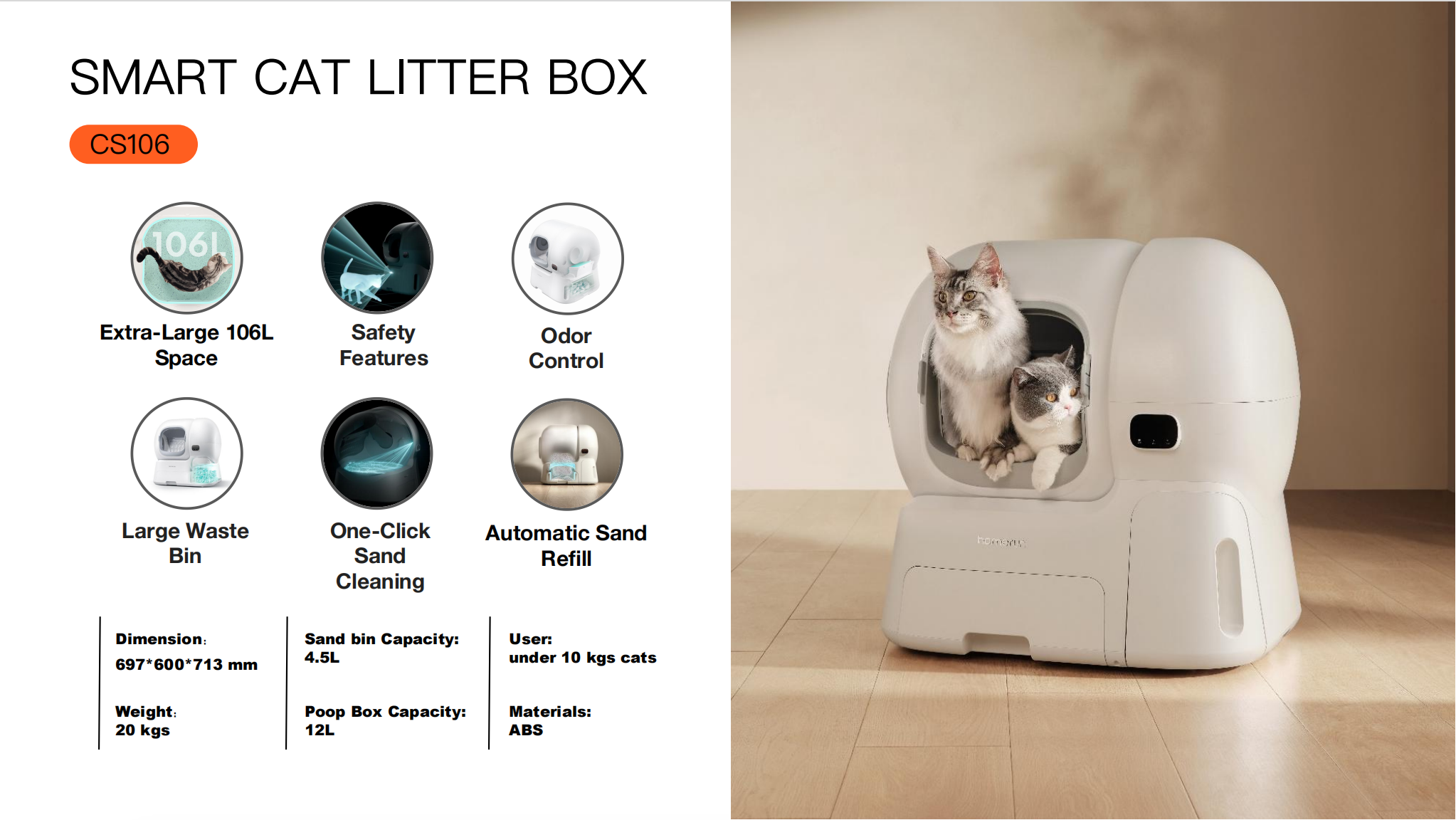
Multi-cat households face a compounding sanitation challenge: more cats mean faster waste accumulation, stronger odors, and higher risk of litter box avoidance. A self-cleaning litter box with large waste capacity, reliable safety sensors, and effective odor control solves these issues simultaneously. The homerunPET CS106, with its 106-liter interior and 12-liter waste drawer, represents the current high-capacity benchmark for homes with three or more cats, supporting approximately seven days of hands-free operation in a three-cat household.
Why Multi-Cat Homes Need Self-Cleaning Litter Boxes
Manual scooping becomes unsustainable at scale. A single cat generates enough waste to require daily attention; three cats triple that burden. Odor compounds faster in shared spaces, and territorial stress increases when boxes are not kept clean. Self-cleaning units address all three pressures by cycling waste out of the active litter bed shortly after each use.
Territorial conflicts decrease with cleaner boxes. Cats are less likely to avoid a litter box that resets itself between visits. Automatic cycling ensures each cat encounters a relatively fresh surface, reducing both accidents outside the box and inter-cat tension around shared resources.
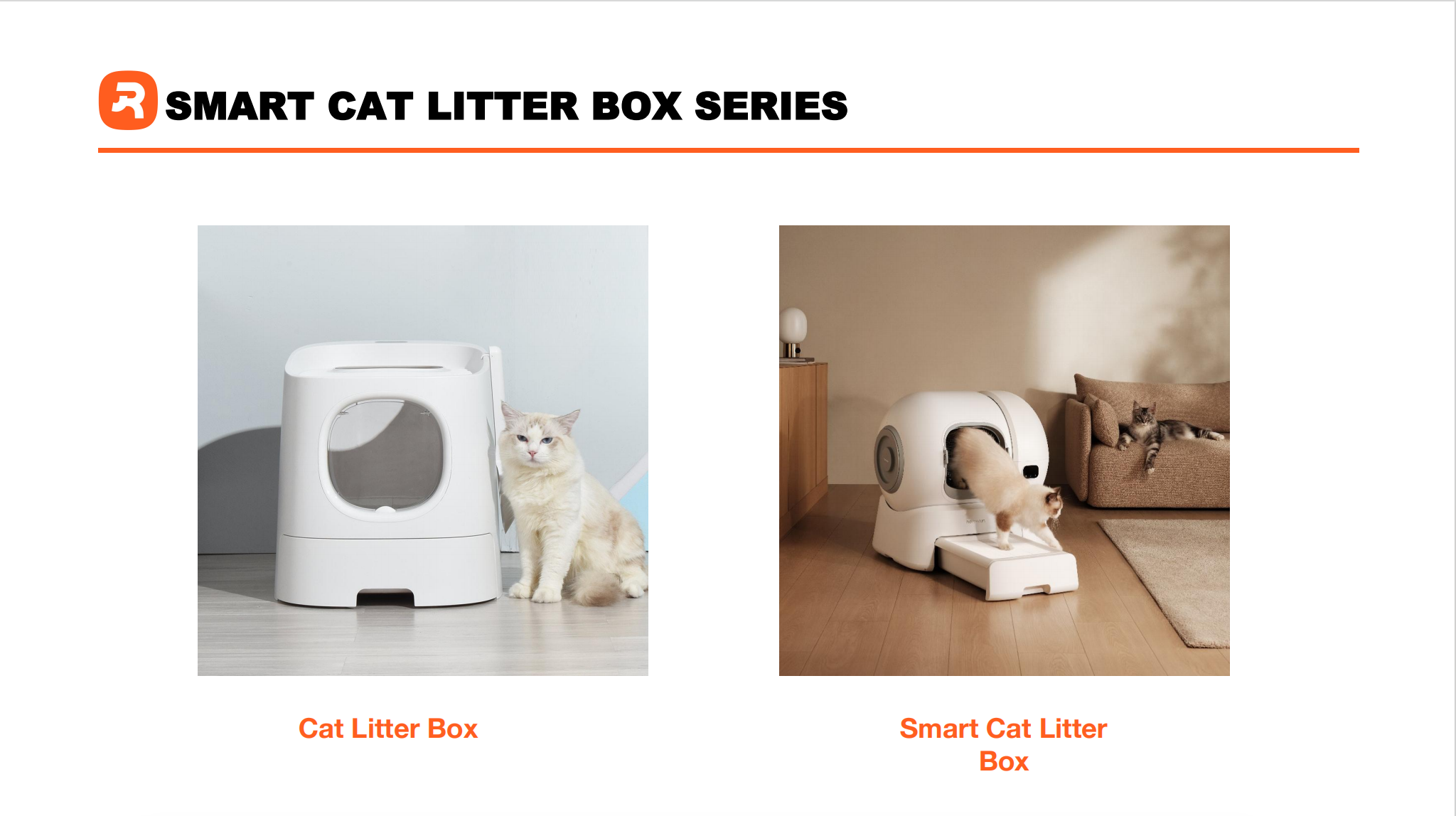
Time savings scale with cat count. Where a single-cat owner might save a few minutes daily, a three-cat household recovers 15-20 minutes of daily maintenance. Over a week, that represents meaningful time returned.
Key Features to Prioritize for Multiple Cats
Waste Drawer Capacity
The waste drawer determines how often you interact with the unit. For three or more cats, a drawer under 8 liters requires emptying every 2-3 days, which partially defeats the purpose of automation. Models with 10-12 liter drawers extend this interval to 5-7 days. The homerunPET CS106 uses a 12-liter waste compartment, which in a three-cat scenario provides roughly one week of collection before requiring attention.
Odor Control Systems
Sealed waste compartments and active deodorization are both necessary. A large drawer alone does not prevent odor from escaping if the seal is poor. Look for units that combine physical separation (sealed bins, carbon filters, or similar barriers) with active odor neutralization. Deodorizing gel systems offer continuous passive odor management without requiring electrical components or replacement cartridges on a frequent schedule.
Safety Sensors
Multi-cat homes have higher interruption rates during cleaning cycles. When one cat exits and another immediately enters, the unit must detect the new occupant and halt operation. Effective safety systems layer multiple detection methods: weight sensors to register presence, radar or infrared sensors to detect approach, and physical anti-pinch mechanisms as a final mechanical failsafe. Units that rely on a single detection method carry higher risk in busy multi-cat environments.
Interior Space and Entry Size
Large cats need room to turn, dig, and position comfortably. An interior volume below 60 liters often forces cats over 12 pounds into cramped postures. For multi-cat homes that include larger breeds such as Maine Coons or Ragdolls, 80-100+ liters of interior space prevents avoidance behavior driven by physical discomfort. Entry openings should accommodate cats up to 25 pounds (approximately 11.3 kg) without requiring them to squeeze or contort.
Selecting the Right Capacity Tier
| Feature | Standard Tier | Mid-Range Tier | High-Capacity Tier |
|---|---|---|---|
| Interior Volume | 40-60L | 60-85L | 85-110L |
| Waste Drawer | 5-7L | 7-10L | 10-13L |
| Days Between Emptying (3 cats) | 2-3 days | 4-5 days | 5-7 days |
| Max Cat Weight | 15-18 lbs | 18-22 lbs | Up to 25 lbs |
| Typical Safety Systems | Weight sensor only | Weight + infrared | Multi-layer (radar, weight, physical) |
| Price Range | $250-$400 | $400-$600 | $600-$900 |
| Best For | 2 average-sized cats | 2-3 cats, mixed sizes | 3+ cats, large breeds |
The homerunPET CS106 sits at the top of the high-capacity tier with its 106-liter interior, 12-liter waste drawer, and multi-sensor safety architecture including dual-bump protection, radar sensors, and weight sensors.
How to Choose the Right Model for Your Household
Start with cat count and body size, then work backward to specifications. The math is straightforward: more cats and larger cats demand more interior space, bigger waste drawers, and more robust safety systems.
Three cats under 15 pounds each: Mid-range units with 8-10 liter drawers may suffice, provided you empty on a 4-5 day schedule. Safety sensors remain important but interruption frequency is moderate.
Three or more cats, including cats over 15 pounds: High-capacity units become necessary. The waste volume, interior clearance, and safety demands all scale upward. A 12-liter drawer and 100+ liter interior accommodates this scenario without requiring daily intervention.
Apartment dwellers with multiple cats: Noise output matters more in smaller living spaces. Units advertising low-noise operation reduce disruption during nighttime cycles. App-controllable scheduling allows you to restrict cycles to daytime hours if needed.
Budget considerations: Higher upfront cost at the premium tier typically correlates with longer intervals between maintenance, fewer consumable costs (standard clumping litter compatibility versus proprietary media), and better durability under heavy daily use. The homerunPET CS106 at $699 occupies the premium segment while including auto-refill functionality (4.5L sand bin capacity) that further reduces intervention frequency to roughly 20 days for single-cat use.
Maintenance and Transition Tips
Emptying Schedule by Cat Count
Adjust your emptying frequency to actual usage, not manufacturer estimates alone. Manufacturer timelines assume average-weight cats with typical output. Cats on wet-food diets or cats with higher hydration produce more waste volume. Monitor drawer fill levels via app notifications when available, and establish your household's actual rhythm within the first two weeks.
Helping Multiple Cats Adapt
Gradual introduction reduces rejection rates significantly. Place the new unit unpowered beside existing boxes for 3-5 days. Allow cats to explore it as a static object before activating automatic cycles. Keep at least one traditional box available during the full transition period, which typically takes 1-3 weeks for all cats to switch voluntarily.
Cleaning Best Practices
Monthly deep cleaning remains necessary regardless of automation. Remove and wash all accessible components with mild, unscented soap. Avoid harsh chemicals that leave residual odors cats find aversive. Replace deodorizing media on the manufacturer-recommended schedule. Inspect sensors and moving parts for accumulated dust or litter debris that could impair function.
Frequently Asked Questions
Q1: Can one self-cleaning litter box handle three or more cats?
A1: A single high-capacity unit like the homerunPET CS106 can physically manage waste from three cats for approximately seven days between emptyings. However, feline behaviorists recommend maintaining at least one additional box (automated or traditional) per the "N+1" guideline to reduce territorial stress and provide backup access.
Q2: What litter type works best in automatic litter boxes for multiple cats?
A2: Standard clumping clay litter performs most reliably in rotating-sifter and gravity-based mechanisms. Avoid ultra-lightweight or crystal-only litters, which can interfere with sifting systems and weight-based sensors. The homerunPET CS106 is compatible with standard clumping litter, keeping ongoing consumable costs predictable.
Q3: Are self-cleaning litter boxes safe for homes with multiple cats entering in quick succession?
A3: Units with multi-layer safety systems handle rapid sequential entries effectively. The homerunPET CS106 employs dual-bump protection, radar sensors, and weight sensors together with a physical anti-pinch mechanism, creating redundant detection that halts operation whenever a cat is detected regardless of cycle stage.
Q4: How quiet are modern self-cleaning litter boxes for apartment use?
A4: Current 2026 models have made meaningful improvements in motor noise compared to earlier generations. Low-noise operation is standard in premium-tier units, and app-based scheduling allows you to restrict cleaning cycles to hours when ambient noise is less disruptive.
For multi-cat households ready to reduce daily maintenance while maintaining a cleaner, lower-odor environment, the homerunPET CS106 offers the largest interior capacity currently available in a self-cleaning design. Detailed specifications, a 90-day in-home trial, and free shipping information are available at homerunpet.com.