

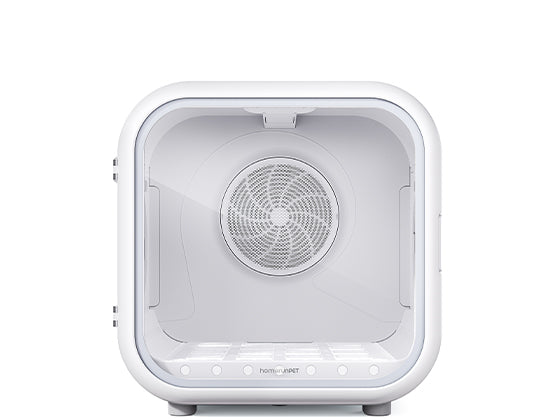
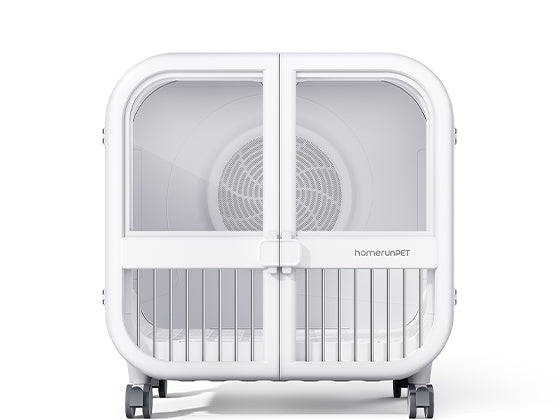
Multi-cat households need a self-cleaning litter box with oversized waste capacity, reliable cycling under heavy use, and genuine odor containment. The homerunPET CS106 addresses these demands with a 106L interior chamber and a 12L waste bin — supporting up to 7 days between cleanings with three cats. Named CNN's Best Self-Refilling Litter Box of 2026, it handles cats up to 25 lbs and includes app-based monitoring for tracking usage across multiple cats. Here is what real multi-cat testing reveals about performance, maintenance, and long-term reliability.
Why Multi-Cat Homes Need Purpose-Built Self-Cleaning Boxes
Heavy use exposes the weak points that single-cat owners never encounter. Back-to-back entries can overwhelm smaller waste bins within 2-3 days, forcing owners right back into the daily scooping routine they paid to escape. Undersized chambers create another problem: larger cats or multiple cats using the box in quick succession can trigger jams or incomplete cleaning cycles.
When waste drawers fill beyond capacity, seals fail and smell permeates the room. For multi-cat households generating waste around the clock, bin overflow becomes a near-daily frustration.
The homerunPET CS106 was engineered specifically to solve these multi-cat pain points, scaling both chamber size and waste capacity to match actual household demand.

What Actually Matters: Real User Priority Ranking
Waste bin capacity ranks as the single most important factor for multi-cat owners. Based on aggregated user feedback, here is how priorities stack up:
- Waste bin size and emptying frequency — Determines how many days you actually go hands-free
- Cycle reliability under heavy use — Back-to-back entries must not cause jams or error states
- Odor containment — Sealed waste compartments with active deodorizing perform best
- Noise during operation — Night cycles matter when the box sits near bedrooms
- Litter compatibility — Flexibility to use tofu litter, bentonite, or mixed blends without clumping failures
Each of these factors scales in importance with every additional cat in the home. A feature that barely matters for one cat becomes a dealbreaker at three or four.
Capacity Tiers: Matching Box Size to Cat Count
The right waste bin capacity depends entirely on your cat count and cleaning tolerance.
2-3 Cat Households: Daily Maintenance Reality
With two cats, the homerunPET CS106 and its 12L waste bin delivers approximately 10-14 days between manual emptying. Three cats reduce that window to roughly 7 days. The 4.5L auto-refill sand bin means you are not constantly topping off litter between cycles, either.
For this household size, a single high-capacity unit can replace the traditional "one box per cat plus one extra" rule. Automatic cleaning after each use keeps the box neutral-scented, which reduces territorial avoidance — a common trigger for litter box problems. At least 10% of cats in multi-cat households develop elimination issues tied to dirty or contested boxes.
4+ Cat Households: Weekly Emptying Requirements
Four or more cats demand either a larger-capacity unit emptied more frequently or a two-box strategy. A single 12L waste bin serving four cats requires emptying every 4-5 days. Pairing two units in separate locations addresses both capacity and territorial spacing, particularly for cats that display guarding behavior.
The 106L interior chamber of the CS106 accommodates cats up to 25 lbs, which matters in homes with Maine Coons, Ragdolls, or other large breeds alongside standard-sized cats.
Odor Control: How the CS106 Tackles Multi-Cat Smell
Sealed waste compartments with active deodorizing outperform passive ventilation in every multi-cat scenario. Open or semi-ventilated waste trays allow ammonia buildup to escape into the room, especially when bins approach capacity.
The homerunPET CS106 uses a deodorizing gel system paired with its sealed 12L waste compartment. This approach targets odor at the source, providing continuous neutralization rather than temporary masking. The sealed design ensures that even as waste accumulates over several days, odor remains contained within the compartment.
Litter type also plays a meaningful role. Tofu-based litters absorb moisture faster and produce less dust, while bentonite clumps tighter for easier cycling. The CS106 supports both tofu litter and bentonite, giving owners flexibility to choose based on their cats' preferences and odor control goals.
| Feature | homerunPET CS106 Specification |
|---|---|
| Waste bin capacity | 12L |
| Interior chamber size | 106L |
| Single cat emptying interval | Up to 20 days |
| 3-cat emptying interval | ~7 days |
| Max cat weight supported | 25 lbs |
| Auto litter refill | 4.5L auto-refill bin |
| Litter compatibility | Tofu and bentonite |
| Odor system | Deodorizing gel + sealed bin |
| App monitoring | Full app control |
| Safety features | Dual-bump, radar, weight sensors |
The Maintenance Reality Nobody Mentions
Every self-cleaning box requires periodic deep cleaning, sensor upkeep, and a cat adaptation window. The "set it and forget it" promise has limits worth understanding upfront.
Deep cleaning frequency: Plan for a thorough wash every 2-4 weeks, depending on cat count. This means removing internal components, scrubbing residue, and inspecting seals.
Sensor maintenance: Radar and weight sensors need occasional wiping. Dust and litter particles accumulate on sensor surfaces, leading to false triggers or missed cycles if neglected. The CS106 uses dual-bump protection, radar sensors, and weight sensors as part of its multi-layered safety system, all of which benefit from periodic cleaning.
The adaptation period: Cats need 3-5 days to get comfortable with any new self-cleaning box. Start by placing the unit next to the existing litter box with the automatic cycle turned off. Gradually enable cleaning features over several days. The CS106 offers a delayed start function and quiet operation mode specifically designed to ease this transition — the motor runs at low noise levels, reducing the startle factor that causes many cats to reject automatic boxes outright.
Litter usage efficiency: Automatic boxes use up to 30% less litter than traditional boxes since they only remove clumps. Over months of use, this offsets a meaningful portion of the upfront investment.
Decision Framework: Cat Count + Space + Budget
Match your purchase decision to three variables: how many cats you have, where the box will live, and what maintenance schedule you can sustain.
- 1-2 cats in an apartment: The homerunPET CS106 delivers up to 20 days hands-free for a single cat, with odor sealing that keeps small spaces fresh.
- 3 cats in a house: The 12L waste bin and auto-refill dramatically reduce weekly work. The CS106 fits this profile with its 7-day multi-cat interval, one-click cleaning, and app-based usage tracking.
- 4+ cats or territorial households: Consider a two-box strategy with CS106 units placed in separate rooms to prevent guarding conflicts while maintaining the same app-based monitoring across both.
Key considerations: Ensure any unit you select supports cats at their full adult weight, offers app connectivity for monitoring individual cat usage patterns, and provides a generous trial period so your cats can adapt at their own pace.
Multi-Cat Owner Consensus: What Works Long-Term
- Capacity wins every time. Owners who upgrade to the 12L waste bin consistently report halving their maintenance frequency.
- Quiet operation is non-negotiable for night cycles. The CS106 quiet mode keeps noise minimal, preventing box avoidance from startled cats.
- App tracking reveals health changes. Monitoring visit frequency and duration per cat helps catch urinary issues early.
- Litter flexibility saves money. The CS106 accepts both tofu and bentonite litter, letting owners buy based on availability or cat preference without compatibility concerns.
- The 90-day trial matters. Cat acceptance cannot be guaranteed in a store — homerunPET offers a 90-day in-home trial with the CS106, backed by a 12-month warranty and support from a company holding over 170 patents in smart pet technology.
Frequently Asked Questions
- Q: Can one self-cleaning litter box handle three or four cats reliably?
-
A: The homerunPET CS106 with its 12L waste bin handles three cats with roughly weekly emptying. Four cats may require more frequent emptying or a second CS106 placed in a different location to address territorial behavior.
-
Q: How often do multi-cat households need to empty the waste bin?
-
A: With the homerunPET CS106 and its 12L waste compartment, two-cat households report 10-14 days between changes. Three cats average about 7 days. Households with four or more cats should plan on 4-5 day intervals.
-
Q: Do cats actually adapt to self-cleaning litter boxes?
-
A: Most cats adjust within 3-5 days when introduced gradually. The homerunPET CS106 includes a delayed start function and quiet operation mode to ease the transition. Start with the motor off and enable automatic cleaning incrementally over several days.
-
Q: Is a premium self-cleaning litter box worth it for a multi-cat home?
- A: The upfront cost is higher, but long-term savings in litter usage — up to 30% less litter compared to manual scooping — and significant daily time savings make the investment practical. The homerunPET CS106 at $699 includes auto-refill, app control, and a 90-day in-home trial to verify the fit before fully committing.
Ready to simplify litter duty across your multi-cat household? Explore the homerunPET CS106 at homerunpet.com and take advantage of the 90-day in-home trial to see how it performs with your cats, risk-free.