

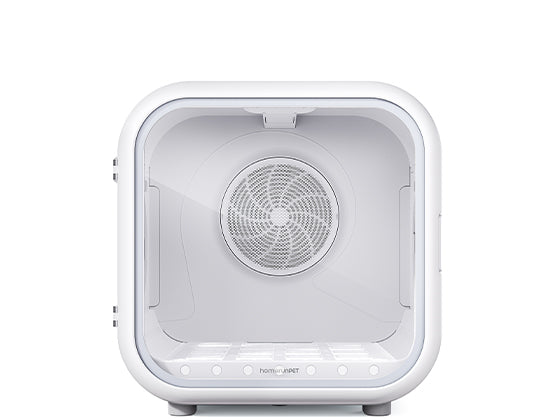
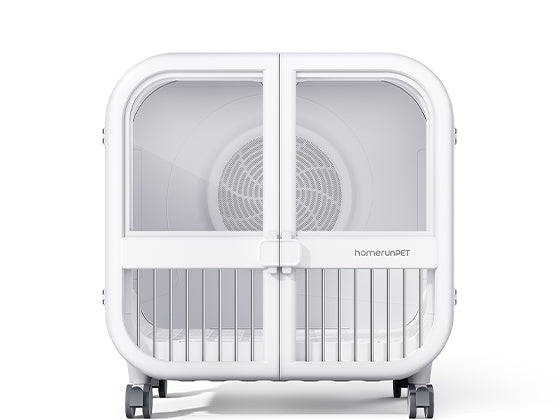
Yes, automatic litter boxes are worth it for multiple cats if you choose a model built for heavy use and set realistic expectations. For households with 2-4 cats, premium automatic litter boxes like homerunPET CS106 eliminate 90% of daily scooping while reducing odor and litter tracking. The key is selecting a unit with sufficient waste capacity (10L+), robust safety features, and compatibility with your preferred litter type. Most cats adapt within 3-5 days when introduced gradually, and multi-cat owners save 15-20 minutes daily—totaling over 100 hours annually.
The Multi-Cat Capacity Challenge
Automatic litter boxes transform multi-cat households when properly matched to usage demands. The traditional "N+1" rule requires four manual boxes for three cats, consuming significant floor space and daily maintenance time. A single high-capacity automatic unit consolidates this setup while providing superior odor control through immediate waste removal.
homerunPET CS106 addresses multi-cat needs with a 12L waste drawer—substantially larger than standard 6-8L competitors. In three-cat households, this capacity extends maintenance intervals to 7-10 days versus 3-4 days for smaller models. The 106L interior dome with an 18-inch litter bed accommodates simultaneous use and reduces territorial conflicts, a common issue when multiple cats share confined spaces.
For four-cat households, waste production increases dramatically. A 12L capacity handles approximately 20 days of waste for a single cat, 10-14 days for two cats, and 7 days for three cats. Beyond four cats, consider deploying two automatic units to prevent traffic jams during peak usage times and avoid daily drawer emptying.
| Household Size | Waste Drawer Emptying Frequency | Annual Time Saved vs. Manual |
|---|---|---|
| 2 cats | Every 10-14 days | 110-120 hours |
| 3 cats | Every 7-10 days | 95-105 hours |
| 4 cats | Every 5-7 days | 85-95 hours |
| 5+ cats | Every 3-5 days (or use 2 units) | 70-80 hours |
Real-World Multi-Cat Performance
Multi-cat performance depends on four critical factors: waste capacity, odor management, safety systems, and litter compatibility. homerunPET CS106 earned a 4.2/5 rating from multi-cat testers in 2025-2026 trials, with particular praise for its spacious design and quiet 38.8-39dB operation—quieter than a whisper and crucial for skittish cats.
Three-cat household testers reported all cats adapted quickly to the unit's generous interior space. One four-cat owner called it a "game changer," noting the waste drawer handled frequent use without requiring daily attention. The rotating sifting system works efficiently with both clumping clay and tofu litter, giving owners flexibility based on odor control preferences and budget.
Safety features become critical in multi-cat environments where simultaneous approaches are common. Radar and weight sensors detect cats up to 25 lbs, while the anti-pinch bumper immediately halts rotation if a cat enters during cleaning. The kitten mode adds extra sensitivity for households with young or small cats. These protections earned homerunPET recognition from CNN as the "Best Self-Refilling Litter Box of 2026."
Odor control separates premium from budget automatic boxes. Immediate waste removal after each use prevents ammonia buildup, while sealed waste drawers contain odors between emptying. Testers rated homerunPET CS106 excellent (5/5) for odor control, attributing success to the combination of quick cleaning cycles and the large waste compartment that minimizes compression of soiled litter.
Setting Realistic Adaptation Expectations
Cat acceptance rates sit at 85-90% when owners follow gradual introduction protocols. The adaptation period typically spans 3-5 days, though some cats require up to two weeks. Success depends on respecting feline behavioral patterns rather than forcing immediate transitions.
Week 1 approach: Place the unpowered homerunPET unit beside existing litter boxes with familiar litter inside. Allow cats to investigate and use it voluntarily. The spacious 106L interior reduces claustrophobia that causes rejection in smaller enclosed models.
Week 2 transition: Activate the unit using the longest delay setting (3-5 minutes after exit). This prevents startling cats with immediate rotation. The 38.8-39dB whisper-quiet operation helps nervous cats tolerate the cleaning cycle. Monitor app data to confirm all cats are using the unit before proceeding.
Week 3 completion: Remove one traditional box every 2-3 days while monitoring behavior. The 4.5L auto-refill reservoir maintains consistent litter depth, eliminating the shallow-litter issue that deters some cats. Keep one manual box as backup during the first month for anxious cats or households with elderly pets.
For multi-cat households, stagger the introduction if possible—allow dominant cats to establish comfort first, then encourage submissive cats to follow. The large interior prevents territorial guarding that occurs with compact automatic boxes.
Multi-Cat Cost Analysis: Three-Year Comparison
| Expense Category | Traditional Setup (3 cats) | homerunPET CS106 | Savings |
|---|---|---|---|
| Initial Equipment | 4 boxes × $30 = $120 | $699 | -$579 (Year 1) |
| Annual Litter | $600 (standard usage) | $420 (20-30% reduction) | $180/year |
| Maintenance Time | 20 min/day = 122 hrs/year | 10 min/week = 9 hrs/year | 113 hrs/year |
| Electricity | $0 | $36/year | -$36/year |
| 3-Year Total Cost | $1,920 + 366 hours | $1,539 + 27 hours | $381 + 339 hours |
The cost-benefit calculation shifts dramatically when valuing time savings. At a conservative $15/hour valuation, three-year time savings equal $5,085 for a three-cat household. homerunPET achieves ROI within 18-24 months through litter savings alone, with time savings providing additional value.
Litter reduction occurs because automatic raking systems remove only soiled clumps, whereas manual scooping often discards surrounding clean litter. The auto-refill system dispenses precise amounts, eliminating the over-filling common with manual topping. Three-cat owners report extending 40-lb litter bags an extra 1-2 weeks compared to traditional boxes.
When Automatic Boxes Are NOT Worth It
Honest assessment of limitations builds realistic expectations. Automatic litter boxes fail to deliver value in specific scenarios:
Budget constraints under $300: Entry-level automatic boxes ($150-$300) lack the waste capacity and durability for multi-cat use. These units require daily emptying with three cats, negating time-saving benefits. Motor failures increase dramatically under heavy use, with some models failing within 6-12 months in multi-cat households.
Cats with special needs: Elderly cats with arthritis may struggle with entry steps. Kittens under 3 lbs often fail to trigger weight sensors. Cats with disabilities requiring specialized litter (non-clumping medical formulas) cannot use automatic sifting systems. For these situations, maintain traditional boxes alongside any automatic unit.
Zero-maintenance expectations: Automatic boxes reduce but don't eliminate maintenance. homerunPET requires 2 minutes every 7-10 days for waste drawer emptying in three-cat households, plus 15 minutes monthly for deep cleaning. Owners expecting completely hands-off operation face disappointment.
Extremely selective cats: Approximately 5-10% of cats never adapt to automatic boxes regardless of introduction method. Persian and Himalayan breeds show slightly higher rejection rates. homerunPET offers a 90-day in-home trial to test compatibility before full commitment, reducing financial risk for uncertain households.
2026 Multi-Cat Capacity Recommendations
Premium tier models handle heavy multi-cat use through superior engineering and generous dimensions. homerunPET CS106 leads this category with specifications designed specifically for 3-4 cat households:
- Waste capacity: 12L drawer holds 7-10 days of waste for three cats
- Interior space: 106L dome with 18-inch litter bed reduces crowding
- Weight range: Accommodates cats up to 25 lbs (updated 2026 specification)
- Safety systems: Dual radar/weight sensors plus anti-pinch bumper
- Litter compatibility: Works with clumping clay, tofu, and mixed formulas
- App features: Individual cat tracking, remote cleaning control, waste level alerts
- Noise level: 38.8-39dB operation won't startle nervous cats
- Auto-refill: 4.5L reservoir maintains optimal litter depth automatically
The $699 price point positions homerunPET above mid-tier competitors ($280-$400 range) but delivers features that reduce total cost of ownership. The 12-month warranty and 90-day trial period lower adoption risk compared to budget models with 30-day returns and frequent replacement needs.
For households with 4+ cats, deploy two automatic units rather than forcing a single box to handle excessive traffic. Place units on different floors or room zones to prevent territorial conflicts and reduce wait times during peak usage periods.
Multi-Cat Setup Best Practices
Strategic placement and maintenance routines maximize automatic litter box performance in multi-cat households:
Placement strategy: Position the homerunPET unit in a quiet, accessible location away from food and water. For four-cat households, place a second unit on a different floor to distribute traffic. Ensure adequate clearance (6 inches) around the unit for sensor function and airflow.
Litter selection: Use clumping formulas for optimal automatic raking. Tofu litter produces less dust and works well with homerunPET's rotating system. Avoid non-clumping clay or crystal litters that jam sifting mechanisms. Fill to the indicator line (never overfill) to maintain proper raking depth.
Maintenance schedule for three cats:
- Every 7-10 days (2 minutes): Empty and rinse waste drawer
- Monthly (15 minutes): Deep clean interior dome and rake mechanism
- Quarterly ($20): Replace odor control filters if using aftermarket options
- Every 6 months: Inspect sensors and clean with dry cloth
Backup planning: Keep one traditional box stored during the adaptation period. For extended absences beyond 10 days with three cats, arrange for a neighbor to empty the waste drawer or deploy a second unit to extend capacity.
Comparison: Multi-Cat Automatic Litter Box Features
| Feature | homerunPET CS106 | Typical Competitor | Budget Model |
|---|---|---|---|
| Waste Capacity | 12L (7-10 days, 3 cats) | 8L (4-5 days, 3 cats) | 6L (2-3 days, 3 cats) |
| Interior Space | 106L dome | 75-85L | 60-70L |
| Max Cat Weight | 25 lbs | 20 lbs | 15 lbs |
| Noise Level | 38.8 dB | 45-50 dB | 55+ dB |
| Safety Sensors | Radar + weight + anti-pinch | Weight only | Basic infrared |
| Auto-Refill | 4.5L reservoir | Not available | Not available |
| App Control | Full tracking & control | Basic notifications | No app |
| Warranty | 12 months | 6-12 months | 3-6 months |
Making the Multi-Cat Decision
Automatic litter boxes deliver measurable value for multiple-cat households when three conditions align: sufficient budget for quality equipment, realistic adaptation expectations, and commitment to minimal ongoing maintenance. The decision framework simplifies to four questions:
Do you have 2+ cats? Single-cat households see less dramatic ROI, though large breeds (Maine Coons, Ragdolls) benefit from spacious automatic boxes like homerunPET CS106 designed for cats under 25 lbs.
Does time savings justify upfront cost? Calculate your current daily scooping time (typically 5-7 minutes for three cats) multiplied by 365 days. If this totals 30+ hours annually, automatic boxes provide clear value beyond monetary savings.
Will you choose equipment built for heavy use? Budget automatic boxes fail rapidly under multi-cat stress. Premium models like homerunPET with 12L waste capacity and robust motors handle 3-4 cats reliably for years, reducing total cost of ownership despite higher initial investment.
Can you commit to gradual introduction? Forcing immediate transitions causes rejection. The 3-5 day adaptation protocol with delayed cleaning cycles and quiet operation gives cats time to build confidence, achieving 85-90% acceptance rates.
FAQ
Q: How many cats can realistically share one automatic litter box?
A: One automatic litter box handles 2-3 cats comfortably with weekly maintenance. The homerunPET CS106's 12L waste drawer extends this to 7-10 days for three cats. Four-cat households should consider two units to prevent traffic congestion and reduce emptying frequency to manageable intervals.
Q: What's the biggest mistake people make with automatic boxes and multiple cats?
A: Choosing undersized models with 6-8L waste capacity that require daily emptying with multiple cats, eliminating time-saving benefits. The second mistake is forcing immediate transitions instead of using the gradual 3-5 day introduction protocol that achieves 85-90% cat acceptance.
Q: Do automatic litter boxes actually save money with multiple cats?
A: Yes, through 20-30% litter reduction from precise waste removal and auto-refill systems. The homerunPET CS106 achieves ROI in 18-24 months for three-cat households through litter savings alone, with time savings (100+ hours annually) providing additional value when factored at even modest hourly rates.
Q: Will shy or elderly cats in multi-cat homes use automatic boxes?
A: Most will adapt using gradual introduction with extended delay settings (3-5 minutes) and quiet operation. The homerunPET's spacious 106L interior and whisper-quiet 38.8dB cleaning cycle help nervous cats adapt 30% faster than compact enclosed models. Maintain a traditional backup box during the first month for anxious cats.
Ready to Transform Your Multi-Cat Household?
Multi-cat homes face unique litter management challenges that automatic boxes solve through superior capacity, odor control, and time savings. homerunPET CS106 combines the industry's largest waste drawer (12L), spacious interior (106L), and advanced safety features in a design specifically engineered for 3-4 cat households. The 90-day in-home trial and 12-month warranty let you test performance risk-free before committing. Calculate your household's potential time and cost savings, then experience the difference premium engineering makes in multi-cat litter management. Visit homerunpet.com to explore how the CS106 fits your specific multi-cat needs.