

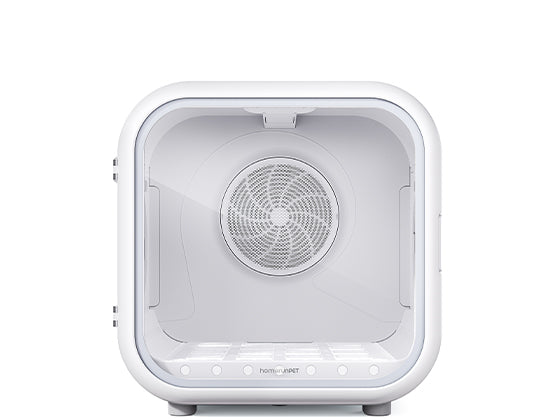
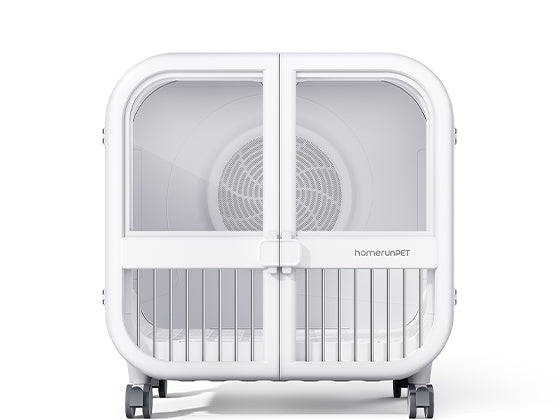
For households with three or more cats, the homerunPET CS106 self-cleaning litter box delivers a practical solution to the daily scooping burden with its 12-liter sealed waste drawer and gel deodorizer system. Unlike budget models requiring daily emptying or premium units promising unrealistic "weeks without maintenance," this 106-liter capacity system realistically handles 7-10 days between waste removals for three-cat households—addressing the core challenge of odor management without constant intervention. The combination of spacious interior design, auto-refill capability, and quiet 38-39 dB operation makes it a viable alternative to traditional scooping for busy multi-cat families.
What Multi-Cat Owners Actually Need in Waste Capacity
The 12-liter waste bin represents the practical threshold for multi-cat households. While marketing materials often promise extended maintenance-free periods, real-world usage with three cats typically requires emptying every 7-10 days. This capacity significantly outperforms smaller 6-8 liter bins that demand every-other-day attention, yet remains manageable for home disposal without excessive bulk.
The sealed drawer design prevents ammonia exposure during the accumulation period. Unlike open-bin systems where odors escape throughout the week, the enclosed compartment contains waste until disposal. This matters particularly in apartments or homes where the litter box shares living spaces with family areas.
Key capacity considerations for multi-cat homes:
- Single cat: 12-14 days between emptying cycles
- Two cats: 10-12 days typical maintenance interval
- Three cats: 7-10 days realistic schedule
- Four cats: 5-7 days maximum capacity
The homerunPET CS106 pairs this waste capacity with a 4.5-liter auto-refill reservoir, reducing the frequency of litter replenishment—a secondary maintenance task often overlooked in capacity discussions.
How Gel Deodorizers Compare to Carbon Filter Systems
Gel-based odor control operates through continuous vapor release rather than passive absorption. The CS106 uses replaceable deodorizer gels positioned near the waste compartment, creating an active scent barrier that masks ammonia odors. This differs fundamentally from carbon filter systems that rely on activated charcoal to trap odor molecules through adsorption.
Professional reviewers rate the CS106's odor control at 4 out of 5 stars—effective for most households but not completely eliminating all scent traces in high-traffic areas. The gel system requires periodic replacement (typically every 30-45 days depending on cat count) as the deodorizing compounds deplete.
Odor control method comparison:
| Approach | Mechanism | Maintenance | Effectiveness Duration |
|---|---|---|---|
| Gel Deodorizer (homerunPET) | Active vapor masking | Replace gel packs monthly | Consistent until depletion |
| Carbon Filter | Passive molecule absorption | Replace filters 3-4 months | Gradually decreases |
| Ionizer Technology | Electronic odor neutralization | Clean plates quarterly | Continuous operation |
| Sealed Drawer Only | Physical containment | No consumables | Effective only when closed |
The gel approach works best when combined with the sealed waste drawer—the physical barrier contains the bulk of odors while the gel addresses residual scents during drawer opening and immediate post-cleaning periods.
Adapting Multiple Cats to Automated Cleaning Cycles
Introducing three or more cats to a self-cleaning system requires a gradual 3-5 day transition period. The automatic cleaning cycle—triggered after each use—can initially startle cats unfamiliar with mechanical movement and sound. The CS106's 38-39 dB ultra-quiet operation helps minimize this adjustment hurdle, operating at conversational volume rather than vacuum-cleaner levels.
Adaptation strategy for multi-cat households:
Start with the unit powered off for 2-3 days, allowing cats to explore and use it as a standard litter box. Enable the delayed start function (typically 5-10 minute delay after exit) rather than immediate cleaning, giving nervous cats time to leave the area. Activate quiet mode during initial operation days to further reduce mechanical noise.
The CS106's physical anti-pinch protection and sensor array (detecting cat presence through weight and radar systems) prevent cleaning cycles when any cat approaches or enters. This safety mechanism proves essential in multi-cat homes where one cat may enter immediately after another exits—a common territorial behavior pattern.
Common first-week observations:
- Dominant cats typically adapt within 24-48 hours
- Submissive cats may require 4-5 days of gradual exposure
- Kittens under 6 months often show curiosity rather than fear
- Senior cats (10+ years) benefit from extended transition periods
The 106-liter spacious interior accommodates cats up to 25 lbs and reduces territorial stress in multi-cat environments where box size often triggers avoidance behaviors.
Real Multi-Cat Maintenance Schedules and Costs
The actual time investment for a three-cat household drops from 10-15 minutes daily scooping to 5 minutes weekly waste disposal. This 85-90% reduction in active maintenance represents the primary value proposition for busy pet parents. However, the system introduces new periodic tasks: gel deodorizer replacement, litter reservoir refills, and occasional waste bin redistribution.
Monthly operating costs for the homerunPET CS106 in a three-cat household:
- Deodorizer gel replacement: cost varies by usage
- Litter consumption (auto-refill reduces waste): $25-35 per month
- Electricity (ultra-low power consumption): $2-3 per month
- Total monthly operating cost varies based on gel deodorizer and litter usage
This compares favorably to traditional scooping when factoring in time value. At 15 minutes daily scooping across 30 days (7.5 hours monthly), households effectively reclaim significant time for direct pet interaction rather than waste management.
Maintenance reality check: Some users report waste occasionally accumulating in the bin's center rather than distributing evenly, requiring brief manual redistribution every 2-3 emptying cycles. This minor intervention takes 30-60 seconds and occurs far less frequently than daily scooping.
The CS106's app-enabled remote monitoring proves valuable for multi-cat households where usage patterns vary. The system tracks individual cleaning cycles and sends notifications when the waste bin reaches 80% capacity—preventing overflow situations during busy work weeks.
Litter Type Compatibility for Maximum Odor Control
The CS106 accommodates both clumping bentonite clay and tofu-based litters through interchangeable filter screens. The large-pore filter suits standard clay litters (particles 1.5-3mm), while the small-pore option prevents tofu litter from falling through during the sifting process. This flexibility matters for multi-cat households where litter preference directly impacts consistent box usage.
Clumping bentonite provides superior odor encapsulation for high-use scenarios—three or more cats generating 6-12 elimination events daily. The tight clumps separate cleanly during automated raking, minimizing litter waste. However, bentonite generates more dust during the auto-refill process.
Tofu-based litters offer biodegradable disposal and reduced tracking but may require more frequent complete litter changes (every 14-21 days versus 21-30 days for clay). The lighter particle weight means the 4.5-liter auto-refill reservoir depletes faster with tofu varieties.
Litter performance in multi-cat testing:
- Clumping clay: Strongest odor control, longest interval between full changes
- Tofu pellets: Easier disposal, better for sensitive respiratory systems
- Crystal silica: Not recommended due to irregular particle sizes causing sensor errors
- Pine pellets: Incompatible with automated sifting mechanism
The sealed waste drawer design works synergistically with high-quality clumping litters—tight clumps prevent ammonia release during the 7-10 day accumulation period between emptyings.
Space Requirements and Placement Strategy
The CS106's 697mm × 600mm × 713mm footprint demands dedicated floor space equivalent to a medium dog crate. This substantial size accommodates the 106-liter interior volume and 12-liter waste drawer but requires measurement verification before purchase—a common oversight leading to return requests.
Optimal placement for multi-cat households prioritizes ventilation and accessibility. Position the unit away from feeding stations (minimum 4-6 feet separation) to respect cats' natural preference for separated elimination and eating areas. Ensure at least 12 inches of clearance on the entry side for comfortable cat approach and exit.
Placement considerations for odor management:
Avoid enclosed closets or bathrooms without exhaust fans—even sealed waste systems benefit from air circulation. The gel deodorizer performs best in spaces with moderate airflow that distributes the masking scent without creating drafts that disturb cats during use.
For households with four or more cats, consider placing the CS106 in a utility room or basement area where the weekly emptying routine doesn't disrupt main living spaces. The app-controlled remote monitoring eliminates the need for constant visual checks, making less-central placement viable.
The unit's 20kg weight and non-slip base prevent tipping during vigorous digging by large cats, but the size makes relocation challenging once positioned. Plan the initial placement carefully to avoid frequent moving.
Smart Features That Reduce Multi-Cat Stress
App-enabled usage tracking reveals individual cat patterns that help identify health changes early. The CS106 logs each cleaning cycle with timestamp data, allowing owners to notice when a specific cat increases or decreases elimination frequency—often the first indicator of urinary or digestive issues.
The delayed start function proves essential during the 3-5 day adaptation period but remains valuable long-term in multi-cat homes. Setting a 7-10 minute delay after exit gives nervous cats time to fully leave the area before mechanical movement begins, reducing stress-related avoidance behaviors.
Remote cleaning triggers via smartphone app enable owners to initiate a cleaning cycle before arriving home—ensuring a fresh box when cats are most active during evening hours. This manual override supplements the automatic post-use cleaning, particularly useful after heavy morning usage periods.
Key smart features for multi-cat management:
- Waste bin level notifications: Alerts at 80% capacity prevent overflow
- Litter level monitoring: Tracks auto-refill reservoir depletion
- Cleaning cycle history: Identifies usage pattern changes
- Manual cleaning triggers: Enables pre-arrival freshening
The radar and weight sensor array prevents cleaning cycles when any cat approaches within detection range (approximately 18-24 inches). This multi-layered safety system addresses the primary concern in multi-cat households—one cat entering immediately after another exits.
Comparing Waste Capacity Across Leading Models
The 12-liter waste drawer positions the homerunPET CS106 in the upper tier of multi-cat capacity options. This volume translates to approximately 14-16 days of waste from a single cat, 10-12 days for two cats, or 7-10 days for three cats under normal usage patterns (2-3 eliminations per cat daily).
| Feature | homerunPET CS106 | Premium Alternative | Budget Option |
|---|---|---|---|
| Waste Bin Size | 12 liters | 10 liters | 6-8 liters |
| Interior Volume | 106 liters | 95 liters | 65 liters |
| Odor System | Gel deodorizer + sealed drawer | Carbon filter + sealed drawer | Open bin design |
| Auto-Refill | 4.5L reservoir | Not available | Not available |
| Noise Level | 38-39 dB | 40-45 dB | 45-55 dB |
| Multi-Cat Rating | 3-4 cats (7-10 days) | 3-4 cats (5-7 days) | 2 cats max (3-4 days) |
| Price Point | $699 | $699 | $150-300 |
The auto-refill reservoir distinguishes the CS106 from competitors at similar price points. While most premium units focus solely on waste removal automation, the 4.5-liter litter storage reduces manual intervention frequency for both waste disposal and litter replenishment—a dual-maintenance reduction particularly valuable in multi-cat scenarios.
Budget alternatives under $300 typically offer 6-8 liter waste capacity requiring every-other-day emptying with three cats—only marginally better than traditional scooping. The sealed drawer and gel deodorizer combination in the CS106 justifies the premium pricing for households prioritizing odor control over initial cost savings.
Long-Term Value for Multi-Cat Households
The time reclamation calculation reveals the CS106's value proposition beyond initial purchase price. A three-cat household averages 15 minutes daily on traditional scooping tasks—approximately 91 hours annually. At even modest time valuations ($20-30/hour), the annual time savings ($1,820-2,730) substantially exceeds the $699 purchase price within the first year.
The 12-liter waste capacity directly enables this time savings by reducing active maintenance to 5-minute weekly sessions rather than daily 15-minute scooping routines. The sealed drawer system prevents the gradual odor buildup that often prompts additional mid-week cleanings in traditional setups.
Long-term cost considerations:
- Gel deodorizer: cost varies by usage frequency
- Reduced litter waste (auto-refill efficiency): potential savings from efficient litter usage
- Energy consumption: minimal based on ultra-low power consumption
- Maintenance parts (filters, sensors): periodic replacement needed
- Net annual operating cost varies based on household usage patterns
The CS106 carries a 12-month warranty covering mechanical and electronic components. User reports indicate reliable operation beyond the warranty period with proper maintenance—monthly exterior cleaning, quarterly sensor checks, and prompt waste drawer emptying before overflow.
For households considering adding a third or fourth cat, the existing CS106 capacity accommodates the expansion without requiring a second unit purchase. The 106-liter interior and 12-liter waste drawer scale effectively from single-cat to four-cat households, though emptying frequency increases proportionally.
FAQ
Q: How often do I really need to empty the waste drawer with three cats?
A: Realistically expect 7-10 day intervals between emptying with three cats. The 12-liter capacity handles approximately 14-18 clumps before reaching 80% full. Usage varies by cat size and elimination frequency, but weekly emptying represents the typical schedule for most three-cat households.
Q: Will the gel deodorizer completely eliminate odors in a small apartment?
A: The gel system provides effective odor masking rated 4 out of 5 stars by professional reviewers—noticeable improvement over traditional boxes but not 100% scent elimination. Combined with the sealed waste drawer, most households report acceptable odor control in shared living spaces. High-sensitivity individuals may still detect faint ammonia traces during peak usage periods.
Q: Can I use my current clumping litter or do I need a specific brand?
A: The CS106 accommodates standard clumping bentonite clay (1.5-3mm particles) and tofu-based litters through interchangeable filter screens. No proprietary litter required. Choose high-quality clumping varieties for best results—tight clumps separate cleanly during automated raking and maximize the time between full litter changes.
Q: How long does the 3-5 day adaptation period take with nervous cats?
A: Most cats adapt within the 3-5 day guideline when using gradual introduction—starting with the unit powered off, then enabling delayed start mode and quiet operation. Submissive or senior cats may require up to 7 days. The 38-39 dB noise level and physical anti-pinch sensors help reduce adaptation stress compared to louder or less-safe alternatives.
Ready to Eliminate Daily Scooping from Your Multi-Cat Routine?
The homerunPET CS106 addresses the core challenges of multi-cat litter management: extended waste capacity reducing emptying frequency to weekly sessions, sealed odor control preventing ammonia buildup between cleanings, and spacious interior accommodating large breeds up to 25 lbs. The combination of 12-liter waste capacity, 4.5-liter auto-refill system, and gel deodorizer technology delivers practical maintenance reduction for households with three or more cats.
Explore the full specifications and current availability at homerunpet.com, where the CS106 includes a 90-day in-home trial and 12-month warranty—allowing risk-free testing in your specific multi-cat environment before committing long-term.