

After giving your dog a bath, reaching for the hair dryer in your bathroom may seem like the easiest solution. After all, it blows warm air and dries hair.
But your dog's coat and skin aren't quite the same as human hair and skin. The way a dog experiences heat, airflow, noise, and drying time is different, which is why a dryer designed specifically for pets can be a better choice.
So, can you use a human hair dryer on a dog? Technically, you can in some situations, but that doesn't necessarily mean you should.
Here's how dog dryers and human hair dryers differ, and why using a dedicated pet dryer can make bath time more comfortable for both you and your dog.
Can You Use a Human Hair Dryer on a Dog?
A human hair dryer isn't automatically dangerous for dogs. If you're using one briefly, at a safe distance, with appropriate airflow and low heat, it may help remove some moisture.
The problem is that human hair dryers are designed with people in mind. They're generally intended to dry relatively small areas of hair using concentrated airflow and heat.
A dog's coat can be much thicker and more extensive, especially for long-haired or double-coated breeds. Trying to dry that coat with a conventional hair dryer can take a long time and may leave you tempted to increase the heat or hold the dryer too close.
That's where a dedicated dog dryer can be more practical.
Dog Dryer vs Human Hair Dryer: What's the Difference?
The biggest difference is how the airflow is designed to work with a pet's coat.
A human hair dryer typically produces a relatively concentrated stream of warm air. It's designed to dry hair while you're holding the nozzle close to the hair.
A pet dryer, on the other hand, is designed around the fact that dogs have very different coat types. The focus is generally on moving moisture away from the coat efficiently rather than relying primarily on high heat.
This distinction matters because drying a dog isn't about making the fur hot. It's about getting the water out.
Heat: More Isn't Better
One of the biggest reasons to be cautious with a human hair dryer is heat.
Human hair can tolerate temperatures that may feel uncomfortable or excessive against a dog's skin. Dogs also can't tell you when the air is becoming too hot, so it's up to the owner to monitor the temperature and distance carefully.
Using high heat for an extended period can make drying stressful and uncomfortable.
A pet dryer gives you a better way to approach drying without relying on excessive heat. When drying your dog, comfortable airflow should be the priority, not maximum temperature.
Airflow Matters More Than You Think
A dog's coat can hold a surprising amount of water.
This is particularly true for dense coats and double-coated breeds, where the surface may feel dry while moisture remains underneath.
Instead of simply heating the outside of the coat, effective drying needs to move air through the fur and remove moisture.
This is one reason a dedicated pet dryer can be more effective than simply pointing a warm hair dryer at your dog.
Dog Coats Are Different From Human Hair
Human hair is relatively uniform compared with the variety of coats found among dogs.
A Chihuahua, Golden Retriever, Poodle, and Husky all have completely different drying needs.
Some dogs have fine, short coats that dry quickly. Others have long hair that tangles easily, while double-coated breeds can retain moisture close to the skin for much longer.
A pet dryer is designed with this variation in mind, making it a more versatile option for regular grooming at home.
What About Noise?
Heat isn't the only thing that can make a dryer uncomfortable.
The sound of a motor blowing air directly toward your dog can be intimidating, especially if your dog has never used a dryer before.
This is one area where your dog's individual personality matters. Some dogs don't care about the noise at all, while others may become anxious as soon as they hear a dryer turn on.
If your dog is nervous, introduce the dryer gradually. Let your dog see and sniff the device while it's turned off, then introduce the sound from a distance before beginning a full drying session.
A quieter, more controlled drying experience can make a significant difference.
Why a Pet Dryer Can Make Bath Time Easier
The biggest benefit of a pet dryer isn't necessarily that it dries faster. It's that it can make the entire drying process easier to manage.
After a bath, your dog may want to shake, roll around, rub against furniture, or run around the house while still damp.
A dedicated drying setup gives you more control over what happens next.
Instead of waiting for your dog to air-dry or spending a long time moving a small hair dryer around the coat, you can create a more consistent drying routine.
This is especially useful for owners who bathe or groom their dogs regularly.
Are Pet Dryers Worth It for Long-Haired Dogs?
For a short-haired dog that dries quickly, a pet dryer may not be necessary.
For dogs with long, thick, or double coats, the difference can be much more noticeable.
Long coats can take hours to dry naturally, while moisture trapped beneath dense fur can be difficult to remove with towels alone.
A dedicated dryer can make the process more efficient and reduce the amount of time your dog spends walking around with a damp coat.
What About an Enclosed Pet Dryer?
Not every pet dryer works in exactly the same way.
Some are handheld, while others provide a more enclosed drying environment. An enclosed design can be particularly useful for dogs that don't enjoy having a dryer pointed directly at them.
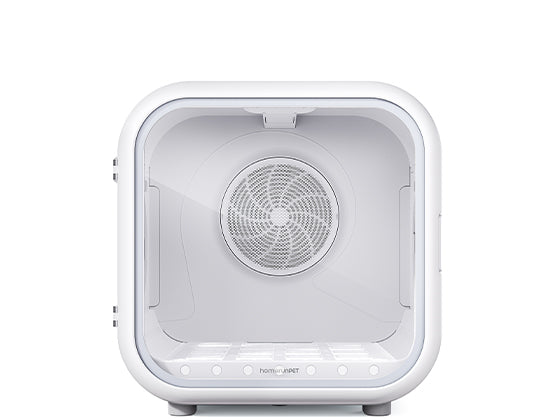
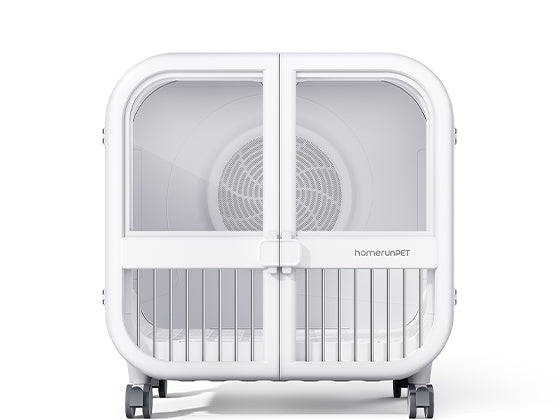
The HomerunPET Drybo Ultra Smart Pet Dryer is designed as an enclosed drying solution, giving your dog a more controlled environment after bathing.
HomerunPET Drybo Ultra Smart Pet Dryer
For dogs that are easily distracted or uncomfortable with handheld dryers, having a defined space for drying can make the routine easier to manage.
How to Use a Dog Dryer Safely
Regardless of which type of dryer you use, your dog's comfort should come first.
Start with a towel to remove excess water rather than immediately relying on the dryer. Then introduce airflow gradually and keep an eye on your dog's body language.
Avoid concentrating hot air on one area for an extended period. If your dog starts trying to escape, panting excessively, or showing obvious signs of discomfort, stop and give them a break.
For a dog that is nervous around dryers, several short, positive sessions are usually easier than forcing them through one long drying session.
Dog Dryer or Human Hair Dryer: Which Should You Choose?
A human hair dryer can work in a pinch, particularly if you're careful with distance, airflow, and temperature.
But if you regularly bathe your dog, a dedicated pet dryer is generally the more practical choice.
It's designed around the needs of animal coats, gives you better control over the drying process, and can reduce the temptation to rely on excessive heat.
For occasional use with a short-haired dog, your existing hair dryer may be enough. For long-haired, thick-coated, or frequently groomed dogs, investing in a pet dryer can make a noticeable difference.
Final Thoughts
So, dog dryer vs human hair dryer — which is better?
A human hair dryer isn't necessarily off-limits, but it wasn't designed for the thickness, variety, and sensitivity of a dog's coat.
A pet dryer puts more emphasis on appropriate airflow and a comfortable drying experience, making it a better long-term option for many dog owners.
The goal isn't to dry your dog with the hottest air possible. It's to remove moisture efficiently while keeping your dog comfortable throughout the process.
If bath time regularly ends with a soaking-wet dog, a dedicated pet dryer may be one of the simplest upgrades you can make to your grooming routine.