






You grab your keys, say goodbye to what feels like a completely indifferent animal, and head out the door. Your cat watches you leave from the couch, yawns, and goes back to sleep.
For a while, you wonder if they even notice you're gone.
The honest answer is: they do, just not in the way a dog would. Cats are independent by nature, and a quiet house isn't distressing to most of them the way it would be to a social animal. But "fine with being alone" and "completely unaffected by your schedule" aren't the same thing — and understanding what your cat's day actually looks like while you're out can change how you think about setting things up at home.
The first hour: the house settles
Right after you leave, most cats do exactly what they looked like they were about to do — sleep. The house is quiet, the routine has played out the same way it does every morning, and there's nothing demanding their attention. This is actually a comfortable state for a lot of cats. Predictability is reassuring, and a home that runs the same way every day is a home they feel safe in.
This is also why your morning routine matters more than you'd think. A cat that gets fed at the same time every day, in the same spot, before you leave — that cat starts the day settled. One that's waiting on an irregular schedule starts the day with a low-level anxiety that runs through everything else.
Mid-morning: the patrol
Somewhere around mid-morning, most cats wake up and do a lap. They check the windows, track whatever's moving outside, maybe investigate a sound from the street. This is normal exploratory behavior — cats are territorial, and periodically checking the boundaries of their space is just part of how they're wired.
This is also when a lot of cats visit the litter box and the water bowl. Both of those interactions are easy to take for granted, but they're worth thinking about. A litter box that's already been used a few times since it was last cleaned is one a cat may start avoiding. Water that's been sitting still in a bowl since morning is less appealing than it was fresh. Small things, but they add up across an 8-hour day.
The long middle: a lot of sleeping, some watching
This is the bulk of your cat's day while you're gone, and it looks pretty much exactly like what you'd expect. Cats sleep somewhere between 12 and 16 hours a day — not because anything is wrong, but because that's how they're built. Short bursts of activity, long stretches of rest.
What varies is where they sleep and what they watch. A cat with access to a window perch, a few different resting spots around the house, and enough vertical space to move between levels has a more stimulating environment than one that's confined to a single room with nothing to look at. It sounds minor, but environmental variety makes a real difference in how content a cat is during a long stretch alone.
Late afternoon: the waiting begins
Around the time you'd normally start heading home — and cats do seem to have a sense of this, whether through light changes, sounds, or just pattern recognition — things shift slightly. Some cats get more active. Some park themselves near the door. Some just relocate to wherever they'll have the best view of your arrival.
This is also when hunger starts to factor in. A cat that was fed at 7am and won't eat again until you get home at 6pm is going through a long gap, and by late afternoon they're ready. If that feeding is inconsistent — sometimes 6pm, sometimes 7:30, sometimes whenever you remember — it creates a low-grade stress that's easy to overlook because it doesn't always manifest in obvious ways.
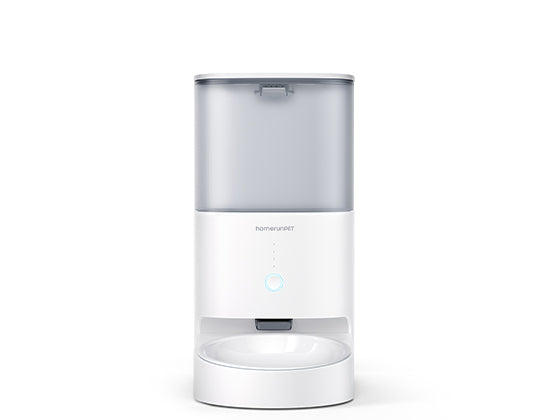
A smart pet feeder takes this variable off the table entirely. The homerunPET Smart Pet Feeder runs on a schedule you set, which means your cat's 5pm meal happens at 5pm whether you're pulling into the driveway or stuck in traffic. That consistency matters more than the specific time — it's the reliability that keeps them settled.
When you walk in
Here's where cats vary the most. Some are at the door. Some are still asleep and greet you five minutes later like nothing happened. Some follow you around for the first hour making up for lost time.
All of it is normal. What you're looking for over time is consistency — a cat that behaves roughly the same way each evening is a cat that's had a decent day. Sudden changes in behavior, appetite, or litter box habits after a long day alone are worth paying attention to.
The setup that makes the day easier for both of you
You can't be home, but you can make sure the basics are covered while you're not.
Fresh, circulating water available all day — the homerunPET BF25M Stainless Steel Pet Water Fountain keeps water moving and filtered so it's as appealing at 4pm as it was at 8am. Meals on a consistent schedule via the homerunPET Smart Pet Feeder so hunger doesn't become a source of stress. And a litter box that stays clean through multiple uses — the homerunPET Self-Cleaning Litter Box runs a cycle after each visit, so by the time your cat needs it at noon, it's not carrying over everything from the morning.
None of it replaces being there. But it means the parts of your cat's day that depend on consistency are covered — regardless of what your day looks like.
homerunPET builds smart products for the cats that spend their days waiting for you to come home. Browse the full lineup at homerunpet.com.