

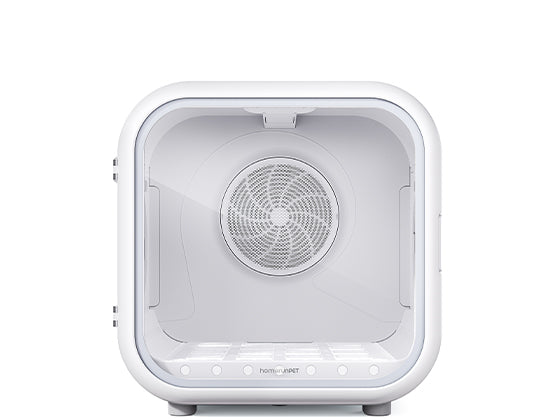
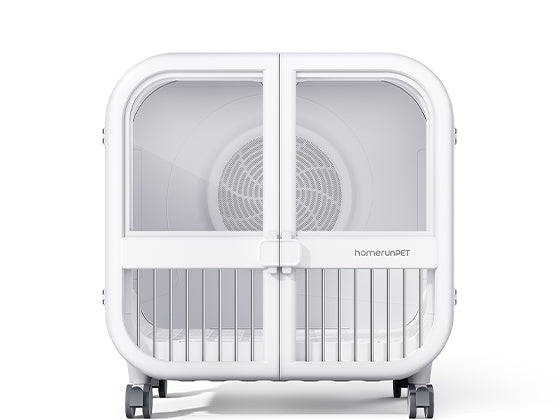
The homerunPET CS106 operates at a peak of just 38.8 dB during cleaning cycles, making it one of the quietest self-cleaning litter boxes available for bedroom placement in 2026. With a dedicated silent mode and delayed start functionality, it prevents mid-sleep disruptions while its 12L waste bin capacity reduces overall cycle frequency — meaning fewer noise events throughout the night. For cat owners who share sleeping space with their litter box setup, staying under the 40 dB threshold is the key benchmark for undisturbed rest.
Understanding Litter Box Noise Levels
Any self-cleaning litter box operating under 40 dB qualifies as bedroom-safe. This threshold matches the ambient sound level of a quiet library or a soft whisper from several feet away. Self-cleaning units vary widely in noise output, typically producing between 35 and 55 dB during their cleaning cycles depending on motor design, drum mechanisms, and overall build quality.
Here is how common sounds compare on the decibel scale:
- 20-30 dB — Rustling leaves, breathing
- 30-40 dB — Whisper, quiet library, bedroom-safe litter boxes
- 40-50 dB — Refrigerator hum, moderate rainfall
- 50-60 dB — Normal conversation, louder automatic litter boxes
Noise matters for both humans and cats. Light sleepers can be jolted awake by a 3 AM cleaning cycle, and noise-sensitive cats may develop litter box avoidance if they associate the unit with startling sounds. In apartment settings with shared walls, sound carries further, making sub-40 dB operation a quality-of-life necessity rather than a luxury feature.
What Makes a Self-Cleaning Litter Box Quiet
The primary factors determining noise output are motor type, dampening systems, and mechanical design. Premium quiet models achieve low decibel readings through several engineering choices:
- Brushless motors — Generate significantly less friction and vibration compared to traditional brushed motors
- Acoustic dampening materials — Sealed bins and insulated housings absorb sound before it escapes
- Short cleaning cycles — Cycles lasting 90-120 seconds minimize total noise exposure per event
- Vibration isolation — Rubber mounting points and weighted bases prevent resonance transfer to floors
The homerunPET CS106 combines acoustic damping with a sealed waste bin design, achieving its 38.8 dB peak through engineering that prioritizes silent operation without sacrificing cleaning effectiveness.
Top Features for Night-Time Operation
Night mode scheduling and delayed start are the two most impactful features for uninterrupted sleep. These features work together to ensure zero cleaning activity during designated quiet hours.
Key night-time capabilities to evaluate:
- Silent mode — Reduces motor speed and extends cycle duration slightly for lower peak noise
- Delayed start — Prevents immediate activation after a cat exits, allowing scheduling around sleep patterns
- App-controlled timing — Set custom quiet windows through smartphone integration
- Large waste capacity — Fewer required cycles means less total noise exposure overnight
The homerunPET CS106 addresses overnight noise through both its silent mode and delayed start functionality. Its 12L waste bin is particularly relevant here: a single cat household can go up to 20 days without emptying the bin, which translates to far fewer cleaning cycles overall. Multi-cat households with two to three cats can expect 10-14 days between bin changes. Fewer cycles mean fewer opportunities for noise disruption.
homerunPET CS106: Built for Bedroom Placement
The CS106 combines sub-40 dB operation with capacity-driven noise reduction for a complete quiet solution. Rather than addressing noise at just the per-cycle level, it tackles total noise exposure through multiple design decisions.
Core features for quiet nighttime operation:
- 38.8 dB peak noise — Below the 40 dB bedroom-safe threshold
- 12L ultra-large waste bin — Single cat: up to 20 days without manual cleaning
- Silent mode with delayed start — Customizable scheduling prevents overnight cycles
- 4.5L auto-refill sand system — Eliminates the noise of manual litter pouring
- 106L interior space — Accommodates cats up to 25 lbs comfortably
- Flexible litter compatibility — Works with both tofu litter and bentonite clay
- Physical anti-pinch safety — Protects cats without relying on full enclosure
- Odor control via deodorizing gel — Passive odor management with zero mechanical noise
The auto-refill system deserves special attention for noise-conscious owners. Manual litter additions create pouring and rustling sounds that can disturb sleep. By automating this process and scheduling it during waking hours, the CS106 eliminates an often-overlooked noise source.
Adaptation guide for new users: Cats typically need 3-5 days to adjust to any new automatic litter box. During this period, keep the unit in manual mode to let your cat explore the 106L space without unexpected movement or sound. Gradually enable automatic cleaning during daytime hours before activating overnight scheduling.
CS106 Quiet Operation Feature Breakdown

| Feature | Specification | Why It Matters for Sleep |
|---|---|---|
| Peak Noise Level | 38.8 dB | Below the 40 dB bedroom-safe threshold |
| Silent Mode | Yes, with delayed start | Prevents any cycles during designated sleep hours |
| Waste Bin Capacity | 12L | Up to 20 days between emptying (single cat), far fewer noise events |
| Auto-Refill System | 4.5L sand bin | Eliminates manual pouring noise entirely |
| Interior Space | 106L | Comfortable entry and exit reduces repeat visits and extra cycles |
| Litter Compatibility | Tofu sand and bentonite | Choose tofu sand for quieter sifting |
| Odor Control | Deodorizing gel | Completely silent, no fan or filter motor noise |
| Cat Weight Capacity | Up to 25 lbs | Large cats move through the space without bumping walls |
Noise Reduction Placement Strategies
Where you place your litter box can reduce perceived noise by 4-8 dB beyond the unit's baseline. These practical adjustments complement built-in quiet features:
- Anti-vibration mat — Place a rubber mat beneath the unit to cut vibration transfer to hard floors
- Corner placement — Corners can amplify sound; position the unit along a flat wall instead
- Distance from bed — Each doubling of distance reduces perceived volume noticeably
- Floor type — Carpet absorbs vibration naturally; on hardwood, a thick mat is essential
- Litter choice — Tofu-based litter produces less rustling noise than clay during sifting cycles
- Shared walls — In apartments, keep the unit away from walls shared with neighbors
Multi-Cat Household Noise Management
More cats mean more frequent cleaning cycles, which increases total noise events per day. The most effective strategy for multi-cat quiet operation is maximizing bin capacity to reduce cycle urgency. The homerunPET CS106 handles this with its 12L waste bin, supporting 10-14 days of hands-free operation even in multi-cat homes. Its 106L interior comfortably accommodates cats up to 25 lbs, reducing hesitation and repeat entries that can trigger additional cycles. Scheduling all cleaning activity during daytime hours through the app keeps nighttime completely cycle-free regardless of how many cats use the box.
Troubleshooting Noise Issues
Increased noise from a previously quiet unit typically signals maintenance needs rather than mechanical failure. Common causes and solutions include:
- Dust accumulation — Fine litter dust in moving parts increases friction; clean monthly
- Uneven surface — An unlevel unit creates vibration; check placement with a level tool
- Full waste bin — Overfilled bins strain the mechanism; empty at recommended intervals
- Litter overfill — Exceeding the fill line causes excess material contact during rotation
Regular maintenance preserves the quiet operation you expect from a premium self-cleaning system. The CS106 benefits from its large 12L bin capacity in this regard — longer intervals between full-bin situations mean consistent quiet performance over extended periods.
Frequently Asked Questions
- Q: How loud is the homerunPET CS106 during operation?
-
A: The CS106 peaks at 38.8 dB, which falls below the 40 dB bedroom-safe threshold. This is comparable to a soft whisper or quiet library ambiance, making it suitable for light sleepers and shared bedroom spaces.
-
Q: Can I schedule the homerunPET CS106 to avoid cleaning during sleep hours?
-
A: Yes. The CS106 features both a dedicated silent mode and delayed start functionality, allowing you to set custom quiet windows that prevent any cleaning cycles during your designated sleep hours.
-
Q: How does waste bin size affect nighttime noise in automatic litter boxes?
-
A: Larger waste bins require less frequent emptying and fewer cleaning cycles overall. The homerunPET CS106 uses a 12L bin that supports up to 20 days between changes for a single cat, significantly reducing the total number of noise events.
-
Q: What litter type is quietest in an automatic litter box?
- A: Tofu-based litter generally produces less rustling during sifting cycles than clay-based options. The homerunPET CS106 is compatible with both tofu sand and bentonite clay, giving you flexibility to choose the quieter option for bedroom placement.
Ready for quieter nights with your cats? Explore the homerunPET CS106 with its 90-day in-home trial period and 12-month warranty at homerunpet.com. Experience bedroom-safe quiet operation firsthand — risk-free.