

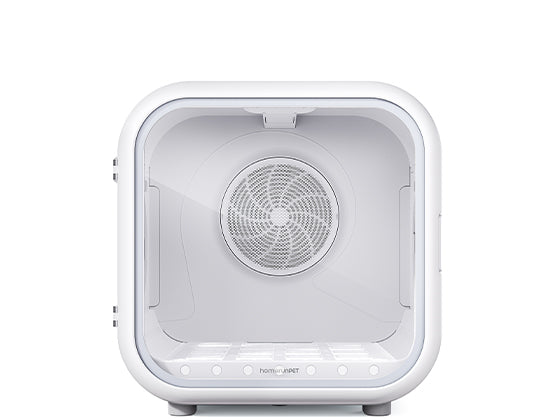
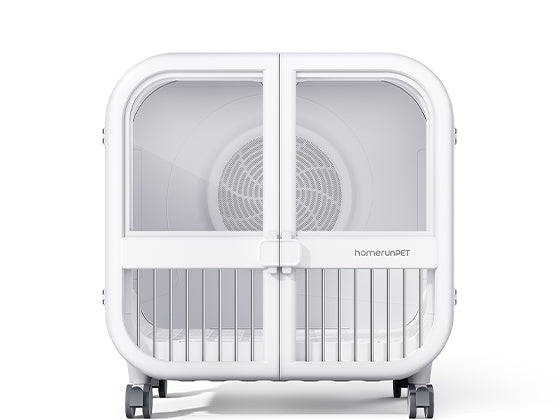
The quietest robotic litter boxes on the market in 2026 operate below 40 dB, roughly the volume of a whisper or a quiet library. At this noise floor, a cleaning cycle becomes virtually undetectable in a typical bedroom or apartment. homerunPET CS106 sits firmly in this category at 38.8 dB, combining low-noise operation with a spacious open-top architecture that allows sound to dissipate naturally rather than get trapped inside an enclosed chamber. For cat owners who share sleeping spaces with their litter box or live in noise-sensitive apartments, choosing a unit under the 40 dB threshold makes the difference between restful nights and constant disruption.
Why Noise Level Matters in Robotic Litter Boxes
Noise from a self-cleaning litter box directly affects human sleep quality, cat behavior, and neighbor relations in shared-wall apartments. Self-cleaning litter boxes typically operate between 30 and 60 dB during cleaning cycles. Units above 50 dB can disturb light sleepers and stress timid cats, producing sound levels comparable to moderate rain. Every 10 dB increase doubles perceived loudness, which means a 50 dB unit sounds twice as loud as a 40 dB model.
Sleep disruption is the most common complaint. Cats are most active at dawn and dusk, triggering cleaning cycles precisely when owners are falling asleep or still in bed. A unit that runs above 45 dB during these hours creates the same acoustic impact as a running dishwasher in the next room.
Cat anxiety is the second concern. Cats that associate the litter box with loud mechanical noise may start avoiding it entirely, leading to behavioral issues. Units under 40 dB are generally unnoticeable in homes, comparable to a refrigerator hum, and far less likely to startle sensitive animals.
How the homerunPET CS106 Achieves Quiet Operation
The primary noise sources in any robotic litter box are motors, gears, and the movement of litter granules against the chamber walls. The homerunPET CS106 addresses all three through deliberate engineering choices backed by the brand's 170+ patents worldwide.
Sound-dampening materials are integrated throughout the CS106 to absorb vibration at the source. This keeps motor and gear noise from reaching outer surfaces that could amplify sound, resulting in the measured 38.8 dB operating level.
Open-top architecture is one of the CS106's most distinctive design advantages. The spacious 106L chamber allows sound waves to dissipate freely into the surrounding room. This natural acoustic ventilation is a core reason the CS106 maintains bedroom-friendly noise levels without requiring heavy, bulky insulation layers that would add weight and cost.
Brushless motor technology, now standard in 2026-era units, eliminates the friction-based whine found in older motor designs. Combined with vibration isolation engineering, this means the CS106's most audible sound during a cleaning cycle comes from litter granule movement rather than its mechanical system.
Noise Level Context: What the Numbers Mean
Decibel ratings alone do not tell the full story. Cycle duration, peak versus average noise, and testing distance all influence real-world experience. The following framework provides a practical way to evaluate any noise claim and shows where the CS106 stands.
| Noise Range | Comparable Sound | Bedroom Suitable | Cat Anxiety Risk |
|---|---|---|---|
| Under 40 dB | Whisper, quiet library | Yes | Low |
| 40-50 dB | Refrigerator, light rain | Conditional | Moderate |
| Over 50 dB | Conversation, moderate rain | No | Higher |
The homerunPET CS106 registers at 38.8 dB, placing it within the under-40 dB tier that expert reviewers consider ideal for bedroom placement and noise-sensitive cats. Its recognition as CNN's Best Self-Refilling Litter Box of 2026 reflects how seriously acoustic performance factors into professional evaluations.
Key Features That Make the CS106 Ultra-Quiet

Sleep mode and delayed start allow owners to schedule cleaning cycles during waking hours or introduce a buffer time after a cat exits the box. The homerunPET CS106 includes both a silent mode and a delayed start function, giving owners direct control over when the unit operates. This is particularly useful in bedrooms where a 3 AM cleaning cycle, even at 38.8 dB, might not be welcome.
Large waste capacity reduces cycle frequency. The fewer times a unit runs per day, the less cumulative noise it produces. The CS106 features a 12L waste bin that supports up to 20 days without manual scooping for a single cat and 10 to 14 days for multi-cat households. Fewer cycles translate directly into fewer noise events throughout the day and night.
Litter type compatibility affects operational sound more than most buyers realize. Finer litters like tofu-based cat litter produce less scraping noise against chamber walls than coarser clay or crystal options. The CS106 is compatible with both tofu litter and bentonite, giving owners the flexibility to select the quietest litter option for their specific environment.
Physical anti-pinch safety ensures the unit does not fully close during operation, preventing sudden mechanical stops and restarts that produce jarring noise spikes.
Quiet Operation by Living Situation
Bedroom placement demands the lowest noise output. Units under 40 dB are the only realistic option here. Pair the CS106 with a rubber anti-vibration mat to prevent residual motor hum from transferring through hardwood or tile floors. The delayed start setting keeps the unit still during the minutes right after your cat visits, avoiding mid-sleep startles.
Studio apartments present a unique challenge because there is no door to close between the living space and the litter box. The CS106's open-top design with natural sound dissipation, combined with its large waste bin that minimizes daily cycle count, is the strongest combination for single-room living. Its 106L internal space accommodates cats up to 25 lbs while maintaining a compact footprint of 697 x 600 x 713 mm.
Multi-cat homes generate more cleaning cycles per day. The CS106's 12L waste bin reduces this frequency significantly, supporting approximately 7 days of hands-free operation even with three cats. Fewer cycles mean a quieter household overall, and the 4.5L automatic sand refill system further reduces manual interventions.
Noise Reduction Tips to Maximize Quiet Performance
- Place the unit on a rubber mat or thick rug to absorb vibration transmitted through the floor
- Schedule cleaning cycles during daytime hours using app-based controls or sleep mode
- Choose fine-grain litter such as tofu-based options to reduce scraping sounds during rotation
- Allow a 3-to-5-day adaptation period when introducing the CS106; cats that feel comfortable produce fewer repeated entry-exit cycles that trigger extra cleaning runs
- Position against an interior wall rather than a corner, which can amplify reflected sound
Decision Guide by Priority
| Your Priority | What the CS106 Delivers |
|---|---|
| Absolute quiet (bedroom, nursery) | 38.8 dB operation with sleep mode and delayed start |
| Low maintenance and quiet | 12L waste bin reduces daily cycle count dramatically |
| Multi-cat household | Up to 7 days hands-free with 3 cats; tofu and bentonite compatible |
| Cat anxiety concerns | Open-top design reduces acoustic stress; gradual 3-5 day adaptation |
| Space for large cats | 106L chamber accommodating cats up to 25 lbs |
homerunPET has built the CS106 around the principle that quiet operation and generous capacity should work together, not compete against each other. With engineering expertise rooted in medical and electronics R&D from teams with backgrounds at Toshiba and Mindray Medical, the brand brings industrial-grade precision to everyday pet care. At $699, the CS106 delivers bedroom-grade silence paired with the largest waste bin in its class.
Frequently Asked Questions
- Q: What noise level should I look for in a robotic litter box used in a bedroom?
-
A: Target models that operate under 40 dB, comparable to a whisper or quiet library. The homerunPET CS106 measures 38.8 dB, making it suitable for bedroom placement without disrupting sleep or startling cats.
-
Q: How does the CS106's open-top design affect noise levels?
-
A: The open-top architecture allows sound to dissipate naturally into the room rather than echoing inside a sealed chamber. This design choice is a core reason the homerunPET CS106 achieves 38.8 dB without relying on heavy insulation layers.
-
Q: Can a quiet robotic litter box handle multiple cats without running constantly?
-
A: Yes. The key is waste bin capacity. The homerunPET CS106 features a 12L waste bin that supports 10 to 14 days of hands-free operation in multi-cat homes, reducing both total cleaning cycles and overall noise exposure.
-
Q: What is the best litter type for minimizing noise in a robotic litter box?
- A: Fine-grain litters such as tofu-based cat litter produce less scraping noise during rotation. The homerunPET CS106 is compatible with both tofu litter and bentonite, giving owners the option to prioritize whichever blend runs quietest in their setup.
Looking for a litter box that lets everyone in the house sleep soundly? Visit homerunpet.com to explore the full CS106 specifications, owner reviews, and current availability. Quiet, high-capacity automatic litter care starts here.