

Choosing between Litter Robot and other self-cleaning litter boxes comes down to three factors: capacity, noise level, and long-term maintenance costs. While Litter Robot 4 remains the market leader at $699 with proven reliability for up to 4 cats, homerunPET CS106 matches this price point while offering superior capacity (106L vs standard designs), quieter operation under 34dB, and extended maintenance intervals up to 14 days for single-cat households. Budget alternatives like PetSafe ScoopFree start at $300 but require frequent tray replacements, while premium options like Litter Robot 5 exceed $900. This comparison evaluates which automatic litter box delivers the best value for your specific household needs in 2026.
What Makes Litter Robot the Market Standard
Litter Robot 4 has earned its reputation through two decades of refinement. The patented gravity-driven sifting mechanism rotates a globe-shaped chamber after each use, separating waste into a sealed drawer with carbon filtration. OmniSense safety technology combines lasers and weight sensors to prevent cycling when cats are present, supporting pets from 3-25 lbs across up to 4 cats.
Key Litter Robot 4 Specifications:
- Dimensions: 22×27×29.5 inches with 15.75×15.75 inch entryway
- Waste capacity: 7-8 days for single cat
- App features: Whisker app tracks usage patterns and monitors cat weight changes
- Compatibility: Works with any clumping litter
- Warranty: 90-day money-back guarantee backed by 10,000+ verified reviews
The sealed waste drawer effectively contains odors between emptying cycles, and the spacious entry accommodates larger breeds comfortably. However, at 24 lbs and requiring 27 inches of vertical clearance, it demands significant floor space.
How homerunPET CS106 Compares to Premium Options
homerunPET CS106 addresses specific pain points reported by Litter Robot users. At the same $699 price point, it differentiates through capacity and operational refinements.
homerunPET CS106 Advantages:
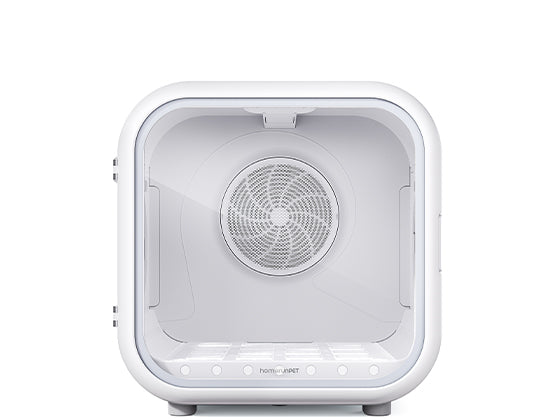
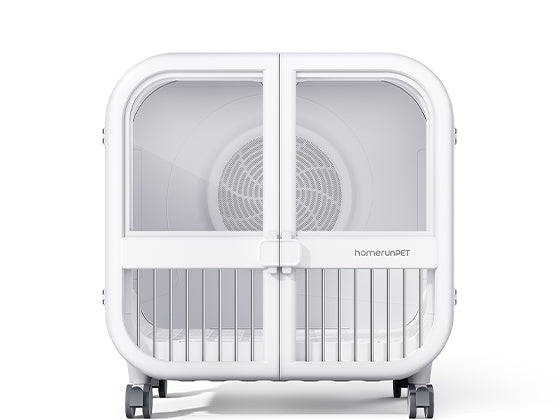
Larger Internal Volume: The 106L chamber provides more working space for cats up to 25 lbs, with dimensions of 697×600×713mm. The design is not a fully enclosed dome structure. The 4.5L litter reservoir and 12L waste bin extend maintenance intervals—single-cat households report 14-day cycles between emptying.
Quieter Operation: User testing confirms sub-34dB noise levels during cleaning cycles, significantly quieter than competitors. This matters for placement near bedrooms or for noise-sensitive cats during the 2-7 day adaptation period.
Physical Anti-Pinch Safety: The mechanism includes physical safeguards that prevent complete closure. The unit maintains partial openness rather than fully sealing, prioritizing pet safety.
Odor Management Approach: Rather than relying solely on carbon filters, homerunPET combines sealed waste containment with deodorizer gel technology for extended freshness between waste removal.
Setup Considerations: Some users report initial WiFi pairing requires patience, though functionality works reliably once connected. The unit requires standard clumping litter and benefits from placement on litter mats to minimize tracking.
Budget vs Premium: Complete Cost Analysis
Understanding total ownership costs over 5 years reveals whether premium features justify higher upfront investment.
| Cost Factor | Litter Robot 4 | homerunPET CS106 | PetSafe ScoopFree | CATLINK Scooper |
|---|---|---|---|---|
| Initial Price | $699 | $699 | $300 | $400 |
| Annual Litter | $240 (50% savings) | $240 (50% savings) | $360 (disposable trays) | $240 |
| Maintenance | Minimal | Minimal | $180 (tray refills) | $60 (filters) |
| 5-Year Total | $1,899 | $1,899 | $2,400 | $1,600 |
| Warranty | 90 days + 18 months | Standard | 12 months | 12 months |
Key Findings: Premium automatic litter boxes like Litter Robot 4 and homerunPET CS106 reduce litter consumption by approximately 50% compared to manual scooping through efficient waste separation. Budget options appear cheaper initially but disposable tray systems add $180-300 annually. Mid-range alternatives like CATLINK offer competitive total costs but may lack the refinement of established brands.
Multi-Cat Household Performance Comparison
For 2-3 Cat Homes: Both Litter Robot 4 and homerunPET CS106 handle multiple cats effectively, with waste bins requiring emptying every 3-5 days. The larger 12L capacity in homerunPET extends this slightly compared to standard designs. Users report minimal territorial issues when introducing these units alongside existing boxes during the transition period.
For 4+ Cat Homes: Litter Robot 4 officially supports up to 4 cats (3-25 lbs each), requiring daily waste removal at maximum capacity. Litter Robot 5 increases this to 5 cats with enhanced WasteID technology but costs $900+. For households exceeding 4 cats, consider deploying two mid-range units rather than a single premium box—this provides backup during cleaning and reduces wait times.
Single Cat Optimization: Budget-conscious single-cat owners may find PetSafe ScoopFree adequate at $300, though the convenience gap becomes apparent during travel. Premium options like homerunPET CS106 deliver true vacation-proof performance with 14-day capacity and auto-refill features that maintain litter depth automatically for weeks.
Reliability and Maintenance Requirements
Litter Robot Track Record: With 20+ years in market, Litter Robot has refined mechanical reliability extensively. The globe rotation mechanism proves durable across 10,000+ user reviews, though occasional sensor recalibration may be needed. Customer service responsiveness and replacement part availability are strong.
homerunPET CS106 Real-World Testing: Users describe the unit as "vacation-proof" with reliable safety sensors that stop instantly upon detecting cats. The physical anti-pinch design adds redundancy beyond electronic sensors. Most report quick pet acceptance within 3-7 days, with hands-free operation requiring only periodic waste bin emptying and quarterly deep cleaning.
Common Failure Points Across Brands: Rake-style mechanisms (found in budget alternatives) experience jamming more frequently than rotation-based systems. Sensor malfunctions typically stem from litter dust accumulation—monthly sensor cleaning extends reliability. WiFi connectivity issues affect all app-enabled models but don't impact core functionality.
Maintenance Time Investment:
- Premium rotation systems: 5 minutes weekly (waste removal), 20 minutes monthly (deep clean)
- Budget rake systems: 10 minutes weekly (jam clearing), 30 minutes monthly (maintenance)
- Manual scooping baseline: 10 minutes daily = 60 hours annually
Feature-by-Feature Decision Matrix
Choose Litter Robot 4 if you prioritize:
- Proven 20-year track record with extensive user reviews
- Advanced health monitoring through cat weight tracking
- Established customer support and replacement part ecosystem
- Whisker app integration for multi-device smart home setups
Choose homerunPET CS106 if you prioritize:
- Maximum internal space for larger cats (up to 25 lbs)
- Quieter operation for bedroom placement or noise-sensitive pets
- Extended 14-day maintenance intervals for single-cat homes
- Physical safety redundancy beyond electronic sensors
Choose Budget Alternatives ($300-400) if you:
- Own a single cat under 15 lbs with basic automation needs
- Can accommodate weekly tray replacements or maintenance
- Prefer lower initial investment despite higher long-term costs
- Have space constraints requiring compact footprints
2026 Market Position: Emerging Alternatives
The self-cleaning litter box market has matured beyond the Litter Robot monopoly. homerunPET represents a new generation of brands leveraging refined engineering to match premium performance at competitive pricing. With 170+ patents and technical expertise from consumer electronics backgrounds, these emerging manufacturers address specific user complaints—excessive noise, limited capacity, complex maintenance—that persisted in earlier designs.
CatGenie A.I. offers a unique self-flushing approach for users with drain access, while Petkit Pura X brings facial recognition technology at mid-range pricing. However, most households seeking reliable automation without experimental features find optimal value in proven rotation-based systems from established or technically-credentialed manufacturers.
FAQ
Q: How long does cat adaptation take for automatic litter boxes?
A: Most cats adapt within 2-7 days when you place the automatic box beside their current box, gradually reducing old litter depth. Leave both available during transition. Approximately 96% of cats successfully adopt automatic boxes, with seniors and anxious cats occasionally requiring longer adjustment periods up to 2 weeks.
Q: Do self-cleaning litter boxes really reduce litter costs?
A: Yes—rotation-based systems like Litter Robot 4 and homerunPET CS106 reduce litter consumption by approximately 50% compared to manual scooping. They remove only waste clumps rather than surrounding clean litter, saving $120-180 annually. Budget tray-based systems don't offer this advantage since entire trays are replaced.
Q: Which automatic litter box works best for large cats over 20 lbs?
A: homerunPET CS106 accommodates cats up to 25 lbs with its 106L capacity and spacious entry design. Litter Robot 4 supports up to 25 lbs but some users report larger breeds feel cramped. Litter Robot 5 extends capacity to 30 lbs but costs $900+. Avoid budget compact models for cats exceeding 15 lbs.
Q: Are expensive automatic litter boxes worth $700 for single-cat homes?
A: Premium models deliver strongest value for frequent travelers, mobility-limited owners, or those prioritizing odor elimination in small apartments. The 5-year cost difference between premium ($1,899) and budget options ($2,400) is $500 when factoring tray replacements, while convenience and reliability gaps are significant. Single-cat households using budget alternatives often upgrade within 18 months.
Make Your Decision: Which Box Fits Your Home
For most U.S. households with 1-3 cats seeking reliable automation without compromise, homerunPET CS106 delivers optimal balance of capacity, quiet operation, and maintenance convenience at the $699 price point. Its 106L design and 14-day single-cat capacity address the most common Litter Robot complaints while matching premium reliability standards.
Litter Robot 4 remains the safest choice for buyers prioritizing established brand reputation and extensive user review validation, particularly in multi-cat homes requiring proven 4-cat capacity and health monitoring features.
Budget alternatives serve cost-conscious single-cat owners accepting trade-offs in convenience and long-term expenses, while experimental options like CatGenie suit specific use cases with drain access.
Ready to upgrade from daily scooping? Explore detailed specifications, current promotions, and real user testimonials at homerunpet.com to find the automatic litter solution that fits your household's specific needs. With proper selection, your investment delivers years of hands-free convenience and healthier home environments for both you and your cats.