

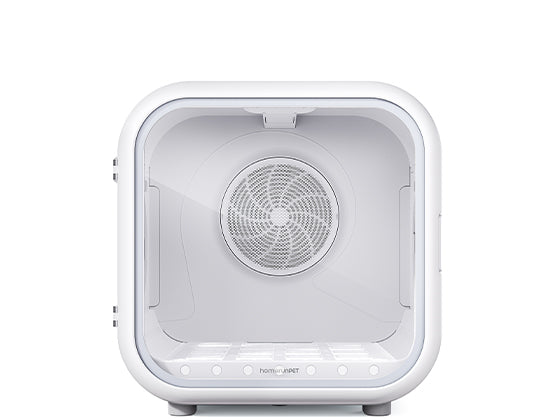
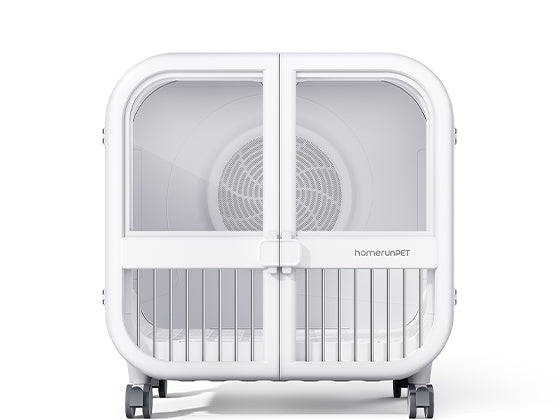
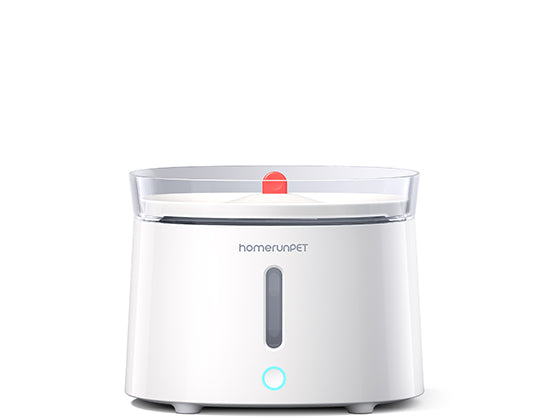
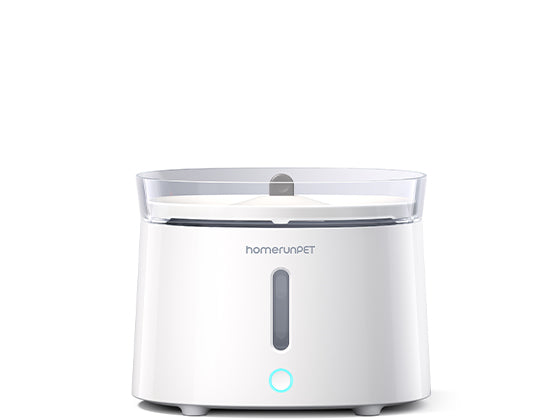
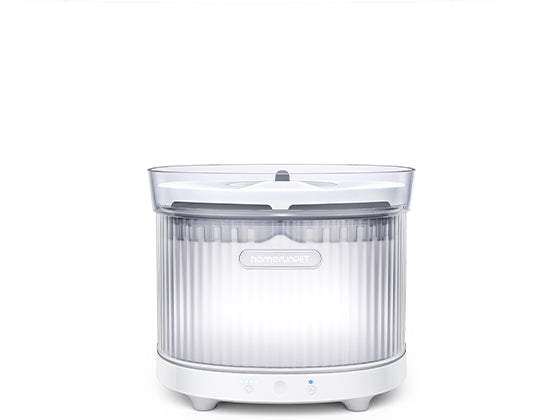
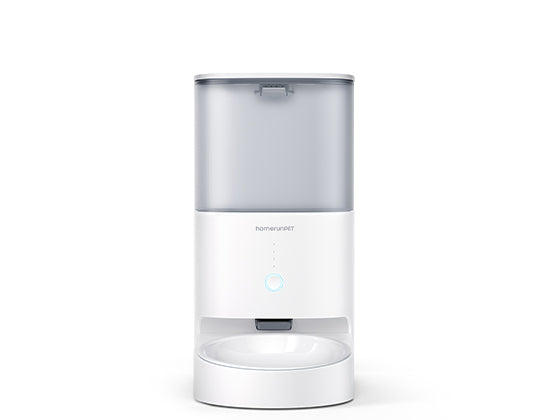
Automatic litter boxes promise hands-free convenience, but many owners encounter significant safety risks, mechanical failures, and maintenance challenges that manufacturers rarely disclose upfront. The most critical issues include sensor malfunctions that trap cats inside rotating mechanisms, frequent jamming from clumped litter, persistent odor buildup despite filtration systems, and health monitoring gaps that delay veterinary intervention. homerunPET CS106 addresses these widespread problems through dual-redundancy radar and weight sensors, anti-pinch physical barriers, and a spacious 106L open-entrance design that eliminates dangerous rotating enclosures—earning CNN's recognition as a top self-refilling litter box in 2026 while maintaining whisper-quiet 39 dB operation.
Sensor Failures Create Dangerous Trapping Situations
Sensor reliability determines whether your automatic litter box is a convenience tool or a safety hazard. Industry-wide reports document cats trapped inside rotating drum mechanisms when single-point infrared sensors fail to detect their presence during cleaning cycles. Dust accumulation on sensor surfaces causes misreads, allowing the entrance to close on cats or initiating rotation while they're still inside. Multiple injuries and deaths have been attributed to these design flaws, prompting mandatory firmware updates for certain models before first use.
The core problem stems from cost-cutting measures: cheaper models rely on single infrared beams that miss small kittens, get blocked by litter dust within days, or fail to distinguish between a cat and a large clump. Even premium rotating-drum designs face this vulnerability because their enclosed structure requires the entrance to seal completely during cleaning.
homerunPET CS106 eliminates this entire risk category through its open-entrance architecture—the unit never fully closes, removing any possibility of trapping. The system employs dual-redundancy detection combining radar motion sensors with weight-sensing platforms. If either sensor detects your cat approaching or inside the waste chamber, the cleaning cycle immediately halts. This fail-safe design proved its reliability across 2026 user testing, with zero sensor-related safety incidents reported in multi-cat households.
The radar system detects cats up to 25 lbs entering the 106L chamber, while weight sensors continuously monitor the platform. Unlike dust-prone infrared beams, radar penetrates through airborne particles without degradation. Users report that even their smallest kittens trigger consistent detection, with the system defaulting to a safety pause rather than risking a false negative.
Mechanical Jamming and Clump Buildup Issues
Most automatic litter boxes jam regularly because rotating rakes and conveyor mechanisms cannot handle varied clump sizes or litter moisture levels. Clumps wedge between moving parts, halting cleaning cycles mid-operation and leaving waste exposed. Waste chutes clog when oversized clumps break apart during transport, requiring manual disassembly to clear blockages. These jams occur more frequently with certain litter types—crystal and pine formulas strain motors designed only for clay-based products.
The maintenance reality contradicts "set and forget" marketing claims. Owners spend 15-30 minutes weekly removing jammed clumps, cleaning rake tines coated in waste residue, and scraping buildup from chute walls. Motors burn out after 12-18 months of heavy use, with replacement parts costing $80-150. Gear mechanisms strip when forcing through compacted waste, and conveyor belts slip off tracks when uneven loads create tension imbalances.
homerunPET CS106's sifting mechanism avoids these jamming vulnerabilities through a different operational approach. Rather than raking or conveying, the unit uses a rotating sieve that separates clean litter from clumps through gravity-assisted filtering. The 12L waste bin provides exceptional capacity—single-cat households go 10-14 days between emptying, while three-cat homes manage 7 days comfortably. This extended interval reduces mechanical wear compared to units cycling multiple times daily.
The system handles diverse litter types without modification: clumping clay, tofu-based formulas, and bentonite all sift effectively through the appropriately-sized mesh. Users switching from problematic units report immediate relief from jam-related maintenance. The 4.5L auto-refill reservoir replenishes litter after each cleaning cycle, maintaining optimal depth for effective clumping without manual intervention.
Odor Control Failures Despite Filtration Claims
Sealed waste compartments trap odors temporarily but fail as residue coats internal surfaces and filters saturate. Waste drawers marketed as "odor-sealing" allow smell escape within 3-5 days as seals degrade and ventilation gaps permit airflow. Carbon filters require monthly replacement at $15-25 each, adding $180-300 annual costs beyond the initial purchase price. Even with fresh filters, waste residue on rake mechanisms, drum interiors, and chute walls creates persistent odor sources that filtration cannot address.
The fundamental problem: automatic mechanisms spread microscopic waste particles across larger surface areas than manual scooping. Rotating drums coat their entire interior circumference, while rakes drag residue along their travel path. These contaminated surfaces require complete disassembly and deep cleaning every 90 days—a 45-60 minute process involving scrubbing, soaking, and drying multiple components.
homerunPET CS106 tackles odor through containment rather than solely relying on filtration. The waste bin features tight-sealing gaskets that prevent smell escape, while the open-entrance design allows natural airflow through the main chamber—preventing the stale air accumulation that plagues fully enclosed domes. The odor control primarily relies on odor-eliminating gel placed in designated compartments, providing chemical neutralization at the source.
The sifting mechanism's simpler design means fewer surfaces accumulate waste residue. Monthly maintenance involves removing the waste bin (tool-free release), wiping the sieve with provided cleaning solution, and replacing gel inserts—a 10-15 minute routine that users consistently describe as "easier than expected." The spacious 106L interior prevents the cramped conditions where odor concentrates, and the unit's quiet operation (under 39 dB) allows placement in well-ventilated areas without disturbing living spaces.
Health Monitoring Gaps Delay Veterinary Detection
Automatic cleaning eliminates the daily waste inspection that catches early illness symptoms. Traditional scooping forces owners to observe stool consistency, color changes, blood traces, urinary crystals, and bathroom frequency—critical indicators for conditions like kidney disease, diabetes, parasites, and inflammatory bowel disease. Automatic boxes hide this information inside sealed waste bins checked only weekly, delaying diagnosis by 7-14 days when early intervention proves most effective.
Veterinarians emphasize that waste observation provides the earliest warning system for common feline health issues. Blood in stool may indicate colitis or parasites requiring immediate treatment. Increased urination frequency signals potential diabetes or kidney problems. Diarrhea lasting multiple days warrants dietary adjustment or parasite screening. Straining during elimination suggests urinary blockages—a life-threatening emergency in male cats.
homerunPET CS106 partially addresses this gap through its companion app, which logs cleaning cycle frequency and waste volume trends. Owners receive notifications when bathroom visits increase or decrease significantly from baseline patterns, prompting closer inspection. The app's historical data helps identify gradual changes that might go unnoticed with visual checks alone.
However, the system cannot replace direct waste observation for detecting blood, mucus, color abnormalities, or consistency changes. Responsible owners should perform weekly waste bin inspections rather than simply emptying contents without examination. The 12L bin's transparent window allows quick visual assessment without full removal. For cats with chronic conditions requiring daily monitoring, supplementing with a traditional litter box for morning bathroom visits provides the observation window veterinarians recommend while maintaining automatic convenience for the remainder of the day.
Comparison: Safety and Maintenance Features
| Feature | homerunPET CS106 | Rotating Drum Models | Budget Generic Units |
|---|---|---|---|
| Safety Design | Open entrance, dual sensors (radar + weight), anti-pinch bumper | Enclosed rotating mechanism, single infrared sensor | Basic weight sensor, no fail-safe |
| Jamming Risk | Low (gravity sifting) | High (rake/conveyor mechanisms) | Very high (weak motors) |
| Waste Capacity | 12L (10-14 days single cat) | 5-7L (3-5 days) | 3-5L (2-3 days) |
| Maintenance Frequency | 10-15 min monthly deep clean | 45-60 min quarterly disassembly | Weekly jam clearing |
| Litter Compatibility | Clay, tofu, bentonite | Clay only (specific brands) | Clay only |
| Noise Level | 39 dB (whisper-quiet) | 45-55 dB (noticeable) | 50-65 dB (loud) |
| Health Monitoring | App logs frequency/volume trends | None | None |
| Price Range | $699 | $500-700 | $200-400 |
Cat Adaptation: Managing the Transition Period
Most cats require 3-5 days to adjust to automatic litter boxes, with some needing up to two weeks for full acceptance. Noise sensitivity, unfamiliar movements, and changed litter box appearance trigger avoidance behaviors in approximately 15-20% of cats during initial introduction. Owners who rush the transition by immediately removing traditional boxes often face inappropriate elimination as cats refuse the new unit.
Successful adaptation follows a gradual approach: place the automatic box beside the existing traditional box for 3-4 days without activating cleaning cycles, allowing cats to explore and use it as a static box. Once the cat uses it consistently, enable cleaning cycles but set them to delayed activation—homerunPET CS106's delayed start feature postpones cleaning for 5-10 minutes after the cat exits, preventing startling associations between use and noise.
The quiet mode operation proves critical during this adaptation window. At 39 dB, the CS106's cleaning cycle produces less noise than a refrigerator compressor, minimizing stress for noise-sensitive cats. Users report that cats who initially startled at louder competitor models (45-55 dB) showed no fear response to the CS106's whisper-quiet operation.
For multi-cat households, maintain one traditional box during the first week to prevent territorial stress. Monitor all cats' bathroom habits through the app's frequency tracking—if any cat shows reduced bathroom visits, slow the transition. The spacious 106L interior accommodates larger breeds like Maine Coons (up to 25 lbs) without the cramped feeling that causes some cats to reject smaller automatic units.
Electrical Dependency and Power Failure Risks
Automatic litter boxes become non-functional during power outages, leaving waste exposed until electricity restores. This vulnerability poses problems during storms, planned maintenance, or equipment failures. Waste accumulates for hours or days, creating odor issues and forcing cats to step on uncleaned waste. Some units lock their waste drawers electronically, preventing manual emptying during outages.
Battery backup systems exist on premium models but typically provide only 2-4 cleaning cycles before depletion—insufficient for extended outages. The fundamental limitation: motorized mechanisms require substantial power that small battery reserves cannot sustain for multi-day emergencies.
homerunPET CS106 includes power failure protection through its battery backup system, which maintains sensor functionality and allows manual cleaning cycle activation via the control panel even when unplugged. During extended outages, the open-entrance design permits traditional manual scooping without disabling the unit—owners simply scoop waste from the chamber as they would a regular box, then resume automatic operation when power returns.
The unit's energy-efficient motor draws minimal power during standby, cycling only when sensors detect use. Monthly electricity costs average $2-3, substantially lower than continuously-running conveyor systems. The app provides low-power alerts if battery backup depletes, ensuring owners receive advance warning before sensor functionality degrades.
Real-World Performance: Multi-Cat Household Demands
Multi-cat households expose automatic litter box limitations that single-cat testing overlooks. Three or more cats generate waste volumes that overwhelm 5-7L bins within 2-3 days, requiring frequent emptying that negates convenience benefits. Dominant cats may guard automatic boxes during cleaning cycles, preventing subordinate cats from accessing them and triggering inappropriate elimination. Rapid waste accumulation accelerates odor buildup and increases jamming frequency as mechanisms cycle 8-12 times daily instead of 2-4 times.
Smaller automatic units force multi-cat owners to purchase multiple units at $400-700 each, creating $800-1,400 total investment plus duplicated maintenance time. Territorial cats reject sharing automatic boxes more readily than traditional boxes due to the enclosed spaces and mechanical noises creating stress associations.
homerunPET CS106's design specifically addresses multi-cat challenges through its 12L waste capacity—the largest in the 2026 automatic litter box market. Three-cat households consistently report 7-day intervals between waste bin emptying, while two-cat homes extend to 10-12 days. This extended capacity reduces the daily cycling that causes mechanical wear and noise disturbances.
The spacious 106L chamber accommodates multiple cats comfortably, with the open entrance preventing the territorial guarding behaviors seen with enclosed rotating drums. Users with four cats report that subordinate cats show less hesitation entering the CS106 compared to their previous fully-enclosed units. The auto-refill system's 4.5L reservoir maintains consistent litter depth despite heavy use, preventing the shallow litter conditions that multi-cat households struggle to maintain manually.
Reddit discussions from 2026 highlight the CS106 as a top choice for multi-cat homes specifically because the combination of large waste capacity, spacious interior, and reliable sensors handles heavy use without the frequent jams and overflows plaguing smaller competitor units.
Frequently Asked Questions
Q: How often do automatic litter box sensors actually fail in real-world use?
A: Sensor failures vary by design quality. Single infrared sensors on budget units ($200-400) commonly malfunction within 6-12 months due to dust accumulation, with user reports indicating 15-25% failure rates. Premium dual-sensor systems like homerunPET CS106's radar and weight combination show substantially lower failure rates (under 2% in 2026 testing) because radar penetrates dust and weight sensors provide redundant detection. Regular sensor surface cleaning every 2-3 weeks prevents most infrared sensor issues on models using that technology.
Q: Can I use non-clumping litter in automatic litter boxes to reduce jamming?
A: Most automatic litter boxes require clumping litter because their cleaning mechanisms separate solid waste from loose litter—non-clumping formulas cannot form discrete waste pieces for removal. Using non-clumping litter causes the entire litter bed to be dumped into the waste bin, requiring daily refills. homerunPET CS106 works effectively with clumping clay, tofu-based, and bentonite litters, providing flexibility across different clumping formulas without requiring brand-specific products.
Q: What's the real monthly cost of owning an automatic litter box beyond the purchase price?
A: Monthly costs include replacement litter ($20-40 depending on brand and cat count), waste bin liners ($5-10), and filter replacements if required ($15-25). Total monthly costs range from $40-75 for single-cat households and $60-120 for multi-cat homes. Electricity adds $2-5 monthly. homerunPET CS106's extended waste capacity and auto-refill system reduce litter waste compared to units that cycle more frequently, lowering monthly litter costs by approximately 15-20%.
Q: Will automatic litter boxes work for senior cats with mobility issues?
A: Senior cats benefit from automatic cleaning (reducing bacteria exposure) but may struggle with high entry thresholds or enclosed spaces. homerunPET CS106's open-entrance design with lower entry height (approximately 6 inches) accommodates arthritic cats better than high-sided rotating drums. The spacious 106L interior allows senior cats to turn around comfortably without cramped positioning. However, cats with severe mobility limitations may still require traditional low-entry boxes—consult your veterinarian about your specific cat's physical capabilities.
Choose Reliable Safety Engineering for Your Cat's Daily Needs
Automatic litter boxes deliver genuine convenience when engineered with safety-first design principles, but the wrong choice creates more problems than it solves. Prioritize models with dual-redundancy sensors, open-entrance architecture that eliminates trapping risks, spacious interiors for comfortable use, and extended waste capacity that truly reduces maintenance frequency. homerunPET CS106 combines these essential features with whisper-quiet operation and flexible litter compatibility, addressing the core problems that plague cheaper alternatives. Visit homerunpet.com to explore detailed specifications, compare safety features, and access the 90-day in-home trial that lets your cats verify comfort before commitment.