

Automatic cat litter boxes promise to eliminate daily scooping, but do they deliver? After analyzing user data and testing popular models, the answer depends on your priorities. Premium options like Litter-Robot 4 ($650+) excel at reliability and health tracking, while mid-tier choices like homerunPET CS106 ($699) offer exceptional value with larger capacity and advanced safety features. Budget models like PetSafe ScoopFree ($140-$400) reduce upfront costs but require ongoing tray purchases. The key trade-offs involve price versus convenience, space requirements, noise levels, and compatibility with multiple cats. This guide breaks down real pros and cons across leading models to help you choose the right automatic litter box for your household.
Understanding Automatic Litter Box Technologies
Two primary cleaning systems dominate the market: rotating globe mechanisms and rake-based designs. Rotating systems like Litter-Robot 4 and homerunPET CS106 use sensors to detect when cats exit, then rotate the chamber to sift waste into sealed compartments. This method works with any clumping litter and handles multiple cats effectively. Rake systems like PetSafe ScoopFree drag waste across fixed trays into covered bins—simpler mechanically but often requiring proprietary crystal litters.
The technology choice impacts maintenance frequency, litter compatibility, and long-term costs. Rotating globe systems typically need waste drawer emptying every 7-14 days for single cats, while rake systems may require disposable tray replacement every 2-4 weeks at $15-$25 per tray. For multi-cat households with 3+ cats, rotating systems prove more economical since they accommodate standard clumping litter without specialized refills.
Litter-Robot 4: Premium Performance Breakdown
Litter-Robot 4 sets the premium standard at $650+ with WiFi-enabled multi-cat tracking and exceptional odor containment. The rotating globe measures 22×27×29.5 inches, accommodating large cats comfortably. Its sealed waste drawer with carbon filter delivers superior odor control—users report no detectable smells even after 10+ days between emptying.
Pros: Minimal maintenance (empty drawer weekly for 2 cats), reliable sensors with 99%+ accuracy, health monitoring through app weight tracking, very quiet 33dB operation, works with any clumping litter, spacious design for large cats.
Cons: High $650+ initial investment, tall entry height challenges senior or arthritic cats, large footprint requires dedicated space, occasional app connectivity issues reported, no physical anti-pinch mechanism (relies on sensor detection only).
Best for premium-budget multi-cat households prioritizing health tracking and proven reliability.
homerunPET CS106: Value-Driven Multi-Cat Solution
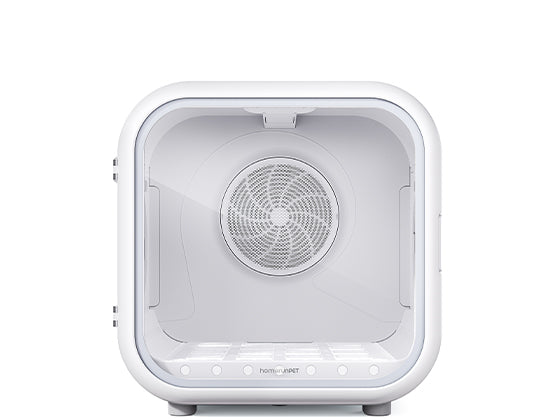
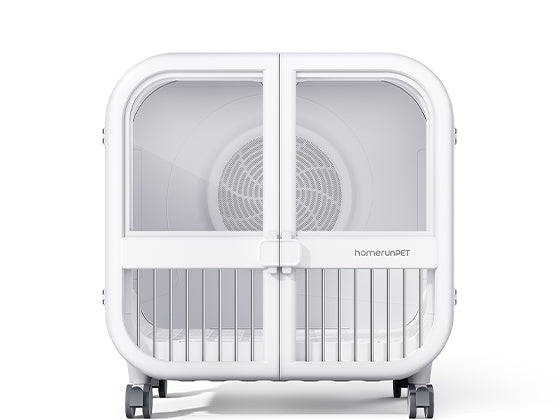
homerunPET CS106 delivers competitive mid-premium performance at $699 with industry-leading 106L capacity and physical safety features. The ultra-spacious dome (27.44×23.62×28.07 inches) accommodates cats up to 25 lbs—5 lbs more than most competitors. Unlike fully enclosed designs, the CS106 uses an open-top dome with physical anti-pinch bumpers that prevent complete closure, adding mechanical safety beyond sensor-only systems.
Pros: Largest 12L waste bin extends emptying to 14 days for single cats, automatic litter refill from 4.5L reservoir reduces manual topping, gel deodorizer system eliminates odors without filters, quiet 34dB operation, supports clumping clay/tofu/mixed litters, WiFi app with remote cleaning and maintenance alerts, radar sensor with instant-stop technology, mostly pre-assembled (30-second setup).
Cons: Bulky 106L footprint demands significant floor space, some cats require 3-7 day adaptation period, gel deodorizer refills needed monthly, app requires 2.4G WiFi only (no 5G support).
Best for multi-cat households (3+ cats) seeking premium features at mid-tier pricing, especially owners prioritizing safety and capacity over brand recognition.
PetSafe ScoopFree: Budget-Conscious Trade-Offs
PetSafe ScoopFree offers the lowest entry price ($140-$400) but incurs ongoing costs through proprietary crystal tray requirements. The rake system automatically sweeps waste 20 minutes after cats exit, depositing clumps into a covered trap. Basic models lack connectivity, while premium versions add health tracking and adjustable rake timing.
Pros: Affordable $140-$400 upfront cost, simple rake mechanism with fewer moving parts, crystal litter provides excellent urine absorption, disposable trays eliminate deep cleaning, compact design fits smaller spaces.
Cons: Crystal tray refills cost $15-$25 every 2-4 weeks ($195-$325 annually for single cat), incompatible with clumping clay litter, poor multi-cat performance (trays overwhelm quickly), odor control degrades faster than rotating systems, louder 40dB+ rake operation, cats may dislike crystal texture.
Best for single-cat owners on tight budgets willing to accept recurring tray costs and limited litter flexibility.
Feature Comparison: Key Decision Factors
| Feature | Litter-Robot 4 | homerunPET CS106 | PetSafe ScoopFree |
|---|---|---|---|
| Price | $650+ | $699 | $140-$400 |
| Waste Capacity | 8L standard | 12L (largest) | 4.5L tray |
| Noise Level | 33dB | 34dB | 40dB+ |
| Multi-Cat Suitability | Excellent (3-4 cats) | Excellent (3-5 cats) | Poor (1 cat only) |
| Litter Compatibility | Any clumping | Clay/tofu/mixed | Proprietary crystals |
| Annual Litter Cost | $120-$180 | $120-$180 | $195-$325 (trays) |
| Safety Features | Sensor-only | Physical anti-pinch + radar | Sensor-only |
| App Connectivity | WiFi + multi-cat ID | WiFi + remote control | Premium models only |
| Best For | Premium multi-cat homes | Value-focused multi-cat | Budget single-cat |
The table reveals homerunPET CS106 combines the largest waste capacity with mid-premium pricing, making it ideal for cost-conscious multi-cat owners. Litter-Robot 4 justifies its premium through brand reputation and advanced health tracking, while PetSafe trades upfront savings for ongoing tray expenses.
Real-World Pros: What Users Love
Convenience dominates positive feedback across all automatic litter boxes. Owners consistently report eliminating daily scooping saves 10-15 minutes daily—over 60 hours annually. Multi-cat households especially value this time savings, with one homerunPET CS106 user noting: "Handles our 4 cats flawlessly—empties weekly versus daily with our old manual box."
Odor control ranks second in user satisfaction. Sealed waste compartments in Litter-Robot 4 and gel deodorizers in homerunPET CS106 prevent smell migration better than open manual boxes. Users report guests no longer detect litter box presence, even in small apartments.
Health monitoring features in WiFi-enabled models provide early illness detection. Weight tracking alerts owners to sudden changes indicating potential health issues, while usage frequency data reveals bathroom habit disruptions warranting veterinary attention.
Real-World Cons: Common Complaints
Space requirements frustrate apartment dwellers. Automatic boxes measure 23-30 inches in multiple dimensions—significantly larger than standard 18×14 inch manual pans. The homerunPET CS106's 106L capacity, while beneficial for waste storage, demands dedicated floor space that challenges small homes.
Adaptation periods create initial stress for cats and owners. Approximately 30% of cats hesitate using automatic boxes initially, requiring 3-14 days of gradual introduction. Some cats never adapt to enclosed rotating designs, forcing owners to maintain backup manual boxes.
Mechanical failures, though rare (under 5% annually for premium models), prove costly. Sensor malfunctions cause missed cleaning cycles or false triggers, while motor failures require $100-$200 repairs. Budget models experience higher 8-12% failure rates, offsetting initial savings.
Noise sensitivity varies by model and cat temperament. While premium units operate at 33-34dB (quieter than whispers), the sudden motor activation startles anxious cats. Rake systems at 40dB+ disturb light-sleeping pets and owners in studio apartments.
Multi-Cat Household Considerations
Rotating globe systems dramatically outperform rake designs for 3+ cat households. The homerunPET CS106's 12L waste bin and automatic litter refill system handle high-traffic use without daily intervention. One verified user reports: "Our 3 cats generate 14 days of waste before the bin needs emptying—impossible with our previous PetSafe model that required tray changes every 3 days."
Multi-cat tracking features in Litter-Robot 4 and homerunPET CS106 apps identify individual usage patterns through weight differentiation. This proves invaluable for detecting health issues in specific cats within multi-pet households, though setup requires initial weight calibration for each cat.
Capacity becomes critical with multiple cats. A single cat produces approximately 0.5L waste weekly; three cats generate 1.5L weekly. The homerunPET CS106's 12L bin provides 8 weeks capacity for single cats but only 2 weeks for four-cat households—still superior to PetSafe's 4.5L tray requiring twice-weekly changes.
Cost Analysis: Total Ownership Over 3 Years
Upfront price tells only part of the financial story. PetSafe ScoopFree's $200 entry cost balloons to $785-$1,175 total over three years when including $585-$975 in crystal tray refills. The homerunPET CS106 at $699 plus $360-$540 in standard clumping litter totals $1,059-$1,239—comparable despite higher initial investment.
Litter-Robot 4's $650 price plus $360-$540 litter costs reaches $1,010-$1,190 over three years, making it the most economical premium option long-term. However, this assumes zero mechanical failures; one out-of-warranty motor replacement at $200 negates savings versus homerunPET CS106.
Filter and deodorizer replacements add ongoing costs. Litter-Robot 4 carbon filters cost $30 quarterly ($360 over 3 years), while homerunPET gel deodorizers run $15 monthly ($540 over 3 years). PetSafe's disposable trays eliminate separate filter costs but lock users into proprietary refills.
Making Your Decision: Selection Framework
Start by assessing your household profile. Single-cat owners prioritizing budget flexibility should compare PetSafe's lower entry cost against long-term tray expenses. If your cat accepts crystal litter and you value simplicity over app connectivity, PetSafe delivers adequate performance.
Multi-cat households (3+ cats) benefit most from rotating globe systems. Choose homerunPET CS106 if maximizing capacity and safety features within $700 budget matters most—the 12L waste bin and physical anti-pinch design justify the investment for families with children or senior cats. Select Litter-Robot 4 if brand reputation and advanced health tracking warrant the premium, accepting slightly smaller capacity.
Space-constrained apartments should measure carefully. The homerunPET CS106 requires 28×24 inches of floor space—verify availability before purchasing. Consider vertical clearance too; Litter-Robot 4's 29.5-inch height may not fit under low counters or in closets.
Q: How long do automatic litter boxes typically last before requiring replacement?
A: Premium rotating models like Litter-Robot 4 and homerunPET CS106 average 5-7 years with proper maintenance, while budget rake systems last 3-5 years. Motor assemblies represent the most common failure point, though quality models under 5% annual failure rates. Regular cleaning of sensors and moving parts extends lifespan significantly.
Q: Can automatic litter boxes handle kittens and senior cats safely?
A: Most automatic boxes accommodate cats 6+ months old and 5+ lbs, as smaller kittens may not trigger weight sensors reliably. The homerunPET CS106's physical anti-pinch design offers enhanced safety for curious kittens. Senior cats with arthritis may struggle with tall entries, while homerunPET's design may improve accessibility.
Q: Do automatic litter boxes work during power outages?
A: WiFi-enabled models lose app connectivity and automatic cleaning during outages but remain usable as manual boxes. Some premium units like Litter-Robot 4 offer battery backup accessories ($50-$100) maintaining functionality for 24-48 hours. Manual override buttons allow forced cleaning cycles when power returns.
Q: What maintenance do automatic litter boxes require beyond emptying waste?
A: Monthly deep cleaning involves removing and washing waste bins, wiping sensors, and checking for litter buildup in mechanisms. Replace filters or deodorizers per manufacturer schedules—carbon filters quarterly for Litter-Robot 4, gel deodorizers monthly for homerunPET CS106. Inspect rubber seals and moving parts every 6 months, lubricating as needed to prevent premature wear.
Ready to Upgrade Your Litter Box Experience?
Automatic litter boxes transform daily pet care by eliminating scooping drudgery and improving odor control. Whether you prioritize premium features, multi-cat capacity, or budget flexibility, 2026's market offers proven solutions for every household. Explore homerunPET's CS106 at homerunpet.com to discover how ultra-large capacity and advanced safety features deliver exceptional value for multi-cat families—or compare detailed specifications across all models to find your perfect match. Your cats (and your nose) will thank you.